


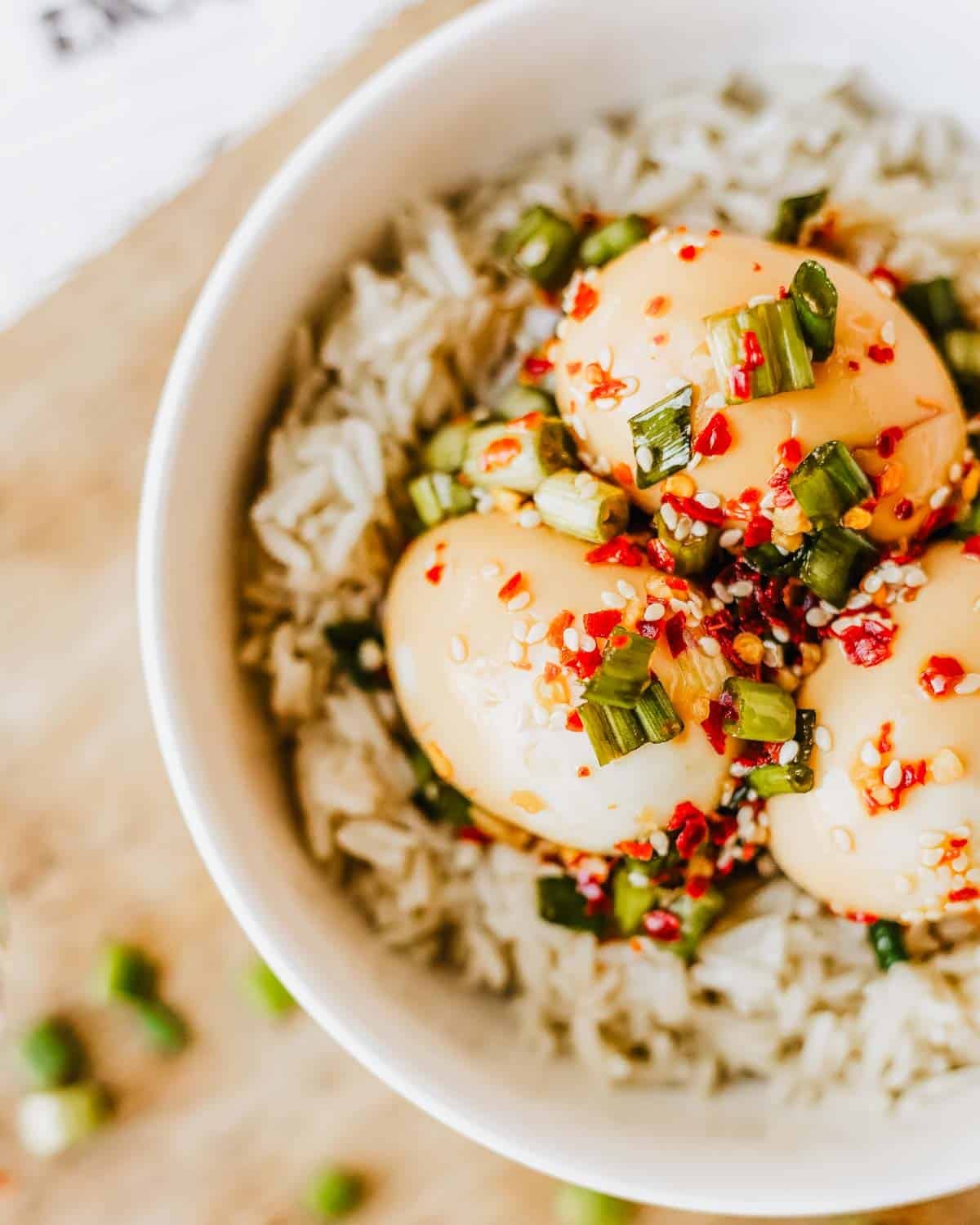
These Mayak eggs known as Korean marinated eggs are so easy to put together and will become your favorite side dish with a bowl of rice. They’re savory, sweet and spicy all at once and my new favorite thing to meal prep on the weekends. Enjoy them however you like your hardboiled eggs – fully cooked through or soft and jammy in the center.
There was a period of time in the food blogging world where people threw the word “crack” into the name of seemingly every recipe. From crack brownies to crack kale chips, you’d think the food blogger population were some hardcore drug addicts.
I never got into that trend, in fact most food blogging trends annoy the heck out of me, but here we are today with a recipe for Mayak eggs where the word “Mayak” actually means “drug” or “narcotic.” If I was ever going to actually title a recipe “crack,” this would be the one. Instead of calling them crack eggs though, let’s just go with Korean marinated eggs since that’s what they are.
I go through phases with meal prepping hardboiled eggs and I’d been in a slump up until discovering this recipe. I’m now fully back onboard the train though as these are some of the most addictively delicious things I’ve tried in years. If you love the combination of savory, sweet and spicy that so many Asian recipes nail, these marinated eggs will win you over quickly.
Traditionally, they feature soft and jammy centers like you’d get from a ramen egg. Of course, when I finally decide to photograph these, I overcooked the eggs a bit. It doesn’t make the recipe any less delicious and just goes to show that the eggs can be enjoyed at whatever doneness level you prefer.
Why You’ll Love These
- They’ll last all week in the fridge for easy snacks or meals.
- Perfect lunchbox addition for kids or adults.
- So good over sticky rice, in noodle bowls (like ramen) or sliced into sandwiches. You can even turn them into egg salad – I’ve been enjoying this cottage cheese egg salad recipe lately.
- Make them as spicy or sweet as you prefer.
The Ingredients
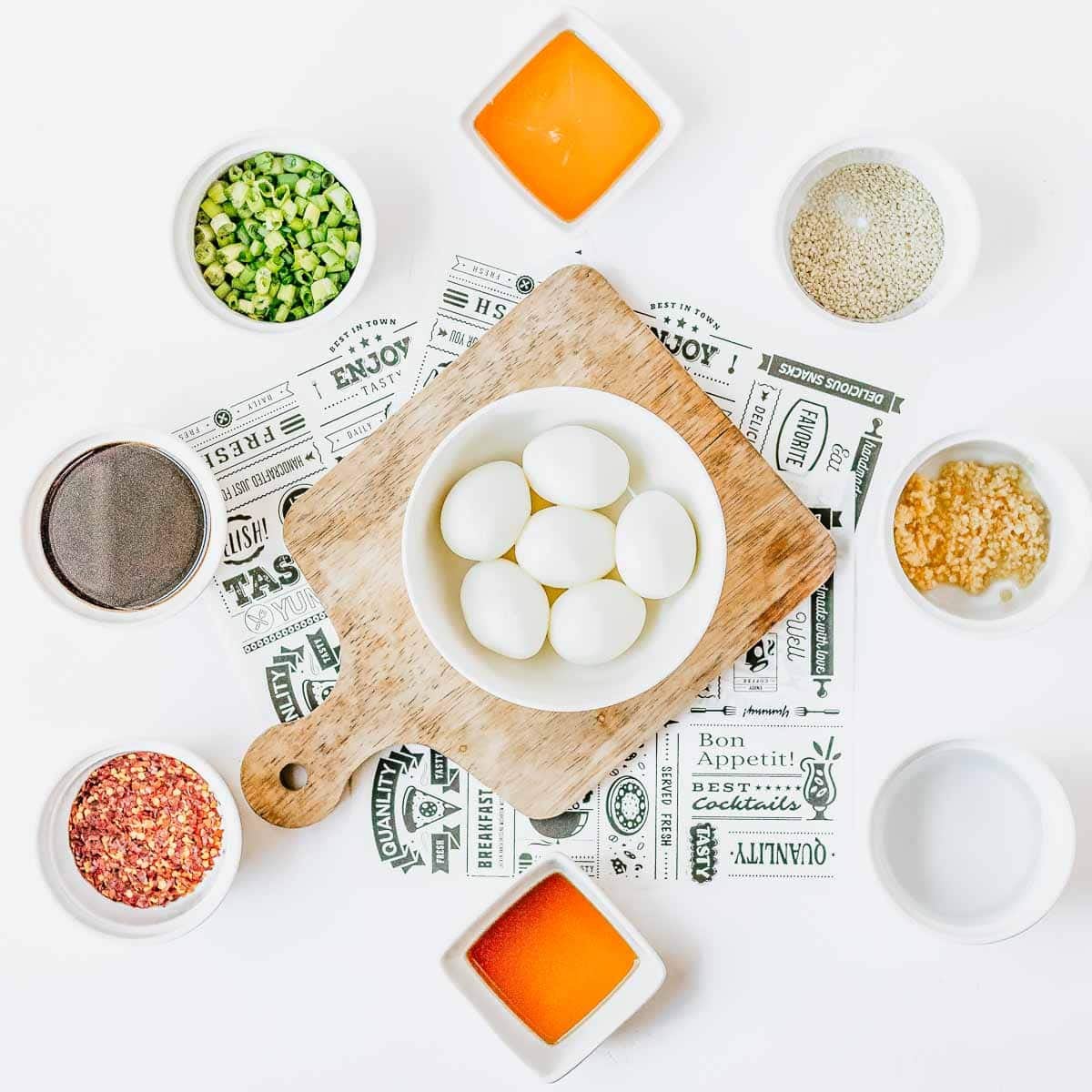
The marinade is simple and one of my favorite things about these marinated eggs is that they don’t require any obscure ingredients most households don’t have.
- Eggs – obviously you’ll need some hardboiled eggs to start. Make them however you normally do and to whatever doneness you prefer. I go back and forth between just a regular boil on the stove in a pot and using the Instant Pot. For stove-top I boil for 6-7 minutes then immediately drain the eggs and either run cold water over them or transfer to an ice bath so they stop cooking.
- Soy sauce – both tamari or coconut aminos can be substituted for gluten-free options.
- Water
- Honey – another liquid sweetener like maple syrup can also work but I prefer the combination of honey with soy sauce.
- Garlic – minced garlic brings a lot of flavor to the eggs, you can increase this if you want really savory Korean eggs.
- Red pepper flakes – these bring the spice. Adjust to your preferred level. You can also use a seeded and minced red chili pepper.
- Sesame oil and sesame seeds – sesame adds a lovely toasted taste to the marinade. You can also omit the oil in the marinade and drizzle the eggs with it before serving instead.
- Green onions – the chopped onions add great flavor to the marinade but also taste delicious when spooned over the eggs to serve.
How to Make Korean Marinated Eggs
This step by step process shows you the quick rundown of making Mayak eggs, but the full detailed recipe can be found in the recipe card at the bottom of this post.
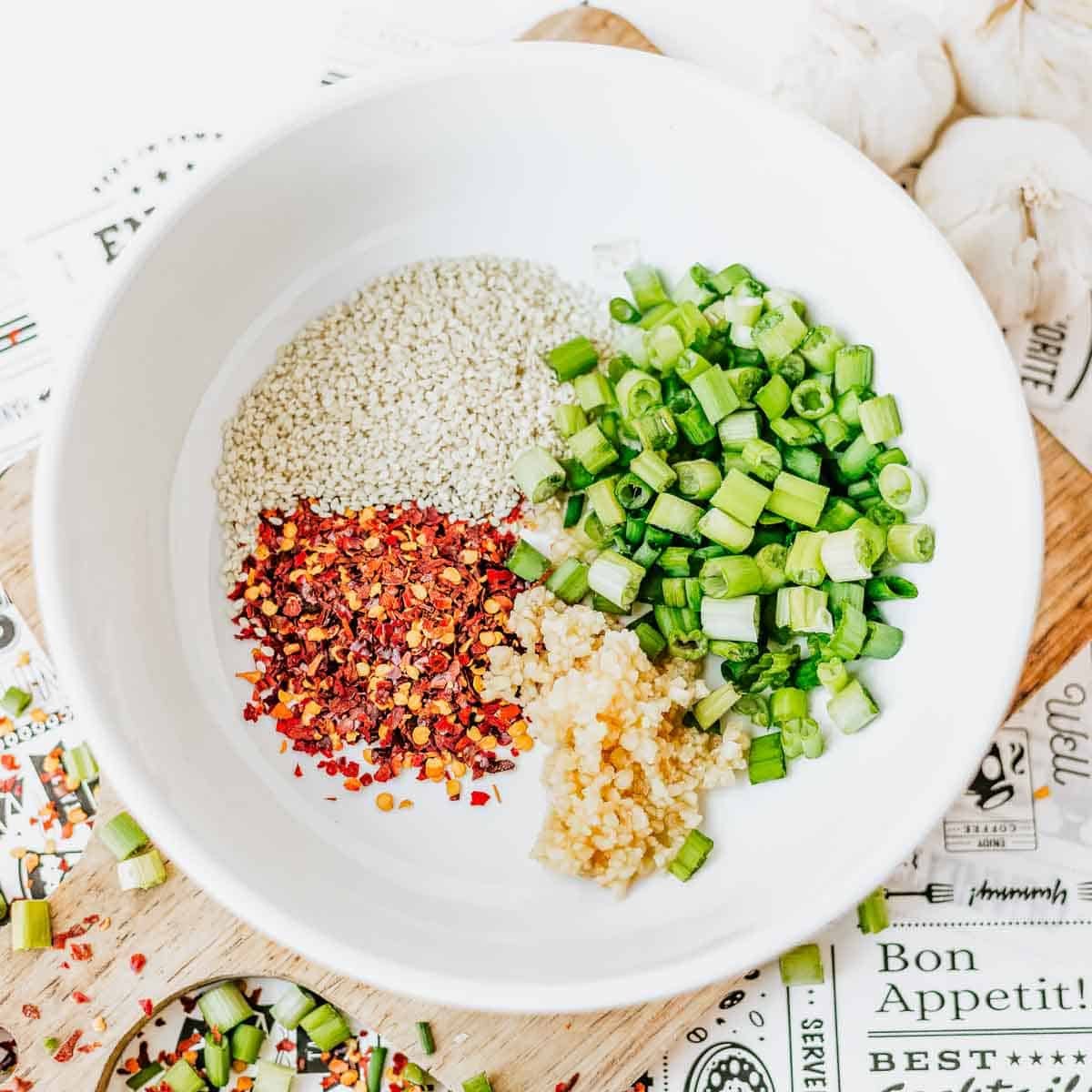
- Add the sesame seeds, green onions, garlic and red pepper flakes to a large bowl.
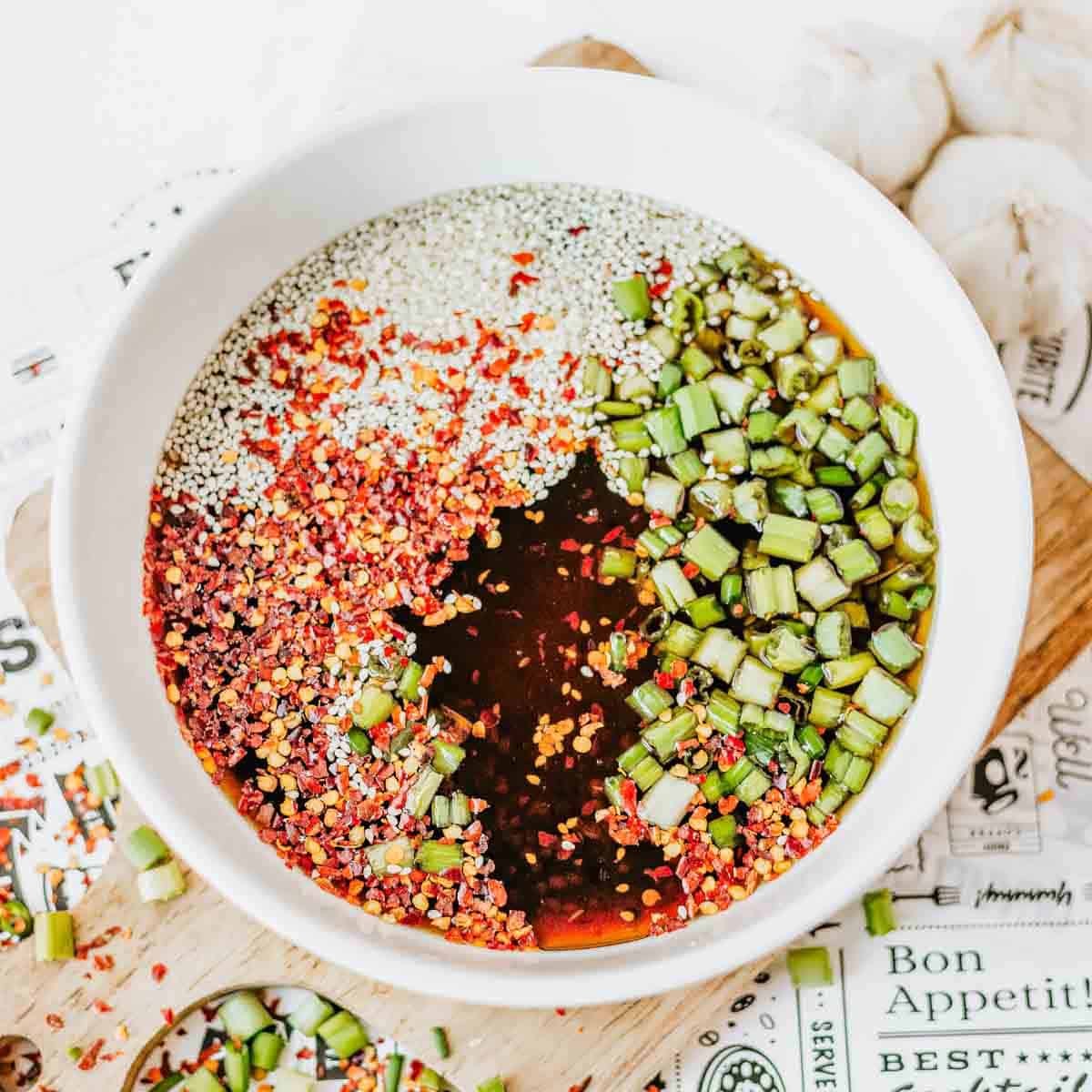
- To that bowl, add the soy sauce, sesame oil, honey and water.
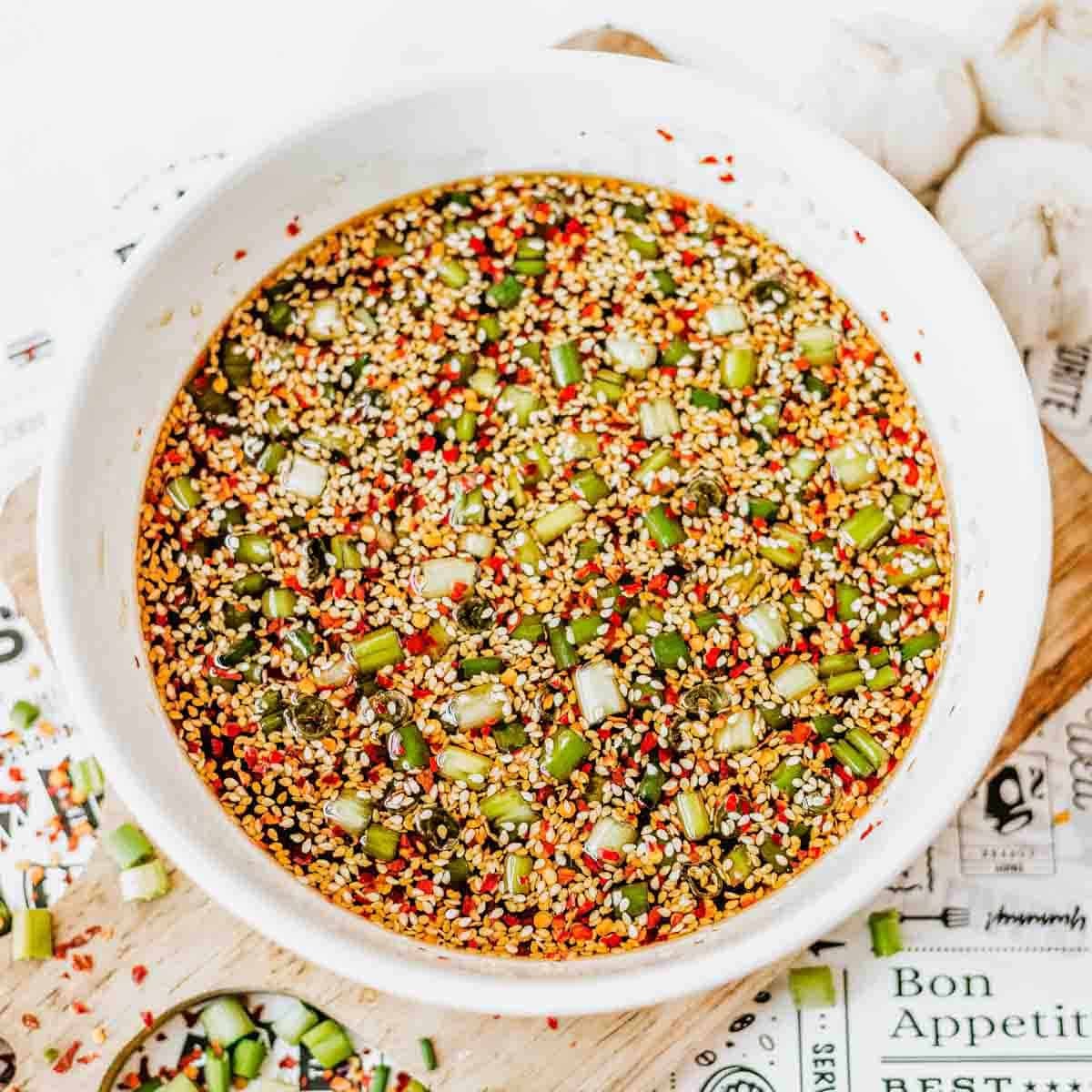
- Whisk well until everything is combined and the honey is fully dissolved.
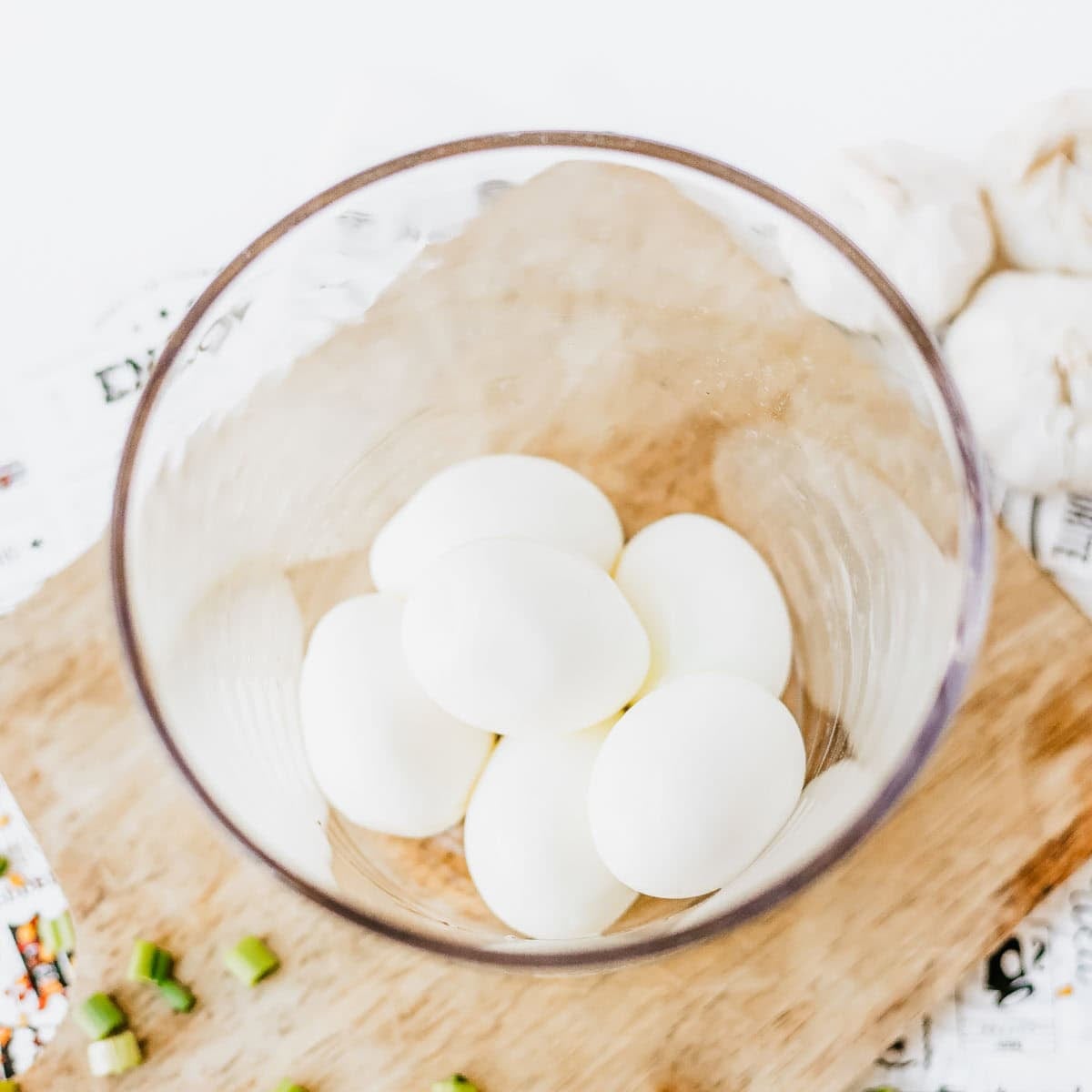
- Place the hardboiled eggs into a large glass bowl or container.
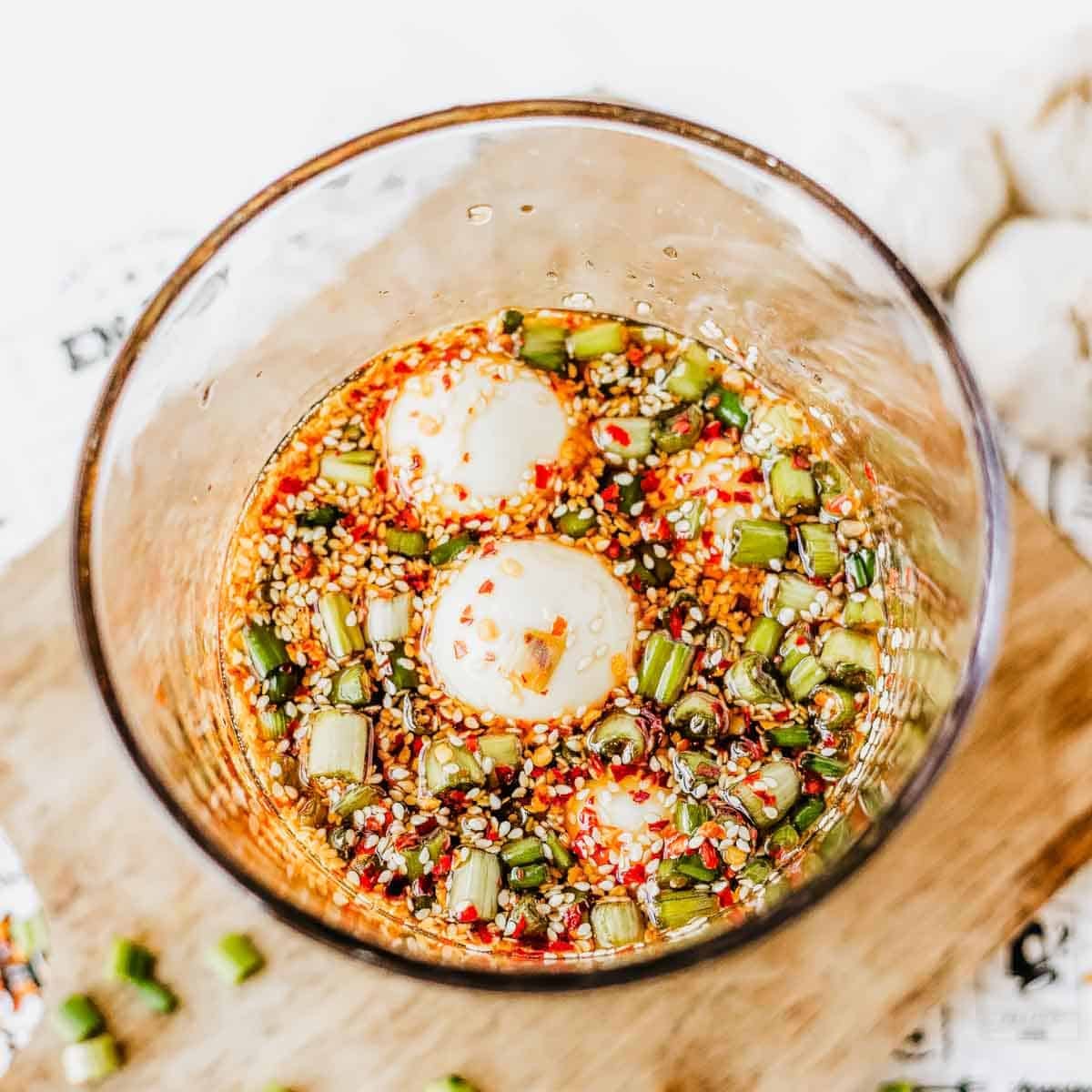
- Pour the marinade over the eggs. Cover and refrigerate for at least 2 hours, though overnight is better. If they’re not completely covered in the marinade, gently stir the eggs after a few hours so all sides get coated.
My Pro Tips
Tricks For Hard Boiling Eggs
- Use room temperature eggs. Cold eggs are more prone to cracking when boiled.
- Add a splash of white vinegar and salt to the water before boiling the eggs. This can help with peeling them more easily.
- Bring the water to a boil, then add the eggs to the pot. Don’t start the eggs in cold water, this can lead to overcooking them.
My Pro Tip
Don’t Throw Out the Marinade!
When you’ve finished the eggs, save the marinade for another use. While you may be tempted to add another batch of hard boiled eggs to it, the flavor is a little diminished from the first batch so I prefer to use the marinade as a sauce for other proteins. It’s great drizzled over fish like sablefish or cod. It also functions perfectly as a stir fry sauce. Try it in this bok choy stir fry or this ramen and pork stir fry.
How to Eat Mayak Eggs
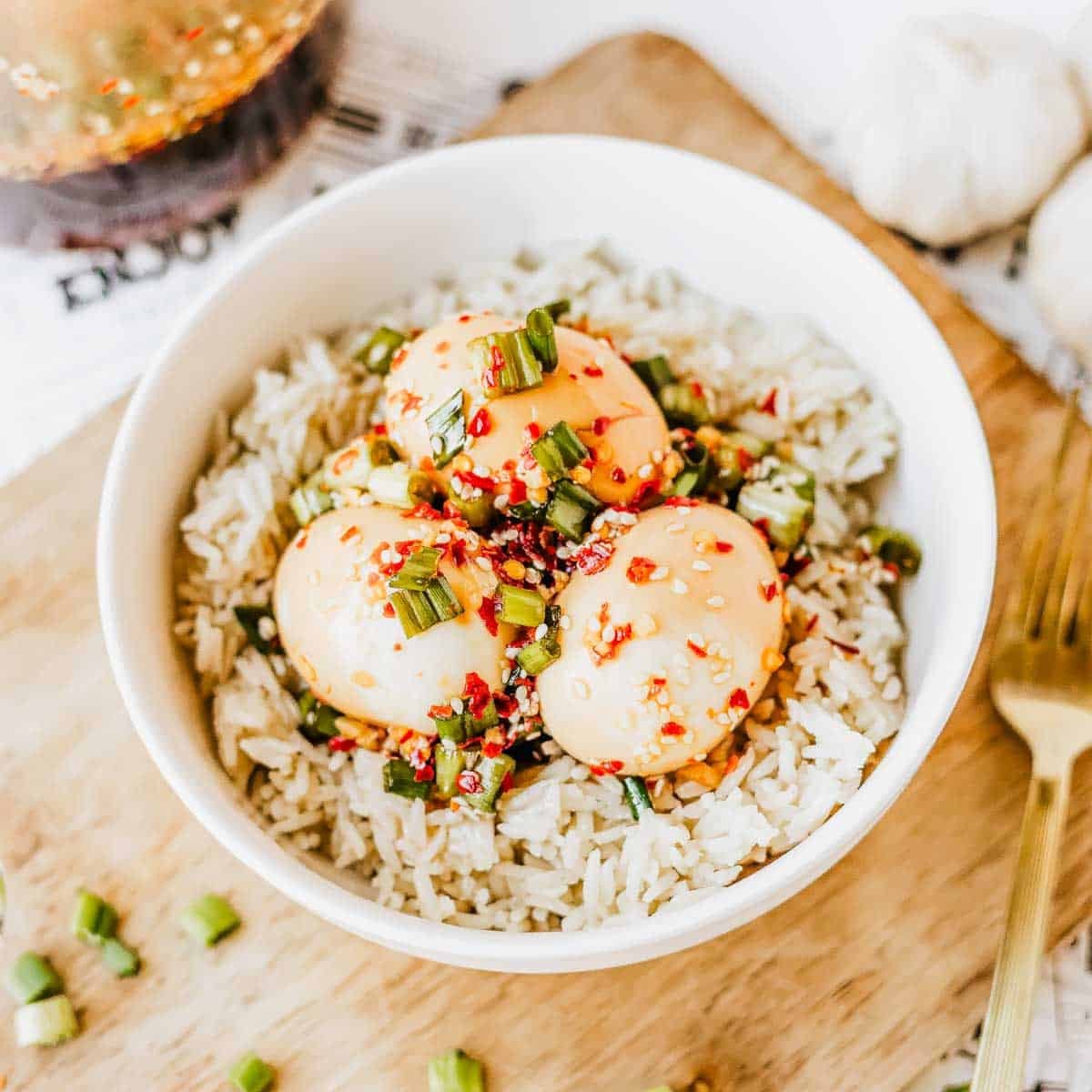
Korean marinated eggs are super versatile. They can be enjoyed for breakfast with a bowl of rice, especially if you love a savory breakfast. Definitely spoon some of the marinade over them before serving for added flavor.
They’re great for lunch and dinner too. For lunch, you can turn them into egg salad or thinly slice them onto a sandwich. Dinner offers the most options. Add them to a bowl of ramen, serve them with an Asian noodle dish like these soba noodles or this spicy udon noodle stir fry. I also love them in this hot and sour egg drop soup. They’re so much more flavorful than a regular soft boiled egg. They top basil fried rice nicely and give it a little bit of a protein boost too.
The eggs can be served hot or cold depending on your mood or what you’re pairing them with.

While all those serving options are great, if I’m being honest, my favorite way to eat these eggs is much simpler. I cook up some ground meat in a pan, spoon in some of the marinade once it’s fully cooked and let it coat the meat. Then I spoon it into a bowl with rice and one or two of the eggs on top. So simple, so delicious!
Korean Marinated Eggs

Ingredients
- 6 hard boiled eggs
- 1 cup soy sauce, substitute tamari for gluten-free
- ¾ cup water
- ¼ cup honey
- 1 bunch green onions, chopped
- 2 tablespoons minced garlic
- 1 tablespoon red pepper flakes
- 1 tablespoon sesame seeds
- 3 teaspoons sesame oil
Instructions
- Add the soy sauce, water, honey, green onions, garlic, red pepper, sesame seeds and sesame oil to a large container. Whisk until well combined.
- Peel the hard boiled eggs and place them in the mixture.
- Refrigerate for at least 2 hours or overnight. Overnight is best.
- Serve over rice or as desired.
Nutrition
Nutrition information is automatically calculated, so should only be used as an approximation.

Gina Matsoukas is an AP syndicated writer. She is the founder, photographer and recipe developer of Running to the Kitchen — a food website focused on providing healthy, wholesome recipes using fresh and seasonal ingredients. Her work has been featured in numerous media outlets both digital and print, including MSN, Huffington post, Buzzfeed, Women’s Health and Food Network.













Are you reheating the eggs when you put them over rice, or just leaving them cold? Thanks!
I enjoy them cold!
Looking forward to trying these tomorrow! Sound wonderful.