


An easy recipe and guidelines for making homemade raw dog food that you can tweak as necessary to what best fits your dog.
Save this recipe!
For as health conscious as I am about what kind of foods I put in my own body, I have to admit for the better part of six of her seven years, I pretty much fed Ginger the equivalent of fast food to humans.
Sure, it was the good fast food but after awhile, even Chick-Fil-A isn’t “healthy” any more if you know what I mean.
Of course, occasionally, I made her homemade pumpkin dog treats but more often than not her food was anything but homemade.
Then one day earlier this year it was like a switch got flipped.
The guy who sold us our water softener system was sitting in our kitchen and as we looked over models trying to figure out which one made the most sense, the sales guy and I started talking about dog food.
He explained how he starting feeding a raw food diet for his adult dogs and how their energy levels were through the roof (not that Ginger needs help in that department), their coats were shinier than ever and their teeth in great shape.
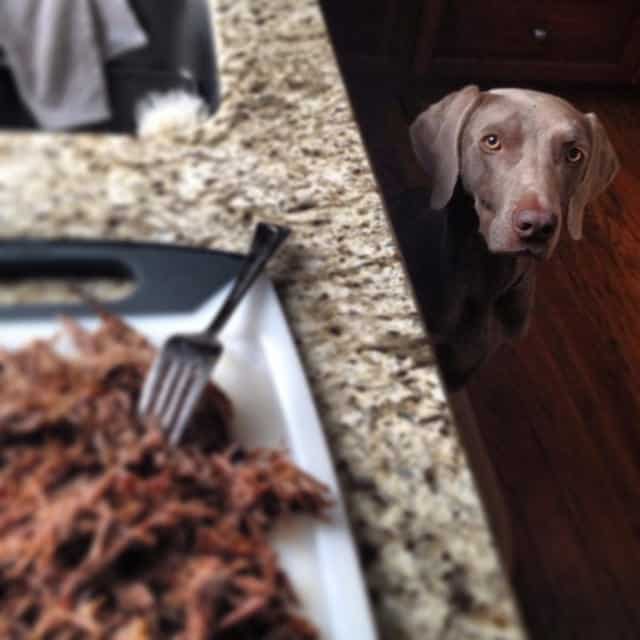
It made sense.
I completely buy into the same theories from a human perspective, why wouldn’t it be the same for dogs?
So, next trip to Petco, I was forking over some serious money (like 3 times the price of dry food) for frozen raw dog food patties and giving this whole thing a shot.
The first meal I gave her the homemade raw dog food, she came running back into the kitchen after licking the bowl clean as if she was begging for more.
As I was preparing the second meal and she saw me take the food out of the refrigerator, she just about lost it running back and forth between the kitchen and the laundry room (where we feed her), her legs moving faster than her body could on the wood floor running into chairs and walls like a lunatic.
It appeared she liked it.
At $25 for 3 pounds of food however, I knew immediately that wasn’t going to happen and I needed to start looking into some homemade dog food recipes.
Sorry, pup, I don’t eat out every day either.

So, I got to researching.
And it turns out, making your own raw dog food isn’t really that hard for dog owners.
It’s a bit disgusting as you see raw meat and organs swirl around in your food processor, but it’s not difficult by any means.
And yes, dogs can eat raw meat.
I think that’s the number one question I get when talk about this with people so I figured we’d get that out of the way first. Raw meals are not only a healthy choice for you dog, it’s what they were born to eat. Commercial dog food is something big industry made up in the middle of the last century along with the rise of human processed foods. Like in humans, this transition has lead to a slew of health issues for our pets and an obesity epidemic that matches that of their owners.
And if you’re wondering what else dogs can eat, check out my other site – What Can My Dog Eat?
Raw Dog Food Recipe Proportions (BARF diet)
The BARF diet stands for “biologically appropriate raw food diet”. Under this raw dog food diet, a dog’s diet should be high in protein, moderate in fat with a minimal amount of carbohydrates. When broken down into percentages, it will look something like this:
- 70% muscle meat with fat
- 10% raw edible bones (chicken feet can be great for this)
- 10% organs
- 5% fresh vegetables/fruits
- 5% dairy/supplements/nuts/seeds
Using those simple proportions, you can pretty much make up your own recipe from whatever you have on hand or find on sale at the store or.
Meat with fat: I will usually buy ground meat of some sort for this just because it’s easier than breaking down other cuts. Beef, chicken, pork, bison, gamey meats, etc. Muscle meat provides essential amino acids and vitamins for the dog. If your dog has any food allergies, it will likely be to a specific protein. Choose a protein type that works best for your dog based on their health conditions.
Bones: Raw edible bones are an important part of the BARF diet for essential nutrients like calcium and phosphorous.
Organs: The good news is organs are cheap. The bad news is organs are kind of gross. Nothing like some slimy chicken livers getting pulsed up in your food processor. Liver and kidneys are the two easiest to find in the grocery store. Liver is also the most nutrient dense organ there is providing fat-soluble vitamin A and other water-soluble vitamins.
Vegetables/fruits: Ginger happens to hate raw vegetables and fruit. She’s literally spit them out before or eaten around them if we’ve tried to feed her some in her bowl. So I choose sweet things here like apples, carrots and sweet potatoes that get processed real fine so she can’t tell. Avoid onions, grapes and raisins as they can cause kidney failure in dogs. It’s also a myth that vegetables provide no nutritional value to dogs. While they’re not necessary to support healthy dogs, they do provide added minerals and nutrients for better health overall.
Dairy/supplements: Whole eggs (shell and all) are a great source of calcium. I’ll also use some plain yogurt to help bind the patties. Supplement wise, ground flaxseed meal, olive oil and fish oil are great additions too. You can also choose to feed your dogs sardines for the healthy omega-3 benefits similar to olive oil.
How much raw food do I feed my dog?
This question has come up a lot in the comments so I figured I’d address it in the post.
The general guideline for adult dogs is to feed a balanced diet between 2-3% of their bodyweight. So, for a 50-pound dog that would be between 1 to 1.5 pounds of food per day.
Influencing factors on determining feed amount
- Activity Level
- Adjustments for weight gain or weight loss (the graphic in this post is helpful in that regard although discussing with your vet is probably best)
- Life Stage
Activity level
Be honest with this assessment. Is your individual dog mostly a lounger that hangs out inside all day with a few backyard jaunts or is it a truly active dog like a sporting breed that hunts, a working dog like a police K9 or your pal that goes hiking with you multiple times a week for hours on end?
Human tendency is to over emphasize/assess activity levels.
Adjustments for weight gain or weight loss
Simply put, does your dog need to lose weight? Gain weight? Maintain? The answer to those questions will help you figure out which end of that 2-3% spectrum you want to start with when starting a raw food diet.
Life stage
Notice I said adult dogs when referring to the 2-3% of body weight for food amounts. Puppies are an entirely different story as they’re quickly growing and need more calories to support that growth.
There are two approaches for feeding puppies:
- 2-3% of their expected adult weight (obviously easier to figure out with a pure bred dog)
- 5-6% of their current puppy weight – adjusting with the dog as it grows
Senior dogs shouldn’t have drastically different needs than a middle-aged dog unless of course, activity level impacts them.
Pregnant dogs are something you should speak to your vet or a veterinary nutritionist about in determining the best amount of raw food to support a healthy pregnancy.
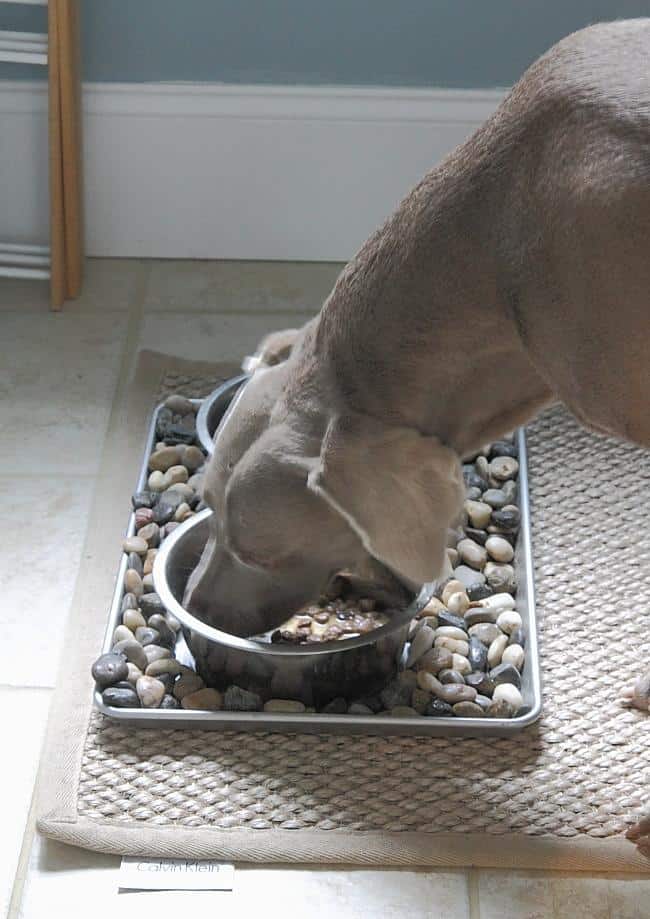
Making our dog homemade raw dog food has just become a part of the weekly routine now.
We do half of the homemade raw dog food recipe and half dry food which we upgraded as well to a grain-free feed with ingredients that make me comfortable when I read the back of the bag.
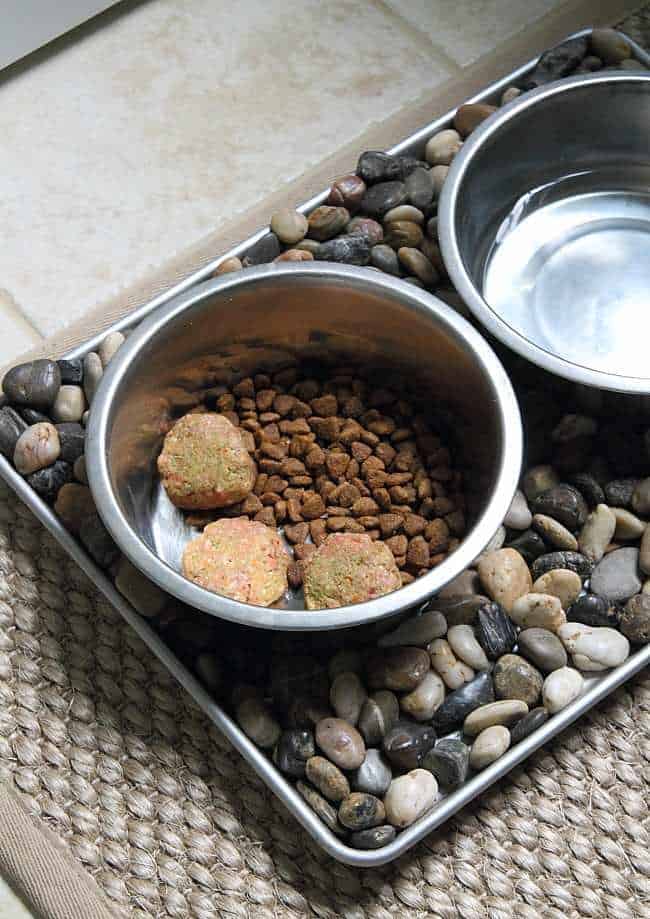
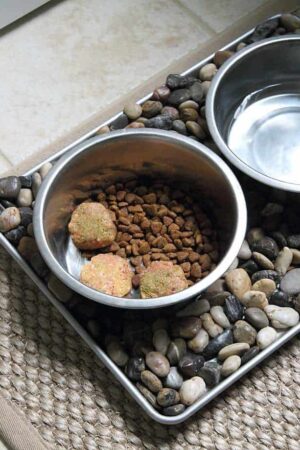
Because digestion rates of dry food (kibble) and raw dog food differ, we now feed one meal completely raw and one meal completely dry rather than mixing the two as seen in these pictures.
It’s a 30 minute weekly commitment that has made both her and I incredibly happy. Easy raw food dog recipes like this are a small price to pay to have complete control over the nutrition our dogs deserve.
Nothing can beat the look she gives me when she sees me reach into the fridge with her bowl in my other hand. And when I see her little stub waging ferociously from the lunatic excitement she has for every meal now, it’s a heartwarming feeling.
Knowing time is precious when you have a seven year old dog, something as simple as good food which I have the ability to control just isn’t even up for debate any more.
The Easiest Homemade Raw Dog Food Recipe
Ingredients
- 2 1/2 pounds ground beef
- 4 ounces chicken livers
- 1 carrot, chopped
- 1 small apple, cored
- 1/2 cup baby spinach
- 2 whole eggs, including shell
- 1/2 cup plain yogurt
- 1 tablespoon ground flaxseed
- 1 tablespoon olive oil
Save this recipe!
Instructions
- Add the carrot, apple and spinach to a food processor and process until finely chopped.
- Add the remaining ingredients except the ground beef and process again until well combined.
- Transfer the mixture into a large bowl. Add the ground beef and mix together with a spatula or your hands.
- Form into patties about the size of your palm and place on a parchment lined baking sheet.
- Freeze patties until solid, transfer to a storage container or plastic bag and keep frozen.
- Remove one day’s worth of patties from the freezer the night before and place in the refrigerator to thaw before serving.
- Browse without ads
- Meal plans made for you
- Member-only recipes
- Print and get cooking
Notes
Nutrition
Nutrition information is automatically calculated, so should only be used as an approximation.

Gina Matsoukas is an AP syndicated writer. She is the founder, photographer and recipe developer of Running to the Kitchen — a food website focused on providing healthy, wholesome recipes using fresh and seasonal ingredients. Her work has been featured in numerous media outlets both digital and print, including MSN, Huffington post, Buzzfeed, Women’s Health and Food Network.








Some people always confuse about, is there good to feed my canine homemade raw food?
And I think you have covered all the stuff for a dog’s owner.
what is good, how much good and how to feed it? Everything is clearly elaborated.
it really solves the problems of lots of dog owners.
Thank you!
Hi I want to put my boy on raw food but he has cushons deseas. Fluid on the lungs and hart mummer what do I put in it .I do not want him on all those med please help
Would you tell me which kibble you are using for the second meal? I feel like a person needs a MBA or more to decipher the ingredients in dog and cat food. Thank you.
Help! I was just about to make my second batch of this recipe that my dog absolutely loves and realized my husband ate the last of the yogurt. Is there a safe substitute?
cottage cheese
My lab cannot tolerate chicken. Tried turkey—no good. Changed to lamb but she is putting on weight. Reduced the food amount which helps. Beef i s ok but Coco is a picky eater. What other meats should I try?
So, you don’t cook the meat at all right? completely raw? I have read so many recipes that say “raw” but they instruct to cook the meat in their recipes. Kinda confusing. Anyway, your recipe looks great and very simple, I will definitely try it out. Thank you so much for the post! very informative!
Correct, it’s all raw/uncooked.
I have read many times about the recall of raw dog foods due to salmonella etc unless it is freeze-dried. Although your recipe sounds great, normal freezing may not be enough to kill off these germs. Could the patties after thawing perhaps be broiled for a short period of time? Would this negate the purpose of raw food feeding? Would love to try this but my wife (chemist) is adamant about giving our dogs uncooked organs/ground without some form of processing. Unfortunately, do not have, nor can I afford a fast freeze-drying unit.
Ask her who’s cooking for the wolves and coyotes :o) . Dogs have much more stomach acid than we do and just like a person with a weak immune system is much more likely to get secondary, chronic illnesses – like flu turns into pneumonia – same is true for dogs. If they have a strong immune system, they can fight off these viral bugs. If you are still concerned, use a good prebiotic and probiotic along with the raw transition.
The picture showing kibble in the dish is confusing even though RFTK says that you don’t put them in the same bowl at the same time. One time only raw and once only kibble. Why use kibble at all? Also, all this math about how much to feed is confusing. I have a 113 lb. 8 year old female bullmastiff that could lose about 10 lb. I have been giving her 4 patties a day. Should I weigh them and what weight should they be?
I prefer to use standard of 2% for maintenance or low activity canine and 3% for hi activity canine. I have a digital scale and use it for each meal.( get one that has lbs/oz conversion….approx 12$ at wal mart or ?) For your 113# dog it would look like this:
@ 2% 113 ( dogs wt. in lbs) x .02(percentage) equals 2.26 lbs or approx 2 1/4 lbs per day
@ 3% 113 x .03 equals 3.39lbs or approx 3 1/4 to 3 1/2 lbs per day
Divide between number of feedings you provide for your girl. I store two meals together in one container.
Keep one container in freezer(total of two meals) and one container in fridge and rotate as needed.
The writer stated in the article that they no longer feed raw and kibble at the same meal. I’m astounded at the number of comments with questions that were already answered in the article.
I’m not sure about the validity of this test : Pet Wellness Life Stress Scan, but the results show that our 60 pound Boxer is allergic to: chicken, eggs, bison, venison, salmon, green beans, pumpkin, and most all grains (among other things) . I know that she needs raw bones in her diet, but finding something like turkey necks, etc. is impossible where I live. How do I get enough calcium in her diet without the chicken bones, egg shells etc.?
Thank you! Your recipe has worked out great for our family and our dogs! The dogs are noticeably more energetic and happier.
So glad to hear!