


An easy recipe and guidelines for making homemade raw dog food that you can tweak as necessary to what best fits your dog.
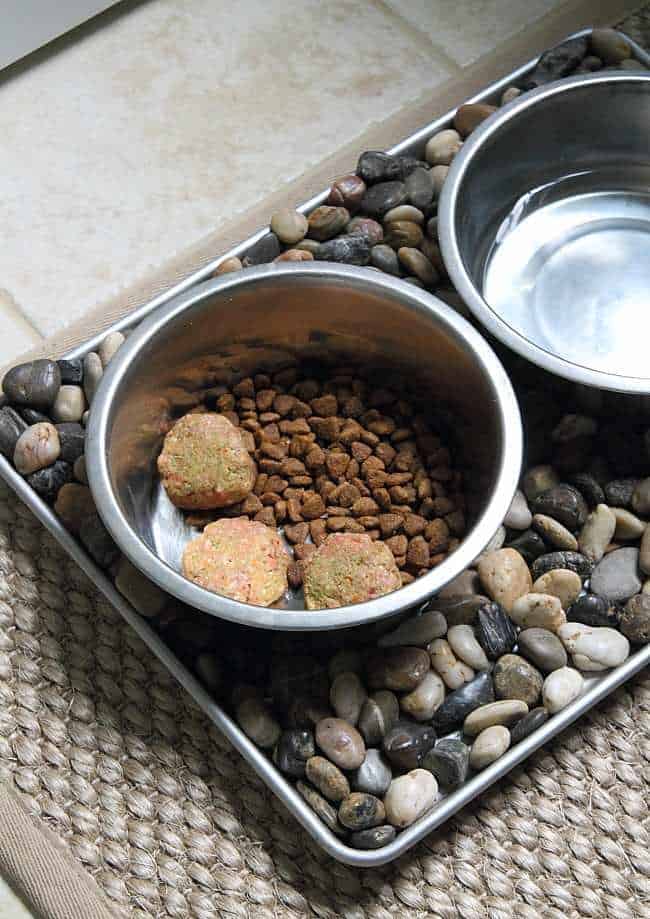
Save this recipe!
For as health conscious as I am about what kind of foods I put in my own body, I have to admit for the better part of six of her seven years, I pretty much fed Ginger the equivalent of fast food to humans.
Sure, it was the good fast food but after awhile, even Chick-Fil-A isn’t “healthy” any more if you know what I mean.
Of course, occasionally, I made her homemade pumpkin dog treats but more often than not her food was anything but homemade.
Then one day earlier this year it was like a switch got flipped.
The guy who sold us our water softener system was sitting in our kitchen and as we looked over models trying to figure out which one made the most sense, the sales guy and I started talking about dog food.
He explained how he starting feeding a raw food diet for his adult dogs and how their energy levels were through the roof (not that Ginger needs help in that department), their coats were shinier than ever and their teeth in great shape.
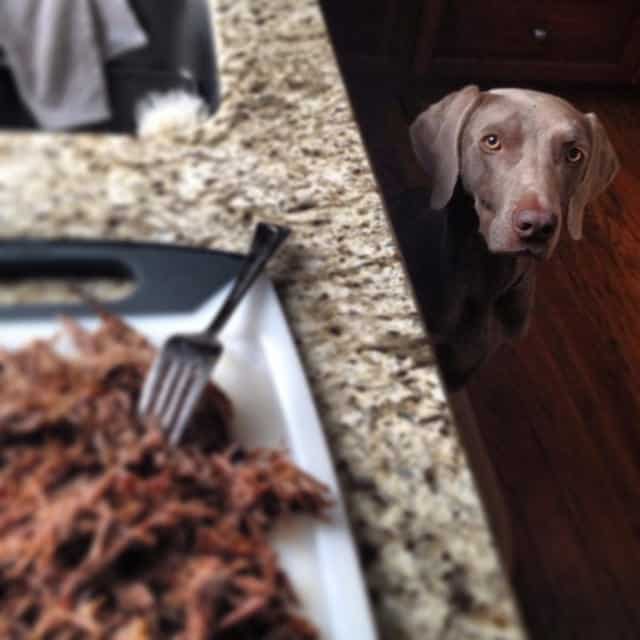
It made sense.
I completely buy into the same theories from a human perspective, why wouldn’t it be the same for dogs?
So, next trip to Petco, I was forking over some serious money (like 3 times the price of dry food) for frozen raw dog food patties and giving this whole thing a shot.
The first meal I gave her the homemade raw dog food, she came running back into the kitchen after licking the bowl clean as if she was begging for more.
As I was preparing the second meal and she saw me take the food out of the refrigerator, she just about lost it running back and forth between the kitchen and the laundry room (where we feed her), her legs moving faster than her body could on the wood floor running into chairs and walls like a lunatic.
It appeared she liked it.
At $25 for 3 pounds of food however, I knew immediately that wasn’t going to happen and I needed to start looking into some homemade dog food recipes.
Sorry, pup, I don’t eat out every day either.

So, I got to researching.
And it turns out, making your own raw dog food isn’t really that hard for dog owners.
It’s a bit disgusting as you see raw meat and organs swirl around in your food processor, but it’s not difficult by any means.
And yes, dogs can eat raw meat.
I think that’s the number one question I get when talk about this with people so I figured we’d get that out of the way first. Raw meals are not only a healthy choice for you dog, it’s what they were born to eat. Commercial dog food is something big industry made up in the middle of the last century along with the rise of human processed foods. Like in humans, this transition has lead to a slew of health issues for our pets and an obesity epidemic that matches that of their owners.
And if you’re wondering what else dogs can eat, check out my other site – What Can My Dog Eat?
Raw Dog Food Recipe Proportions (BARF diet)
The BARF diet stands for “biologically appropriate raw food diet”. Under this raw dog food diet, a dog’s diet should be high in protein, moderate in fat with a minimal amount of carbohydrates. When broken down into percentages, it will look something like this:
- 70% muscle meat with fat
- 10% raw edible bones (chicken feet can be great for this)
- 10% organs
- 5% fresh vegetables/fruits
- 5% dairy/supplements/nuts/seeds
Using those simple proportions, you can pretty much make up your own recipe from whatever you have on hand or find on sale at the store or.
Meat with fat: I will usually buy ground meat of some sort for this just because it’s easier than breaking down other cuts. Beef, chicken, pork, bison, gamey meats, etc. Muscle meat provides essential amino acids and vitamins for the dog. If your dog has any food allergies, it will likely be to a specific protein. Choose a protein type that works best for your dog based on their health conditions.
Bones: Raw edible bones are an important part of the BARF diet for essential nutrients like calcium and phosphorous.
Organs: The good news is organs are cheap. The bad news is organs are kind of gross. Nothing like some slimy chicken livers getting pulsed up in your food processor. Liver and kidneys are the two easiest to find in the grocery store. Liver is also the most nutrient dense organ there is providing fat-soluble vitamin A and other water-soluble vitamins.
Vegetables/fruits: Ginger happens to hate raw vegetables and fruit. She’s literally spit them out before or eaten around them if we’ve tried to feed her some in her bowl. So I choose sweet things here like apples, carrots and sweet potatoes that get processed real fine so she can’t tell. Avoid onions, grapes and raisins as they can cause kidney failure in dogs. It’s also a myth that vegetables provide no nutritional value to dogs. While they’re not necessary to support healthy dogs, they do provide added minerals and nutrients for better health overall.
Dairy/supplements: Whole eggs (shell and all) are a great source of calcium. I’ll also use some plain yogurt to help bind the patties. Supplement wise, ground flaxseed meal, olive oil and fish oil are great additions too. You can also choose to feed your dogs sardines for the healthy omega-3 benefits similar to olive oil.
How much raw food do I feed my dog?
This question has come up a lot in the comments so I figured I’d address it in the post.
The general guideline for adult dogs is to feed a balanced diet between 2-3% of their bodyweight. So, for a 50-pound dog that would be between 1 to 1.5 pounds of food per day.
Influencing factors on determining feed amount
- Activity Level
- Adjustments for weight gain or weight loss (the graphic in this post is helpful in that regard although discussing with your vet is probably best)
- Life Stage
Activity level
Be honest with this assessment. Is your individual dog mostly a lounger that hangs out inside all day with a few backyard jaunts or is it a truly active dog like a sporting breed that hunts, a working dog like a police K9 or your pal that goes hiking with you multiple times a week for hours on end?
Human tendency is to over emphasize/assess activity levels.
Adjustments for weight gain or weight loss
Simply put, does your dog need to lose weight? Gain weight? Maintain? The answer to those questions will help you figure out which end of that 2-3% spectrum you want to start with when starting a raw food diet.
Life stage
Notice I said adult dogs when referring to the 2-3% of body weight for food amounts. Puppies are an entirely different story as they’re quickly growing and need more calories to support that growth.
There are two approaches for feeding puppies:
- 2-3% of their expected adult weight (obviously easier to figure out with a pure bred dog)
- 5-6% of their current puppy weight – adjusting with the dog as it grows
Senior dogs shouldn’t have drastically different needs than a middle-aged dog unless of course, activity level impacts them.
Pregnant dogs are something you should speak to your vet or a veterinary nutritionist about in determining the best amount of raw food to support a healthy pregnancy.
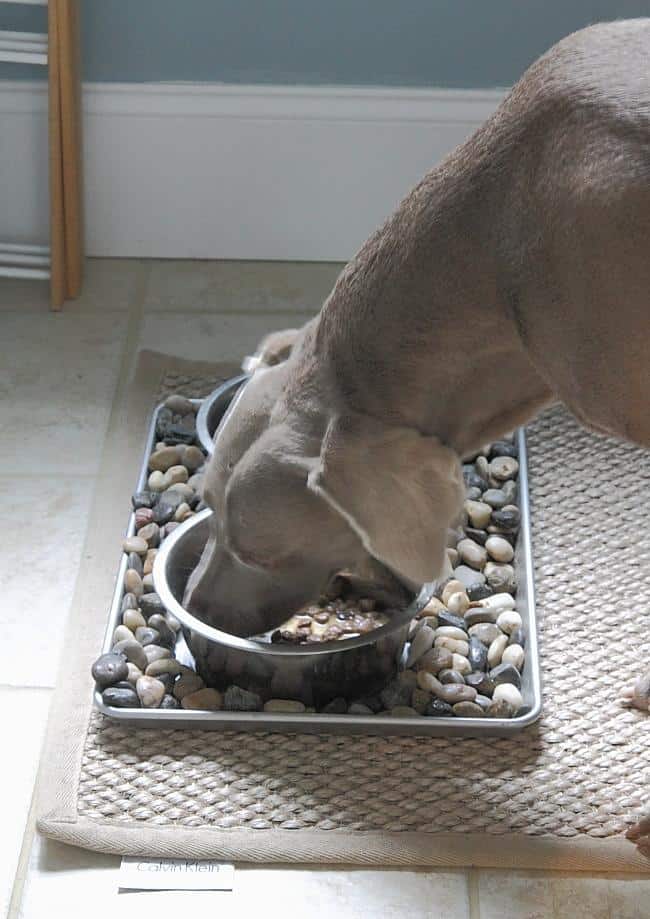
Making our dog homemade raw dog food has just become a part of the weekly routine now.
We do half of the homemade raw dog food recipe and half dry food which we upgraded as well to a grain-free feed with ingredients that make me comfortable when I read the back of the bag.
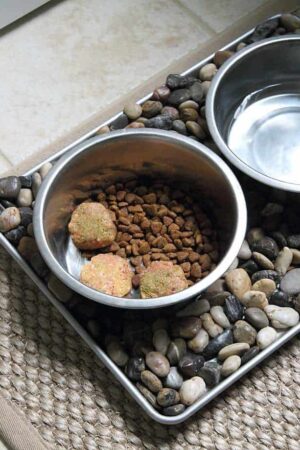
Because digestion rates of dry food (kibble) and raw dog food differ, we now feed one meal completely raw and one meal completely dry rather than mixing the two as seen in these pictures.
It’s a 30 minute weekly commitment that has made both her and I incredibly happy. Easy raw food dog recipes like this are a small price to pay to have complete control over the nutrition our dogs deserve.
Nothing can beat the look she gives me when she sees me reach into the fridge with her bowl in my other hand. And when I see her little stub waging ferociously from the lunatic excitement she has for every meal now, it’s a heartwarming feeling.
Knowing time is precious when you have a seven year old dog, something as simple as good food which I have the ability to control just isn’t even up for debate any more.
The Easiest Homemade Raw Dog Food Recipe
Ingredients
- 2 1/2 pounds ground beef
- 4 ounces chicken livers
- 1 carrot, chopped
- 1 small apple, cored
- 1/2 cup baby spinach
- 2 whole eggs, including shell
- 1/2 cup plain yogurt
- 1 tablespoon ground flaxseed
- 1 tablespoon olive oil
Save this recipe!
Instructions
- Add the carrot, apple and spinach to a food processor and process until finely chopped.
- Add the remaining ingredients except the ground beef and process again until well combined.
- Transfer the mixture into a large bowl. Add the ground beef and mix together with a spatula or your hands.
- Form into patties about the size of your palm and place on a parchment lined baking sheet.
- Freeze patties until solid, transfer to a storage container or plastic bag and keep frozen.
- Remove one day’s worth of patties from the freezer the night before and place in the refrigerator to thaw before serving.
- Browse without ads
- Meal plans made for you
- Member-only recipes
- Print and get cooking
Notes
Nutrition
Nutrition information is automatically calculated, so should only be used as an approximation.

Gina Matsoukas is an AP syndicated writer. She is the founder, photographer and recipe developer of Running to the Kitchen — a food website focused on providing healthy, wholesome recipes using fresh and seasonal ingredients. Her work has been featured in numerous media outlets both digital and print, including MSN, Huffington post, Buzzfeed, Women’s Health and Food Network.








Hi, How many cups does this make?
Simple to make and great time saver
Omfg, did any of you read the article? It STATES… 2-3% of the dogs body weight
Hello, I was wondering. I feed pedigree hard dog food and for my Chihuahua I started feeding can food. My vet said stop the soft because she needs the hard for her teeth. So she wouldn’t eat the hard so I started mixing for all the dogs. Pit, Lab and Chihuahua. I recently started feeding cooked liver carrots and rice to the hard dog food. I give the big dogs 1big tablespoon and the little dog I give 1 teaspoon of the cooked liver mix. Am I doing good feeding the liver mix or am I hurting them. If we kill turkey or deer I also cook up the heart and gizzards and put them in the food mix. I also do chicken mixes to, but mainly the cooked liver mix. Any input would be great. Thank you
Hello,
I really want to give my senior dog raw food. However, I have a fear of bacteria, especially with chicken organs. I thought freezing them would kill off the bacteria, but it turns out that bacteria only goes into hibernation and reanimates when thawed. Any suggestions?
I fed my cats raw food, but it takes awhile to make the switch. A teaspoon a day– even half a teaspoon– adding slowly. They are fickle, and don’t like changes. “Hissy Fit” is what Feed This, a local small producer of raw food for dogs and cats, delivered in pint tubs frozen, in my county, calls their cat food. Check out feedthis.com, to read up on why raw. I stopped using raw because of cost, but my sweetie does not like her high-quality kibble very much, after 6 years of raw. Someone I met at a dog park talked about making his own, to keep cost down, so here I am. Thanks for the recipe!
Wow! I’ve been making my own dog food for a couple of years but I’ve never gone raw. Seems like it’s giving your dog crazy energy levels. You briefly talked about supplements, I use Azestfor which is super healthy and you can just mix it into the food. I would definitely add a supplement if you’re only feeding your pup homemade dog food to make sure they are getting everything they need. :)
Not to mention the benefits of homemade dog food since we all know that the amount of minerals and vitamins found in homemade cuisines is much higher than processed food we find in the market. Even the market food has lots of things to care about such as expiry date, manufacturing process etc.
Hey, really very nice post and good recipe of raw dog food to make at home really a great idea and good nutrition recipe, Thanks for sharing this with us really helpful.
I just recently stumbled on your site and love your guides and recipes!
I don’t want to rain on your parade, however, but people need to really research past just this discussion before switching over to a raw diet.
Doing both raw and dry kibble is a strict no-no in most raw circles, and can seriously damage your dog’s gut and health. The entire point of changing to raw is to eliminate chemicals, corn, soy, and other irritants that bloat your dog and cause it health issues. Then why would you continue to “supplement” a raw diet with kibble? It defeats the purpose and since you even noted that dogs digest a raw diet at a different rate than kibble, you are causing upset to the tummy by keeping the kibble in their system.
If you are going to go raw, then go completely raw. Also, as animals who descended from wild carnivores as evidenced by their teeth–they need bones (and pieces of good meat) to chew and rip and put those jaws to use as well as it helps in digestion. Also, it is common for a dog to puke this all up, and re-eat, as is done in the wild.
If you know hunters, sometimes you can work out a deal to take what they don’t use, or also, when they clean out their freezer before the beginning of a new hunting season, they may be willing to give you that as well.
People, please research before changing over, and once you do, COMMIT to doing it fully, otherwise you can really hurt your pet’s health. PS. cat’s can do raw too.
Actually there have been studies done ad it’s coming to light that kibble digests faster or at about the same rate as raw.
That makes sense to me, when one unavoidably, notices the much smaller stool size that comes with raw food dining ~ it has to take longer to digest and for the body to fully absorb the nutrients. However, it is also true, just like with humans, that SOME real food is far better than none and many cannot afford a fully raw diet, financially or time wise.
Still, I certainly agree with your – full raw is beyond-the-pale, best and whole food rather than ground, hands down.