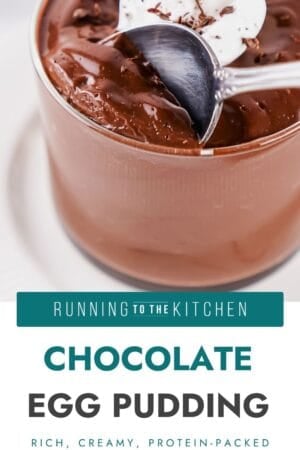


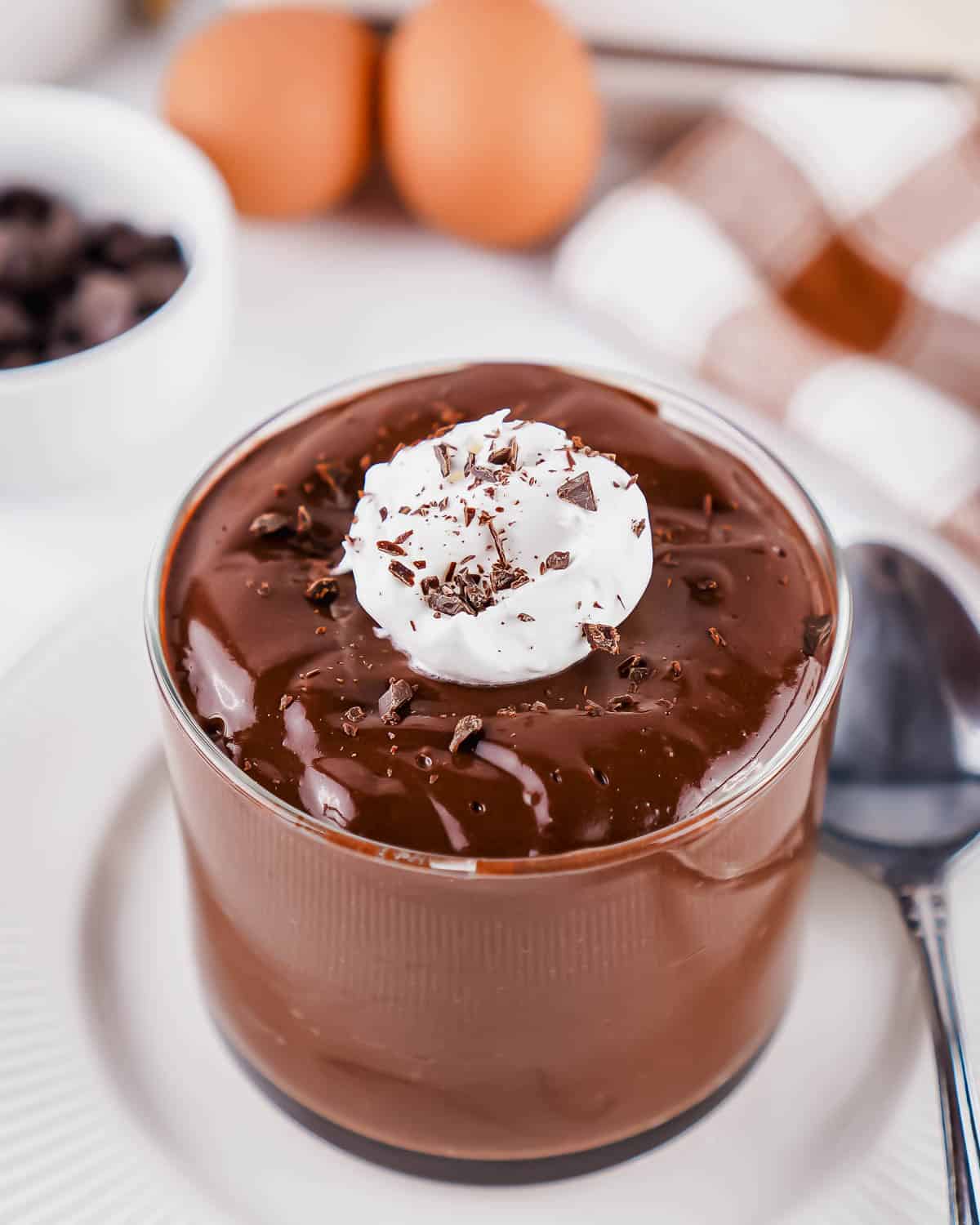
This viral hard-boiled egg chocolate pudding is thick, rich and surprisingly close to the classic chocolate pudding we grew up eating. My version adds chocolate protein powder for an extra protein boost and even more chocolate flavor, all with just six ingredients and a blender.
I really didn’t expect hard-boiled eggs to win the chocolate pudding competition, but here we are.
At this point, I’ve made all three of the high-protein chocolate puddings that have made their rounds on social media: chocolate cottage cheese pudding, silken tofu chocolate pudding (I’ll have to get that recipe up soon) and now this hard-boiled egg chocolate pudding. Of the three, this is easily my favorite.
And yes, I realize how ridiculous that sounds.
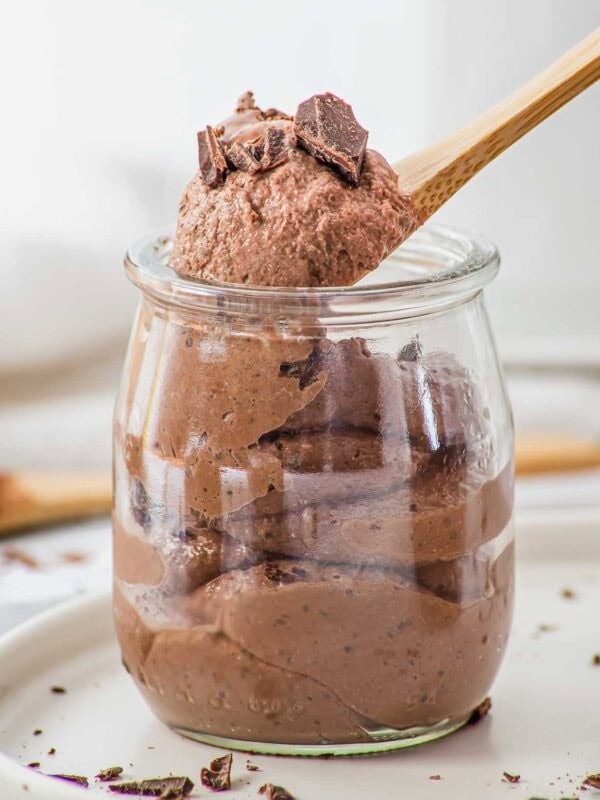
The cottage cheese version is creamy and the tofu version is incredibly smooth, but this one tastes the most like actual chocolate pudding to me. It’s richer, thicker and has that almost custardy texture I remember from the little pudding cups we ate growing up. If you gave it to me without telling me there were six hard-boiled eggs hiding in the blender, I don’t think I’d ever guess. In fact, my husband didn’t.
I resisted this trend for a while because unlike cottage cheese or tofu, eggs seemed like an ingredient that would be pretty hard to disguise in dessert, but apparently, I was wrong. I guess cacao, honey and vanilla are more than capable of doing exactly that.
My Version of the Viral Recipe
I also add chocolate protein powder to my version, which bumps up the protein even further while making the chocolate flavor richer and more intense. The result is a thick, decadent pudding made entirely in the blender that’s easy to prep ahead and keep in the fridge for the week.
Why Hard-boiled Eggs Work in Chocolate Pudding
The whole thing sounds a lot less strange when you think about what eggs already do in desserts.
Eggs, and particularly egg yolks, are used to create the rich texture in custards, pastry creams and plenty of traditional puddings. We’re taking a very unconventional route to get there by hard-boiling them first, but once they’re completely blended, the yolks give the pudding a richness that cottage cheese and tofu can’t really replicate.
That’s probably why this version surprised me so much.
You also don’t get pieces of egg white floating around in your dessert, which would be gross. A high-powered blender completely breaks everything down into a thick, smooth consistency.
Ingredient Highlights
There are only six total ingredients, all of which are in the recipe card below. Let’s go over a few of them and some questions you might have:
Hard-boiled eggs: You’ll need six for this recipe. If hard-boiled eggs are already part of your weekly meal prep, my Korean marinated eggs are another way I use them that couldn’t be more different from this pudding.
Milk: Any kind will work. I usually make this with unsweetened coconut milk from the carton to keep it dairy-free, but I’ve also used A2 2% milk and it’s great with that as well. You can also adjust the amount slightly depending on how thick you like your pudding.
Honey: This provides the sweetness and works really well with the cacao. Maple syrup would likely work too, although I prefer the flavor of honey here.
Cacao powder: I use cacao rather than cocoa powder for a deep chocolate flavor. Navitas is my go-to brand.
Chocolate protein powder: This isn’t in every version of the viral recipe, but I wanted more protein per serving and an even stronger chocolate flavor. I use Equip chocolate beef-isolate protein powder (their stevia version). Use a chocolate protein powder you already know you like because its flavor will come through in the finished pudding. This will also affect the amount of sweetener you use. If your protein powder is sweet already (like mine), 70g of honey should be fine. If yours isn’t, you may want to use more. Taste the pudding after it’s blended and adjust the sweetener at that point. I also use this protein powder in my chocolate protein mug cake, another one of my go-to higher-protein chocolate desserts.
My Pro Tip
Let It Chill
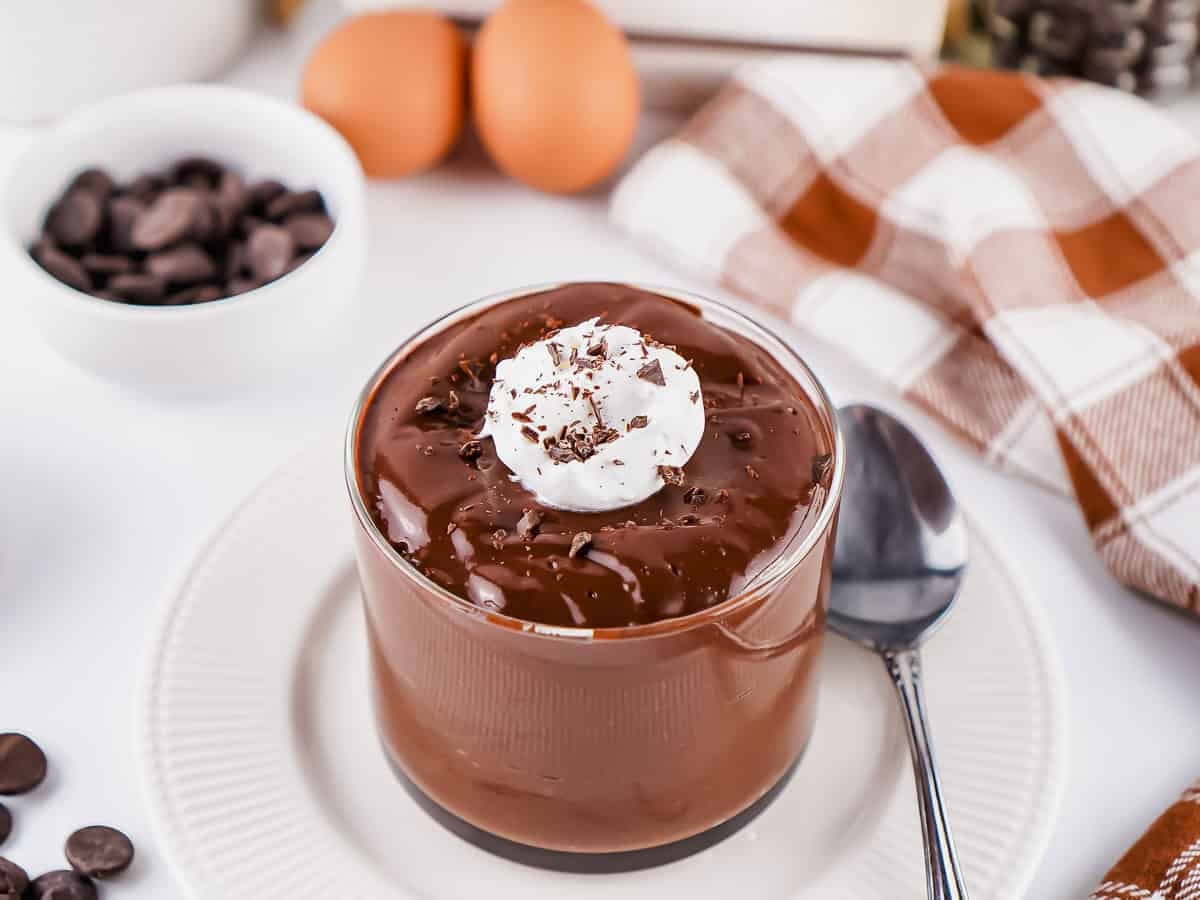
You can eat the pudding immediately after blending, but don’t judge it yet. Give it at least a few hours in the fridge, or better yet, let it chill overnight. It thickens as it sits, the chocolate flavor becomes richer and any hint that there are six hard-boiled eggs hiding in your dessert will disappear.
And because I know everyone is wondering: no, I don’t think it tastes like eggs. If I taste it straight from the blender and really look for it, I can sometimes pick up the faintest hint because I know they’re in there. Once it’s thoroughly chilled though, I don’t taste egg at all.
How I Serve It
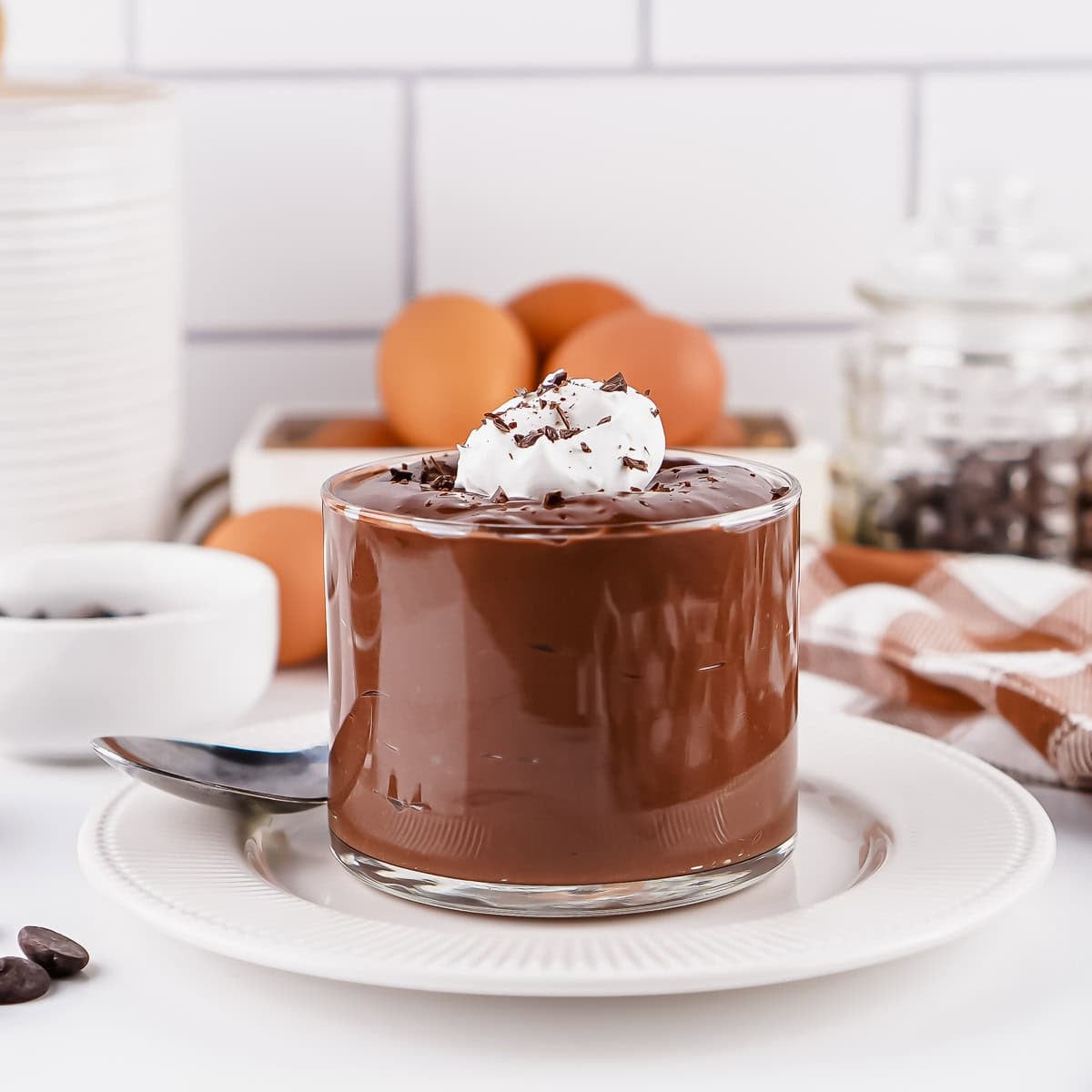
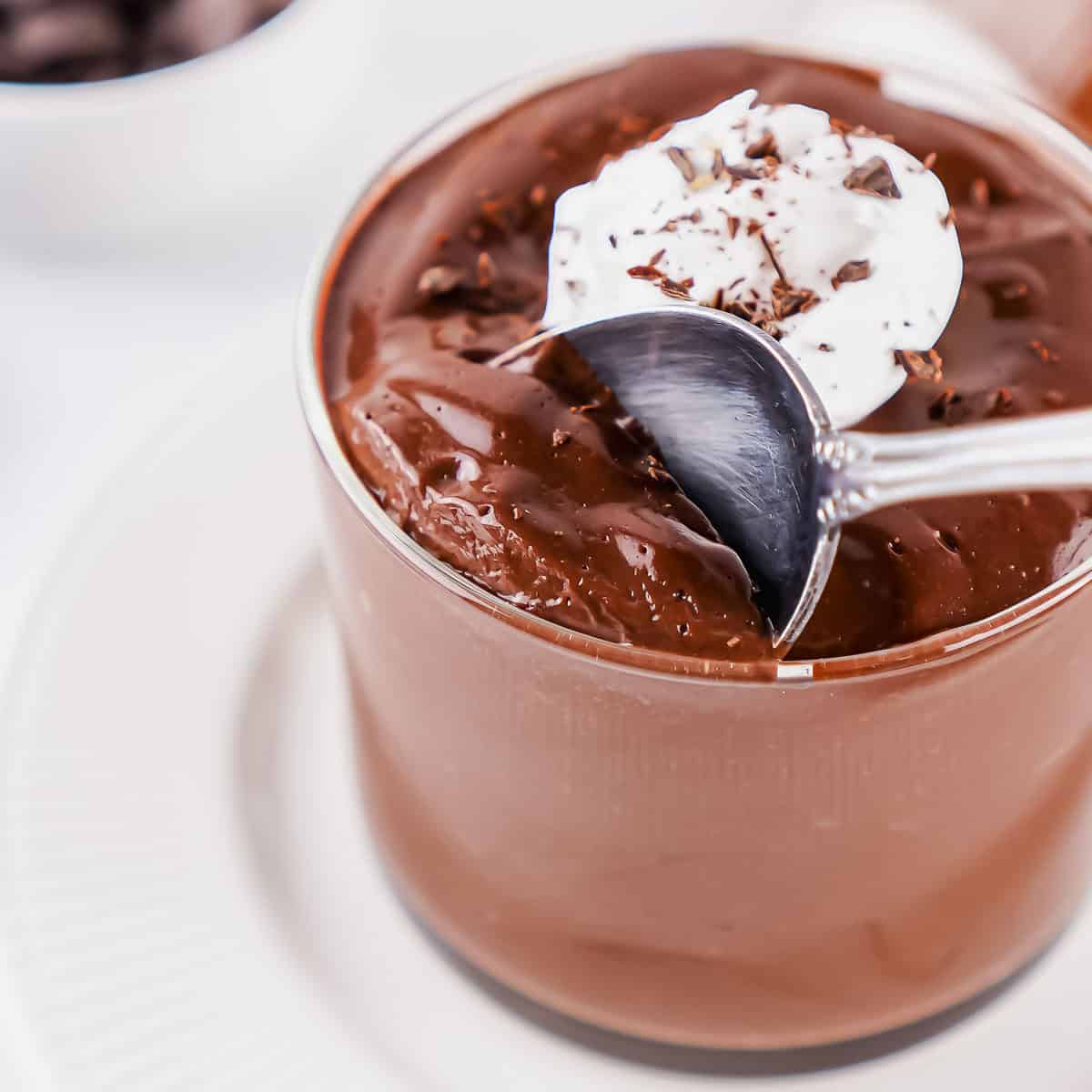
This pudding is pretty rich, so I like serving it with fresh berries and/or a little whipped cream to balance that out. Raspberries and strawberries are especially good with the deep chocolate flavor. A few chocolate shavings on top are fun too for the true chocolate lovers.
Storage
Store the pudding covered in the refrigerator for up to 5 days.
It will thicken as it sits. If it becomes thicker than you’d like, stir in a small splash of milk before serving.
I portion mine into individual jars or containers after blending so I can grab one straight from the fridge.
Hard-boiled Egg Pudding vs. Cottage Cheese vs. Tofu
I’ve now tried all three, and this is how they compare.
Cottage cheese chocolate mousse: Probably the easiest sell if the idea of eggs in dessert is still too much for you. It’s creamy, high in protein and I’ve made it plenty of times. A magic shell on top is a must. If cottage cheese is more your speed, these chocolate cottage cheese muffins are another way I use it with chocolate and protein powder.
Silken tofu chocolate pudding: The smoothest of the three and a great option if you want a plant-based treat. Tofu has such a neutral flavor that chocolate works really well with it.
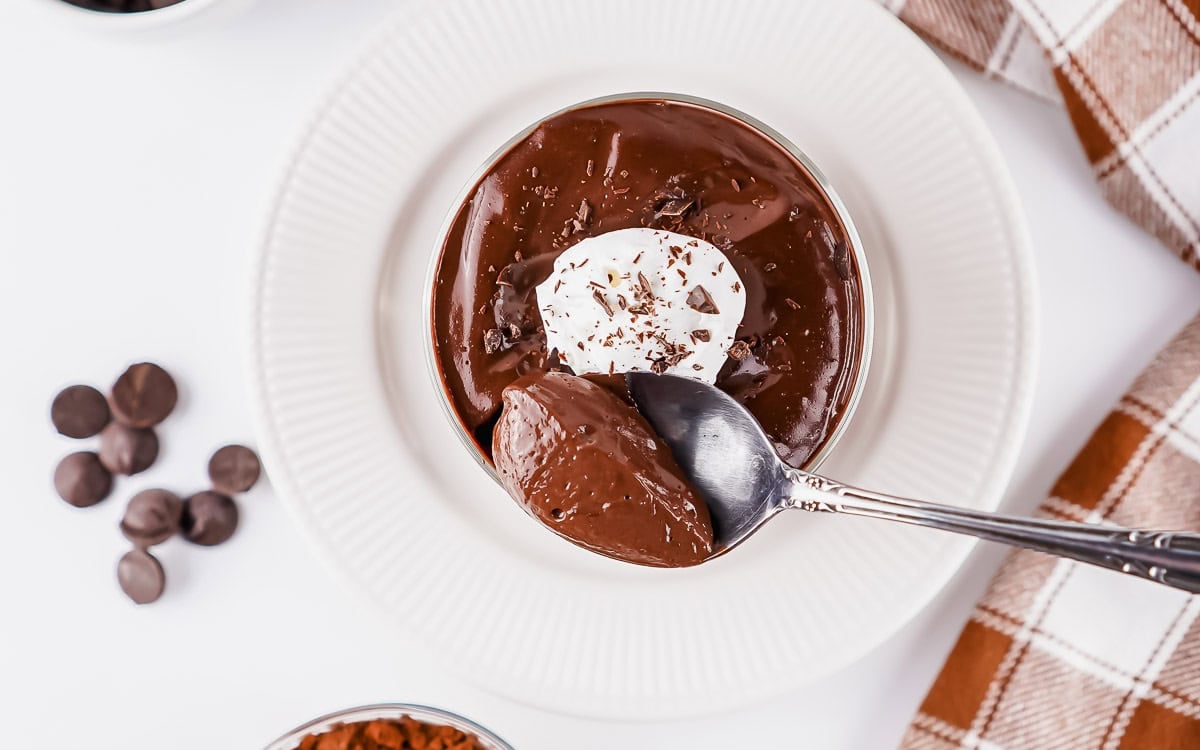
Hard-boiled egg chocolate pudding: My winner. It’s the richest and the closest to the chocolate pudding I remember eating as a kid. The yolks give it a texture and richness the other two don’t have.
Chocolate Egg Pudding
Ingredients
- 6 hard-boiled eggs, peeled
- 120 grams milk, any kind, I like unsweetened coconut milk from the carton
- 70 grams honey
- 35 grams cacao powder
- 50 grams chocolate protein powder (2 scoops), I use Equip chocolate beef-isolate protein
- 1 tablespoon vanilla extract
Instructions
- Starting with the eggs, add all the ingredients to the blender.
- Blend for 15 seconds, scrape down the sides and bottom, and blend for another 15 seconds before scraping the blender down one more time. Blend for 40 more seconds.
- You can technically eat the pudding right away, but it tastes the best if you let it rest in the fridge until chilled, or overnight.
- Serve with your choice of whipped cream, shaved dark chocolate or berries if desired.
Video
Nutrition
Nutrition information is automatically calculated, so should only be used as an approximation.

Gina Matsoukas is an AP syndicated writer. She is the founder, photographer and recipe developer of Running to the Kitchen — a food website focused on providing healthy, wholesome recipes using fresh and seasonal ingredients. Her work has been featured in numerous media outlets both digital and print, including MSN, Huffington post, Buzzfeed, Women’s Health and Food Network.