


An easy recipe and guidelines for making homemade raw dog food that you can tweak as necessary to what best fits your dog.
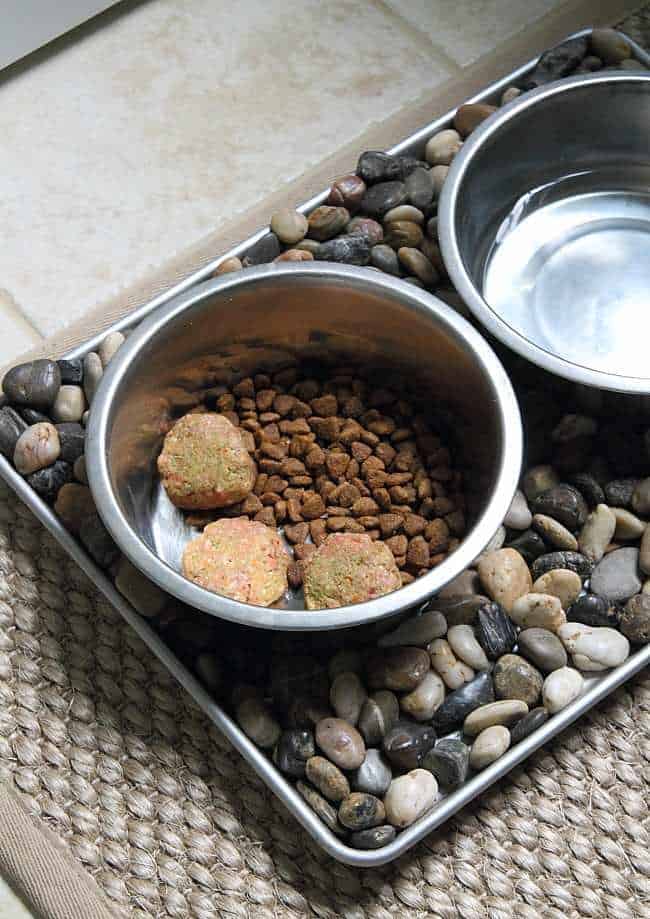
Save this recipe!
For as health conscious as I am about what kind of foods I put in my own body, I have to admit for the better part of six of her seven years, I pretty much fed Ginger the equivalent of fast food to humans.
Sure, it was the good fast food but after awhile, even Chick-Fil-A isn’t “healthy” any more if you know what I mean.
Of course, occasionally, I made her homemade pumpkin dog treats but more often than not her food was anything but homemade.
Then one day earlier this year it was like a switch got flipped.
The guy who sold us our water softener system was sitting in our kitchen and as we looked over models trying to figure out which one made the most sense, the sales guy and I started talking about dog food.
He explained how he starting feeding a raw food diet for his adult dogs and how their energy levels were through the roof (not that Ginger needs help in that department), their coats were shinier than ever and their teeth in great shape.
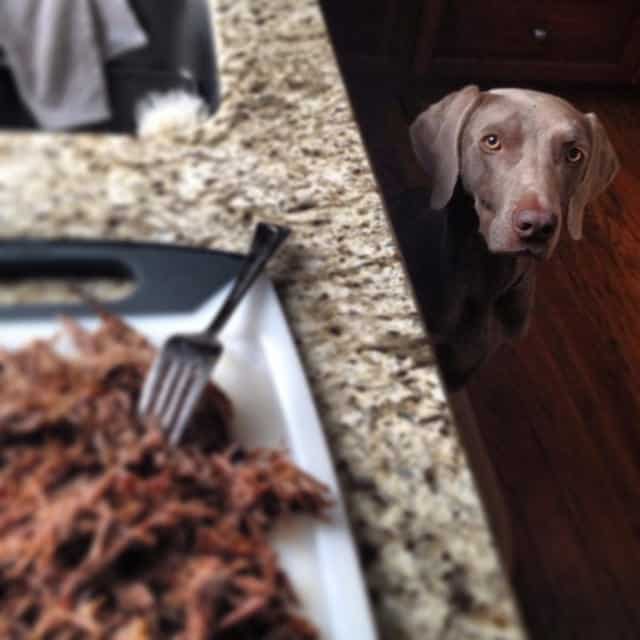
It made sense.
I completely buy into the same theories from a human perspective, why wouldn’t it be the same for dogs?
So, next trip to Petco, I was forking over some serious money (like 3 times the price of dry food) for frozen raw dog food patties and giving this whole thing a shot.
The first meal I gave her the homemade raw dog food, she came running back into the kitchen after licking the bowl clean as if she was begging for more.
As I was preparing the second meal and she saw me take the food out of the refrigerator, she just about lost it running back and forth between the kitchen and the laundry room (where we feed her), her legs moving faster than her body could on the wood floor running into chairs and walls like a lunatic.
It appeared she liked it.
At $25 for 3 pounds of food however, I knew immediately that wasn’t going to happen and I needed to start looking into some homemade dog food recipes.
Sorry, pup, I don’t eat out every day either.

So, I got to researching.
And it turns out, making your own raw dog food isn’t really that hard for dog owners.
It’s a bit disgusting as you see raw meat and organs swirl around in your food processor, but it’s not difficult by any means.
And yes, dogs can eat raw meat.
I think that’s the number one question I get when talk about this with people so I figured we’d get that out of the way first. Raw meals are not only a healthy choice for you dog, it’s what they were born to eat. Commercial dog food is something big industry made up in the middle of the last century along with the rise of human processed foods. Like in humans, this transition has lead to a slew of health issues for our pets and an obesity epidemic that matches that of their owners.
And if you’re wondering what else dogs can eat, check out my other site – What Can My Dog Eat?
Raw Dog Food Recipe Proportions (BARF diet)
The BARF diet stands for “biologically appropriate raw food diet”. Under this raw dog food diet, a dog’s diet should be high in protein, moderate in fat with a minimal amount of carbohydrates. When broken down into percentages, it will look something like this:
- 70% muscle meat with fat
- 10% raw edible bones (chicken feet can be great for this)
- 10% organs
- 5% fresh vegetables/fruits
- 5% dairy/supplements/nuts/seeds
Using those simple proportions, you can pretty much make up your own recipe from whatever you have on hand or find on sale at the store or.
Meat with fat: I will usually buy ground meat of some sort for this just because it’s easier than breaking down other cuts. Beef, chicken, pork, bison, gamey meats, etc. Muscle meat provides essential amino acids and vitamins for the dog. If your dog has any food allergies, it will likely be to a specific protein. Choose a protein type that works best for your dog based on their health conditions.
Bones: Raw edible bones are an important part of the BARF diet for essential nutrients like calcium and phosphorous.
Organs: The good news is organs are cheap. The bad news is organs are kind of gross. Nothing like some slimy chicken livers getting pulsed up in your food processor. Liver and kidneys are the two easiest to find in the grocery store. Liver is also the most nutrient dense organ there is providing fat-soluble vitamin A and other water-soluble vitamins.
Vegetables/fruits: Ginger happens to hate raw vegetables and fruit. She’s literally spit them out before or eaten around them if we’ve tried to feed her some in her bowl. So I choose sweet things here like apples, carrots and sweet potatoes that get processed real fine so she can’t tell. Avoid onions, grapes and raisins as they can cause kidney failure in dogs. It’s also a myth that vegetables provide no nutritional value to dogs. While they’re not necessary to support healthy dogs, they do provide added minerals and nutrients for better health overall.
Dairy/supplements: Whole eggs (shell and all) are a great source of calcium. I’ll also use some plain yogurt to help bind the patties. Supplement wise, ground flaxseed meal, olive oil and fish oil are great additions too. You can also choose to feed your dogs sardines for the healthy omega-3 benefits similar to olive oil.
How much raw food do I feed my dog?
This question has come up a lot in the comments so I figured I’d address it in the post.
The general guideline for adult dogs is to feed a balanced diet between 2-3% of their bodyweight. So, for a 50-pound dog that would be between 1 to 1.5 pounds of food per day.
Influencing factors on determining feed amount
- Activity Level
- Adjustments for weight gain or weight loss (the graphic in this post is helpful in that regard although discussing with your vet is probably best)
- Life Stage
Activity level
Be honest with this assessment. Is your individual dog mostly a lounger that hangs out inside all day with a few backyard jaunts or is it a truly active dog like a sporting breed that hunts, a working dog like a police K9 or your pal that goes hiking with you multiple times a week for hours on end?
Human tendency is to over emphasize/assess activity levels.
Adjustments for weight gain or weight loss
Simply put, does your dog need to lose weight? Gain weight? Maintain? The answer to those questions will help you figure out which end of that 2-3% spectrum you want to start with when starting a raw food diet.
Life stage
Notice I said adult dogs when referring to the 2-3% of body weight for food amounts. Puppies are an entirely different story as they’re quickly growing and need more calories to support that growth.
There are two approaches for feeding puppies:
- 2-3% of their expected adult weight (obviously easier to figure out with a pure bred dog)
- 5-6% of their current puppy weight – adjusting with the dog as it grows
Senior dogs shouldn’t have drastically different needs than a middle-aged dog unless of course, activity level impacts them.
Pregnant dogs are something you should speak to your vet or a veterinary nutritionist about in determining the best amount of raw food to support a healthy pregnancy.
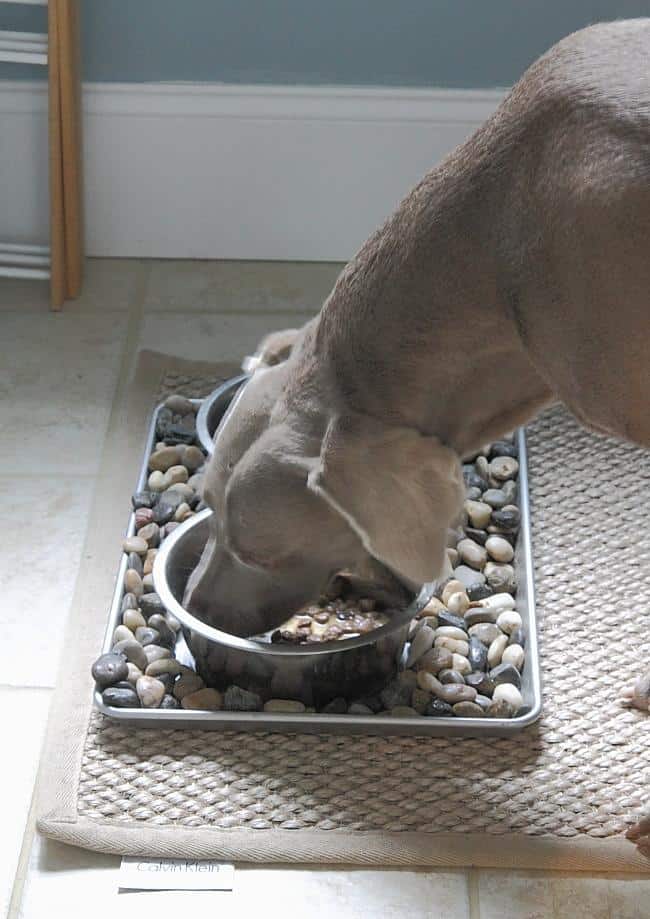
Making our dog homemade raw dog food has just become a part of the weekly routine now.
We do half of the homemade raw dog food recipe and half dry food which we upgraded as well to a grain-free feed with ingredients that make me comfortable when I read the back of the bag.
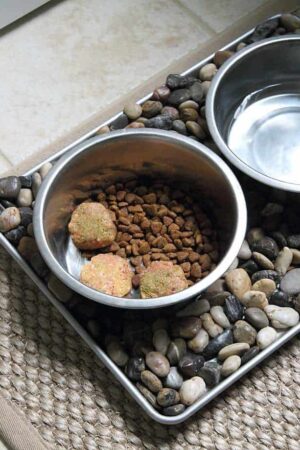
Because digestion rates of dry food (kibble) and raw dog food differ, we now feed one meal completely raw and one meal completely dry rather than mixing the two as seen in these pictures.
It’s a 30 minute weekly commitment that has made both her and I incredibly happy. Easy raw food dog recipes like this are a small price to pay to have complete control over the nutrition our dogs deserve.
Nothing can beat the look she gives me when she sees me reach into the fridge with her bowl in my other hand. And when I see her little stub waging ferociously from the lunatic excitement she has for every meal now, it’s a heartwarming feeling.
Knowing time is precious when you have a seven year old dog, something as simple as good food which I have the ability to control just isn’t even up for debate any more.
The Easiest Homemade Raw Dog Food Recipe
Ingredients
- 2 1/2 pounds ground beef
- 4 ounces chicken livers
- 1 carrot, chopped
- 1 small apple, cored
- 1/2 cup baby spinach
- 2 whole eggs, including shell
- 1/2 cup plain yogurt
- 1 tablespoon ground flaxseed
- 1 tablespoon olive oil
Save this recipe!
Instructions
- Add the carrot, apple and spinach to a food processor and process until finely chopped.
- Add the remaining ingredients except the ground beef and process again until well combined.
- Transfer the mixture into a large bowl. Add the ground beef and mix together with a spatula or your hands.
- Form into patties about the size of your palm and place on a parchment lined baking sheet.
- Freeze patties until solid, transfer to a storage container or plastic bag and keep frozen.
- Remove one day’s worth of patties from the freezer the night before and place in the refrigerator to thaw before serving.
- Browse without ads
- Meal plans made for you
- Member-only recipes
- Print and get cooking
Notes
Nutrition
Nutrition information is automatically calculated, so should only be used as an approximation.

Gina Matsoukas is an AP syndicated writer. She is the founder, photographer and recipe developer of Running to the Kitchen — a food website focused on providing healthy, wholesome recipes using fresh and seasonal ingredients. Her work has been featured in numerous media outlets both digital and print, including MSN, Huffington post, Buzzfeed, Women’s Health and Food Network.








I had a hard time finding chicken livers so I went for chicken hearts and gizzards and some beef liver. I also substituted the yogurt for cottage cheese. My dog loves the taste BUT hates the consistency. He likes chunky meat pieces. Perhaps I can add some chunky stuff to it. Thanks for the recipe!
I read this post a couple years ago when my dog started getting this bad cough. Her fur was always dry and a bit stiff and she had a perpetual mite problem I was treating with RX meds. I was feeding her a high quality dry kibble but her issues never completely went away. A few people suggested a raw diet so I set to work “investigating”. After deciding, I took your lead and purchased some raw frozen dog food – my dog went crazy!! She absolutely loved it. Feeding time became so much fun. Lol.
Long story – a bit shorter – I used this recipe to start my journey. I’ve added a few items and would like to share them – salmon – I purchase the frozen fillets from Costco and thaw just a bit so I can cut into pieces with a scissors. Then back into the freezer. I add a one inch square piece to each meal. Frozen Blueberries and cooked cauliflower go into a food processor then I add a couple tablespoons of chia seeds to firm it up. Cod liver oil, olive oil, turmeric, cumin, ground flax seed, powdered greens, black pepper and a bit of salt. I freeze this mixture in ice cube trays.
The difference in my Daisy (mini dachshund) has been amazing. The salmon pushed her coat to a lovely soft feel. Her mite problem is gone. Her ears smell nice. She no longer coughs. Her poo is small and quickly breaks down. She’s almost 14 now and even though I know she has slowed down she still plays like a pup.
Thank you for embarking (lol) on this journey and sharing your trials and insights. I thank you and my crazy little friend thanks you!!
To all of you sitting on the fence – it is a bit more expensive than the dry kibble – I have a small dog so I don’t notice the expense – but I know my girl is eating like I eat – healthy. I know what goes into her food – every carrot, blueberry, egg, etc. she eats nothing I wouldn’t eat. Even the egg shells!!
Thanks again.
Hi Leslie- Thanks so much for your thoughtful comment. So happy to hear about your journey and that Daisy is doing so well!
Hi! Just made these patties for the first time and founds the mixture kind of runny. What can I add to made it thicker, so it’s easier to handle?
Oh! I would also add that people should NEVER let raw food just sit in the bowl if the dog doesn’t eat it and make sure you wash your bowls between feeding if you don’t do that already :)
@Rachael Stanislaw, I NEVER have leftovers 🤣
They lick their bowls so clean that I never have dry bits stuck to their bowls. I just wash them to keep them sanitary 🤣🤣
Really sorry but there are so so many things wrong here, people are telling others so much bad info when it comes to raw it’s get ridiculous and worst still they are getting away with it.
People please please research ALL first and be prepared to take time in doing so!
@rr, This is a somewhat unhelpful comment, IMHO. If there are problems with the recipe and recommendations supplied here, point them out. Maybe supply some alternatives yourself, or links to information supporting your argument. To just criticize without any backup for your assertions is just so so “wrong”.
@rr, if you are so concerned with pointing out what is wrong why don’t you offer a solution? That would make this unhelpful comment helpful.
Hi, so our dog is not quite 4 yet and we found out about a year ago she was diabetic, so we put her on a raw meat diet and is doing pretty good, but still has to have some insulin. But mostly my question is she has had super soft stools. Any suggestions on what we should add to her raw meat diet to eliminate that. She doesn’t seem sick at all, just that her stools are loose.
@Debra, give your dog some pumpkin it is very good for digestion and her intestin!
@Sue, Give her more calcium – raw meaty bones, sardines, eggshells.
@Sue, i would shy away from pumpkin, it is more of a laxative. I work at a vet clinic and see this often where people come in due to their pets having runny or soft stool and the number one thing they say is “well, I’ve been giving them pumpkin and it isn’t helping!” That is because pumpkin is straight up fiber. Consult a registered dietitian or vet before you start adding different things into your dogs diet. What we would recommend is to add rice into the diet as it is calming and/or get a fecal panel done.
If using ground chicken or turkey in place of ground beef, do you recommend 80/20 for the fat content?
I assume the vitamin content isn’t an issue here, a lot of recipes call for a vitamin supplement as well.
I like this recipe because it’s simple and will be cost effective for 2 dogs.
Yes, I usually go with 80/20 or 85/15.
My dog recently hit the 5 year mark and out of nowhere had some crazy stomach reaction (and I don’t mean throwing up) to the same food I have been feeding for over 3 years. I’ve had him tested for just about everything and NOTHING is wrong with him. Any thoughts on using this kind of diet with a dog who has a “sensitive digestion system”?
@Dani, we switched our 2 year old pup to a raw BARF diet (Steve’s Real Food, available at some stores) & he is not only obsessed with it, but it allowed us to get him off prescription-required dry dog food that he had been on due to frequent stomach upsets (including vomiting, diarrhea, bloody stool once). He has a sensitive stomach so we have to be sure to let the food thaw out completely before serving it to him (if its frozen, he’ll have an episode of retching about 4 hours after feeding) but otherwise, I’ve noticed a drastic difference in him; we’ll never go back.
@Miranda, I’ve been told to never feed dogs frozen or cold food—always bring food to room temperature.
We are waiting for our puppy to be weaned from her mother, at present she is only two weeks old, how olddies she have to be before can we begin the raw food diet?
Hi Emma – you can start them relatively young but you may want to discuss with your vet first to determine the best age. I’d probably continue whatever dry food the breeder starts the puppy on once its weened (or switch to a dry food of your choosing) for a bit before switching over to raw. And when I did switch, I’d likely start slowly. It’s important puppies have the correct ratios of nutrients needed to help them grow and they’ll need much more food than an adult dog. Having fed our last puppy raw food during her first year, I can tell you the food requirements are A LOT. It’s like a full time job making enough raw food for a puppy!
@Gina Matsoukas, our puppy was on raw when she was weened of the teet by our breeder. 6 or 7 weeks old. No issues.
How many pounds does this recipe make?