


If you love the pillowy texture and olive oil flavor of regular focaccia, you’ll love these portion-sized focaccia muffins all the same. Studded with olives and rosemary, they make the perfect accompaniment to soups, salads and pasta dishes.

Like most of the world in 2020, I got majorly into sourdough baking. After countless boules, I finally decided to try my hand at focaccia. I had initially thought it’d be much harder (a completely unfounded assumption) than regular sourdough bread but I was totally mistaken and the result was something I loved a million times more.
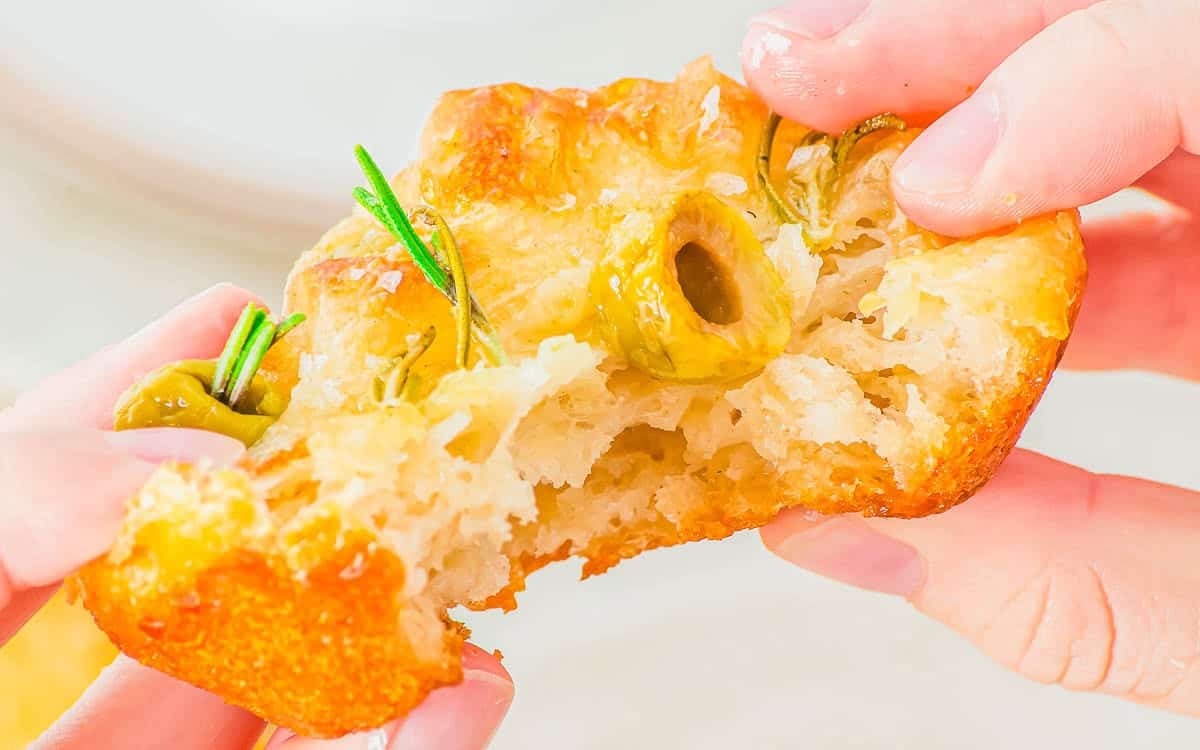
With it’s pillowy-soft crumb, bubbly holes and golden brown, crunchy edges, it quickly became my favorite bread to eat. Plus, there’s something incredibly satisfying about a bread that requires you to punch your fingers into it to create dimples.
The idea for focaccia muffins was born out of my love for the bread and desire to make something more portion-sized. It helps me stop at a reasonable amount instead of eating half the bread in one sitting. What’s also great about the muffin or roll approach to focaccia is being able to vary the toppings per muffin. For a bread that often makes use of such a polarizing topping such as olives, this is a great upside.

Why You Should Make Focaccia Muffins
- No kneading — focaccia is one of the simplest breads to make because there’s no formal kneading required.
- Similar to sourdough without the work — the highlight of sourdough bread is the open crumb structure. Focaccia gives you that without the multiple steps.
- Perfectly portioned — each muffin is the perfect amount for one person.
- Topping options — go whichever route you like with focaccia from keeping it plain with just olive oil and salt, to herb-studded, to veggie packed.
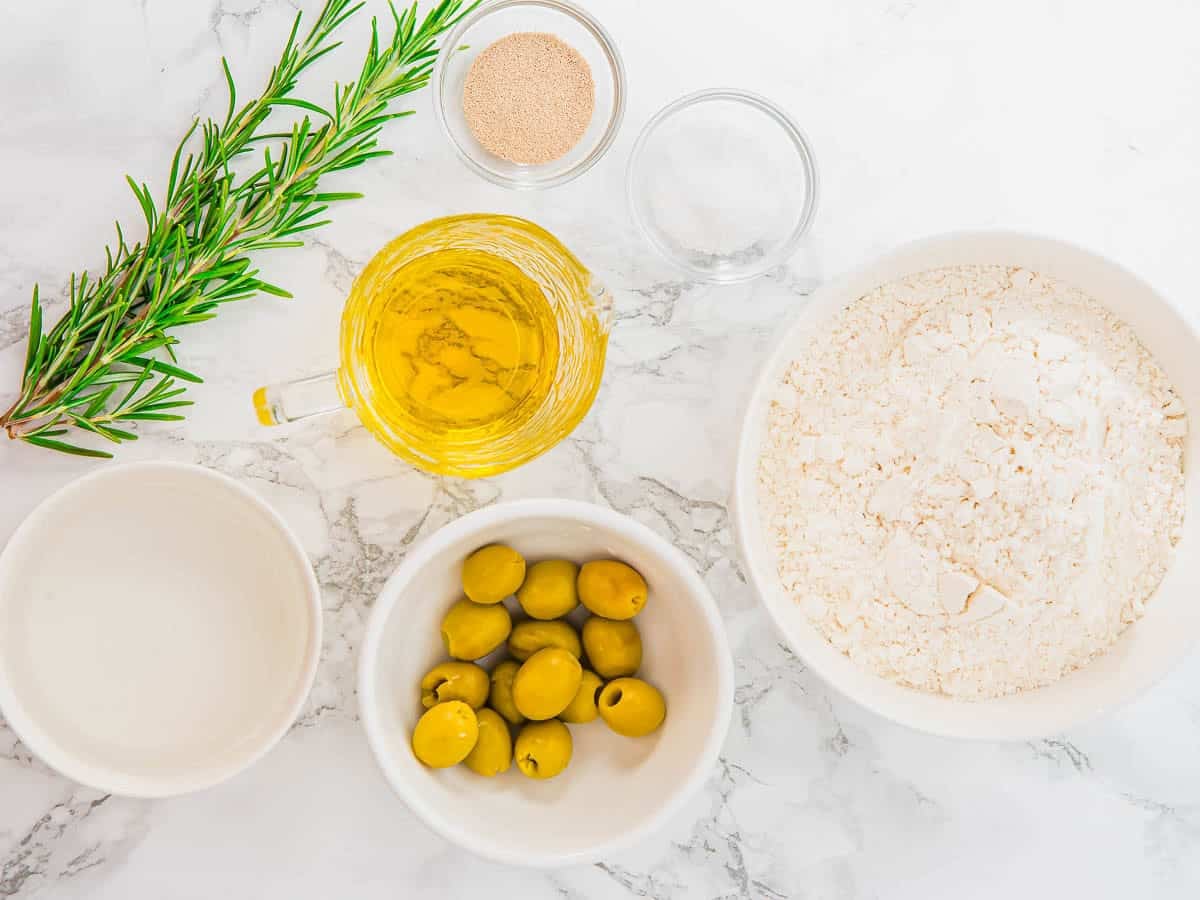
Ingredients You’ll Need
The list is short and sweet. It’s amazing how something so flavorful can come from these unassuming ingredients.
- Flour — All purpose flour, 00 flour or bread flour can all be used to make focaccia but you’ll want to make sure that whichever you choose has at least 12g of protein per 100g of flour. Protein amount affects the development of gluten in the bread and too little will result in a subpar crumb — arguably the most prized feature of focaccia.
- Yeast — Since this isn’t sourdough focaccia, we are relying on dried instant yeast to create the rise.
- Extra virgin olive oil — Olive oil keeps focaccia tender and flexible by softening the gluten, helps the dough stretch and hold air, promotes crisp browning on the top and bottom and adds moisture and flavor throughout the bread. Choose a good quality oil for making these muffins.
- Sea salt
- Toppings — Focaccia toppings are up to you and your preferences. I chose to use fresh rosemary and olives for this batch of muffins.
Step by Step Instructions
The full set of directions with detailed quantities and instruction can be found in the recipe card at the bottom of this post. This is a surface level walk-through to help you visualize the process of making focaccia muffins.
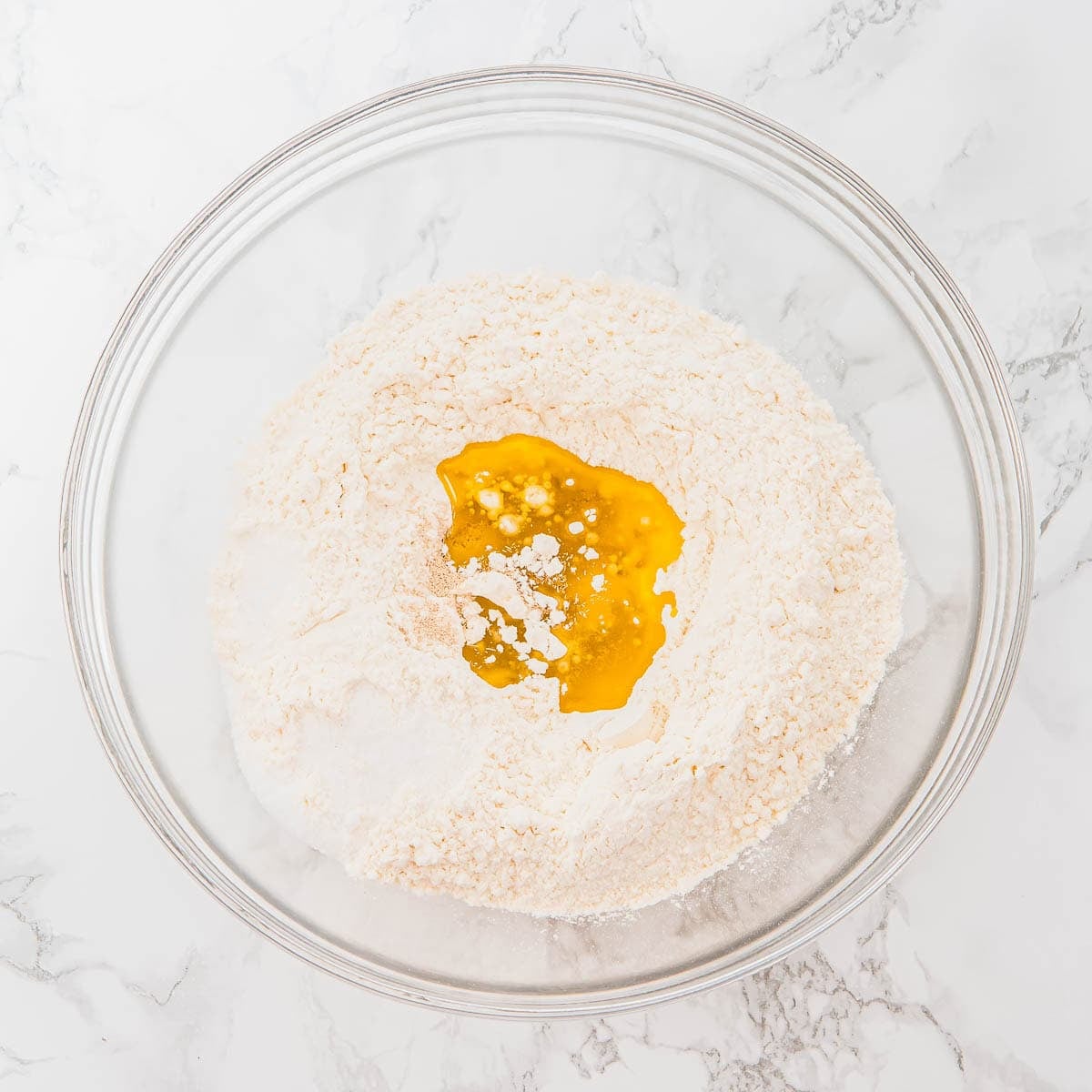
- Combine the flour, salt, yeast and 3 tablespoons of the olive in a bowl.
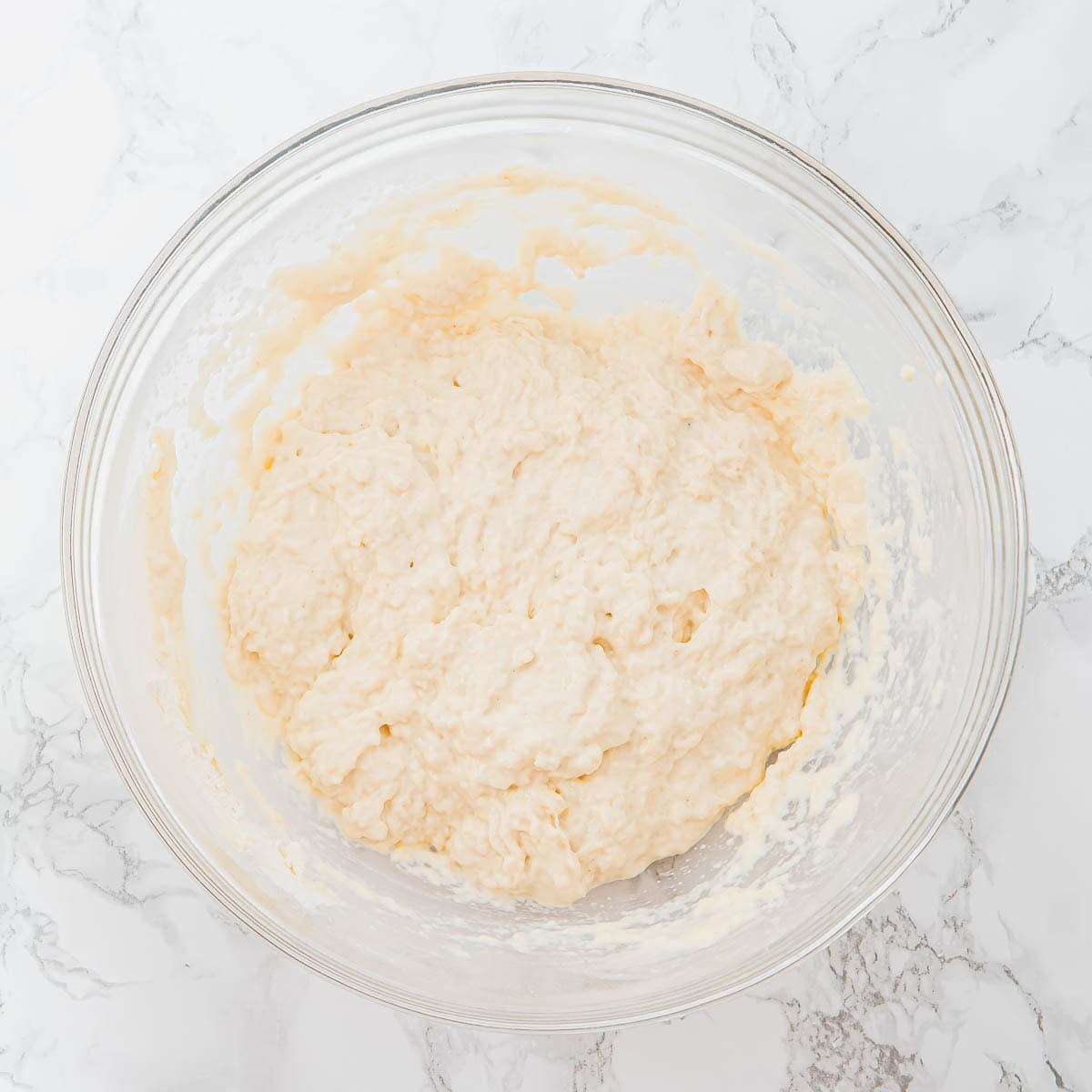
- Add the water and mix together until it forms a sticky dough.
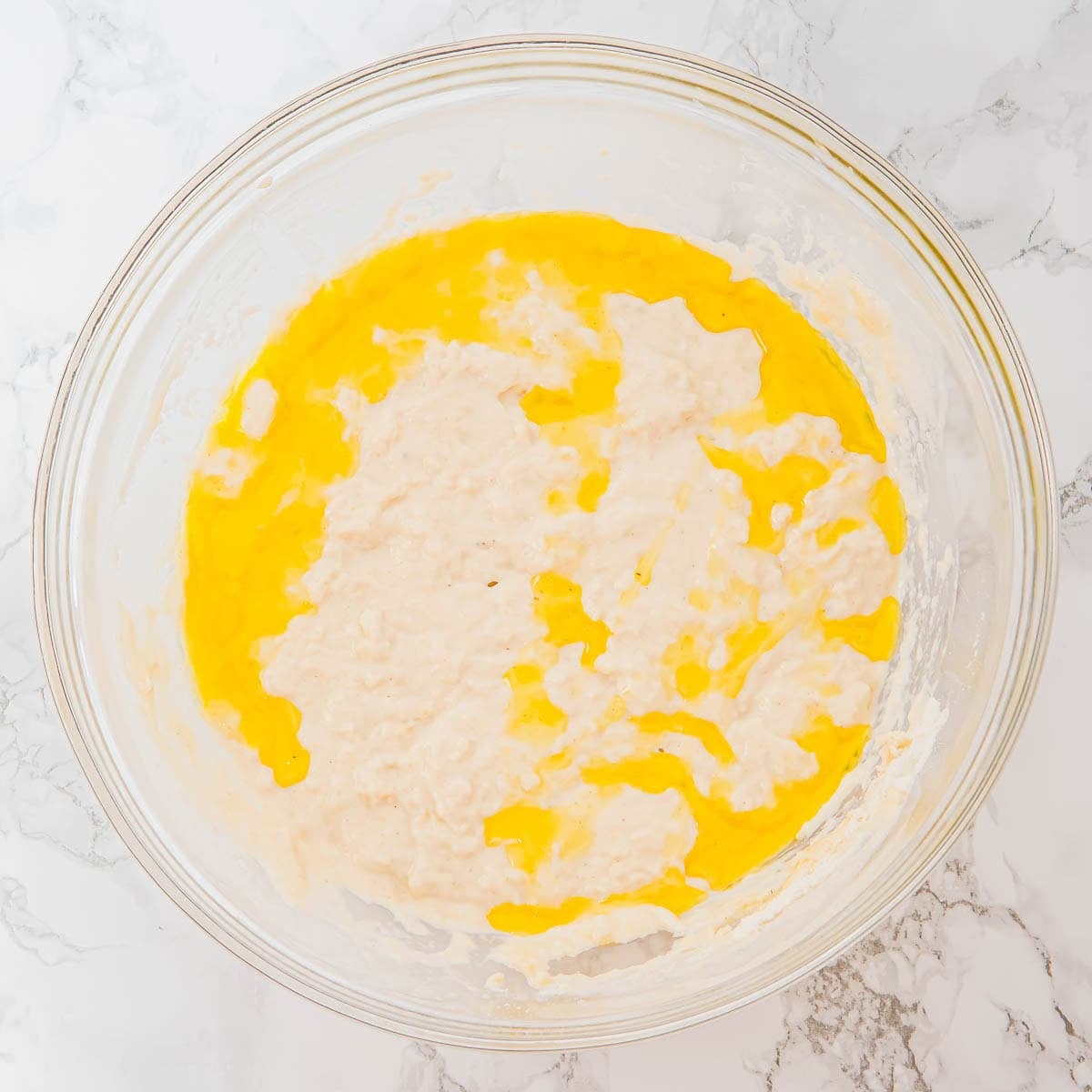
- After resting for 30 minutes in a warm spot and doubling in size, add the remaining olive oil.
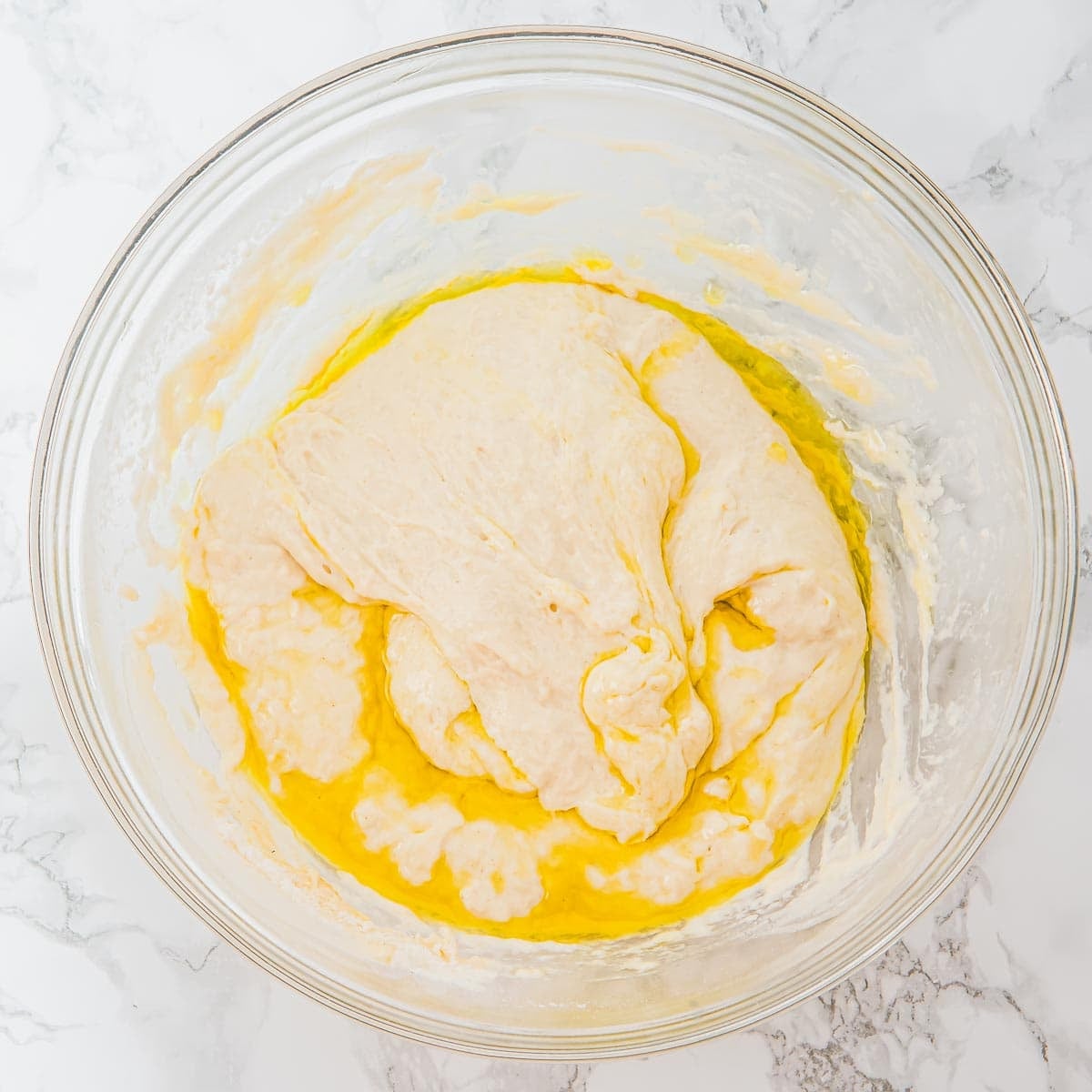
- With oiled hands, fold the dough from the outside of the bowl to the center.
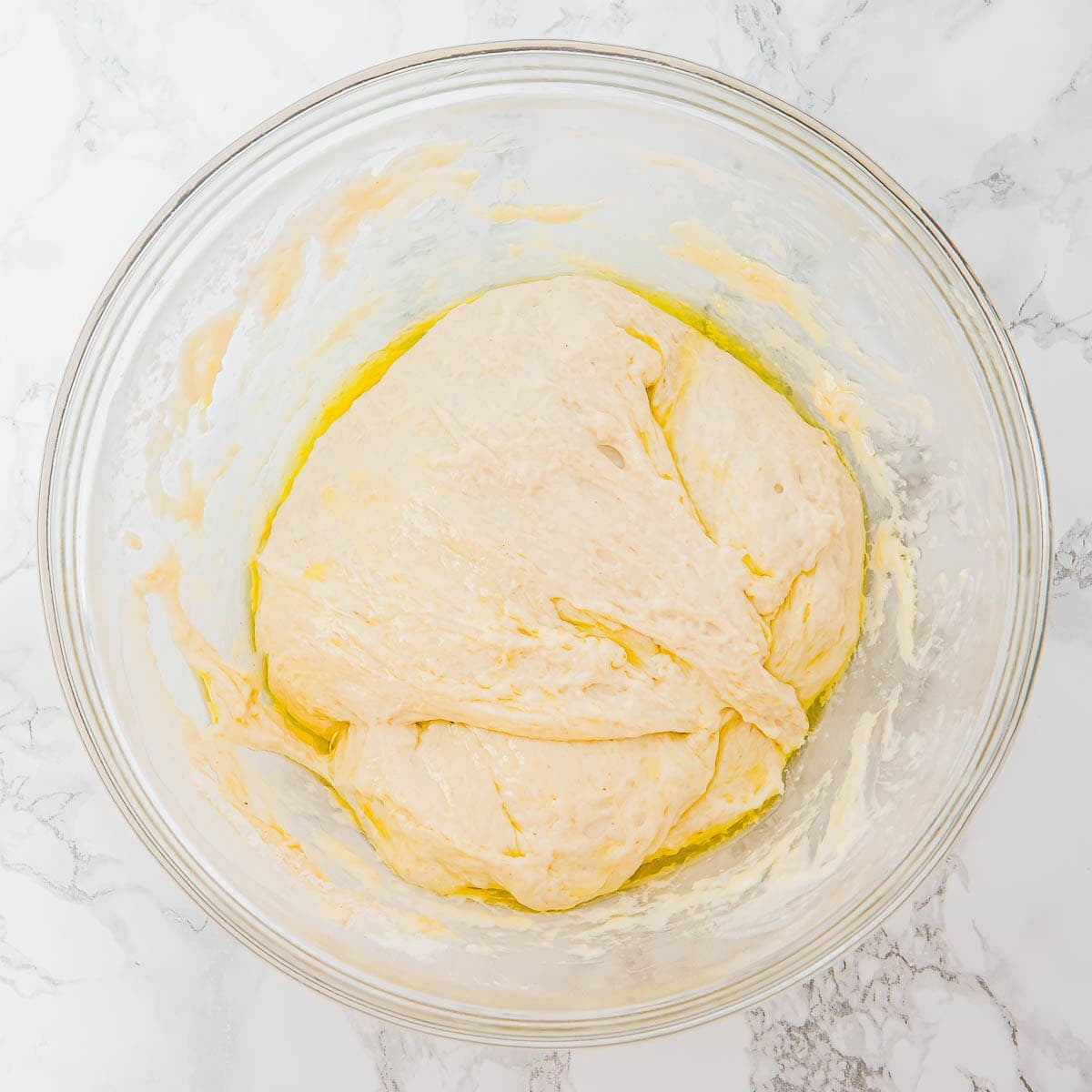
- Repeat the folds several times until the structure of the dough is sufficiently strengthened.
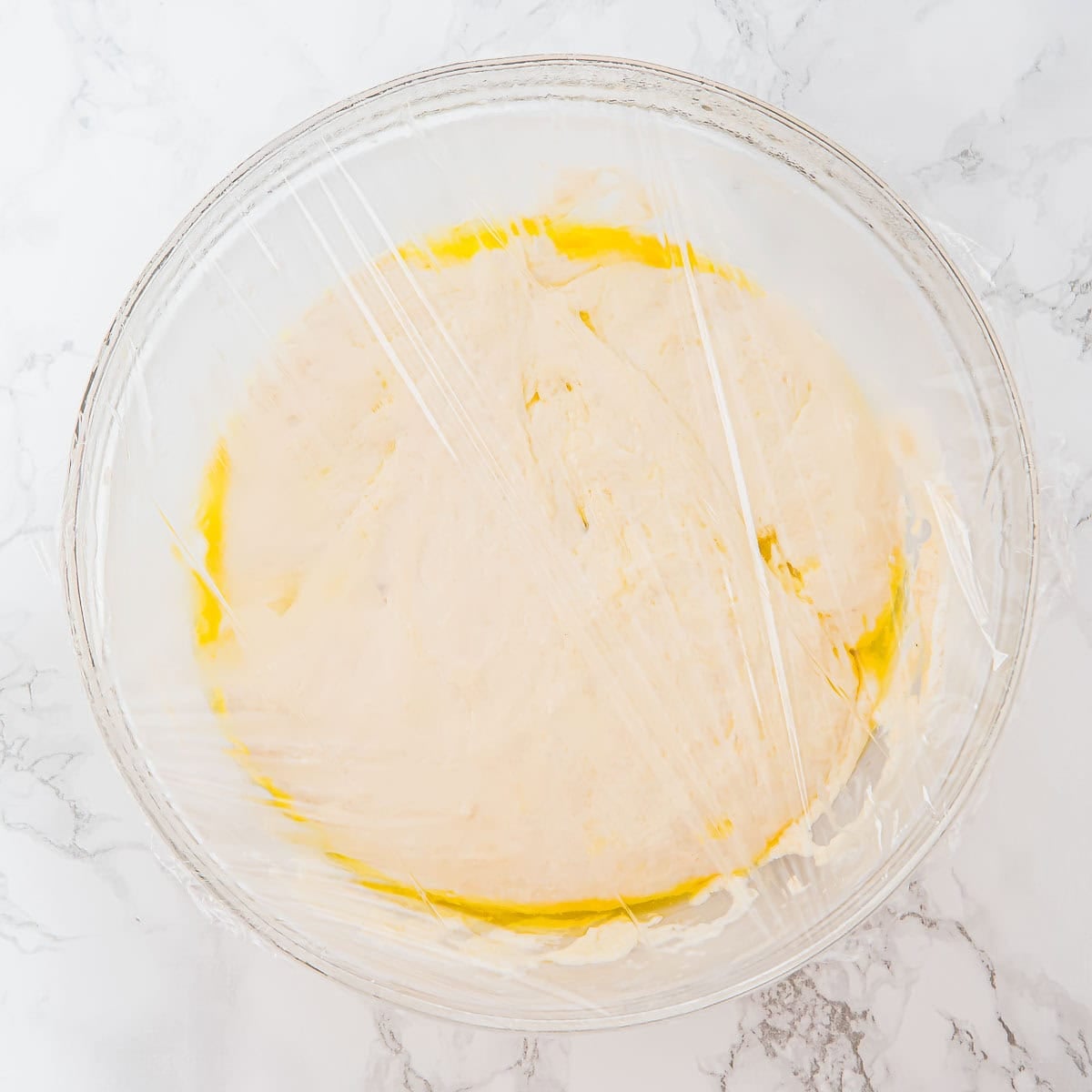
- Cover with plastic wrap and refrigerate for 8-12 hours. Overnight is best.
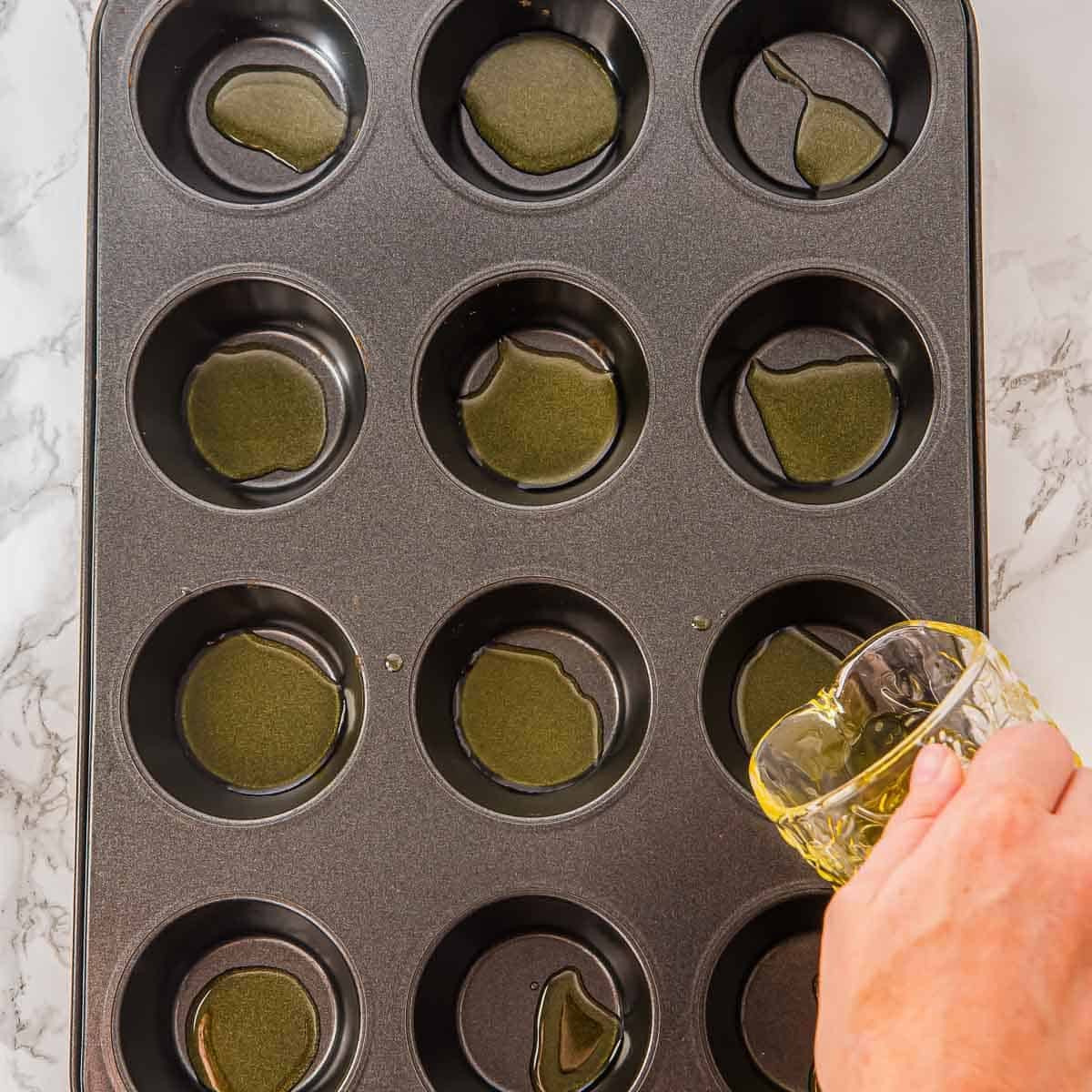
- Grease a muffin tin with olive oil.
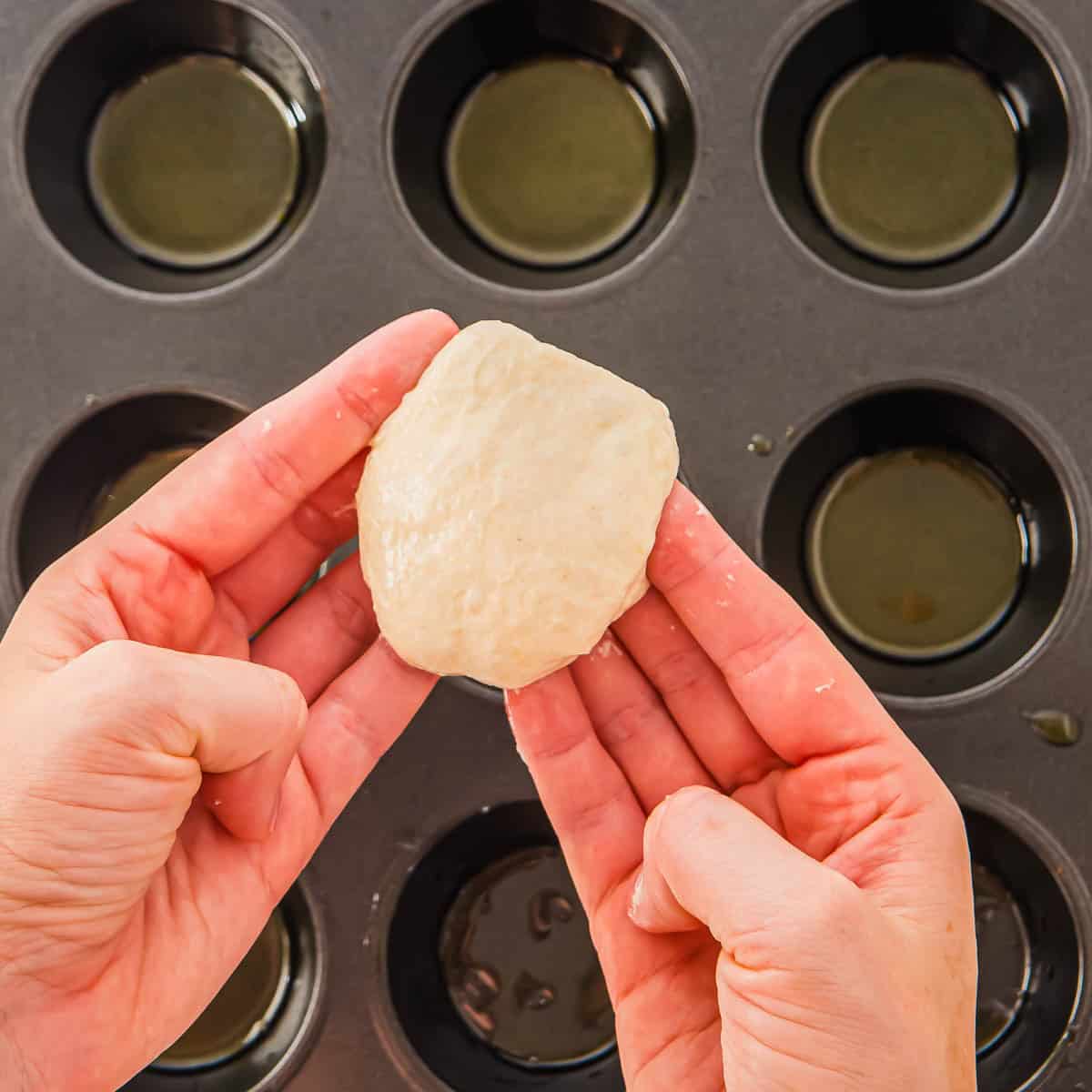
- Portion dough into 12 pieces and roll into a ball.
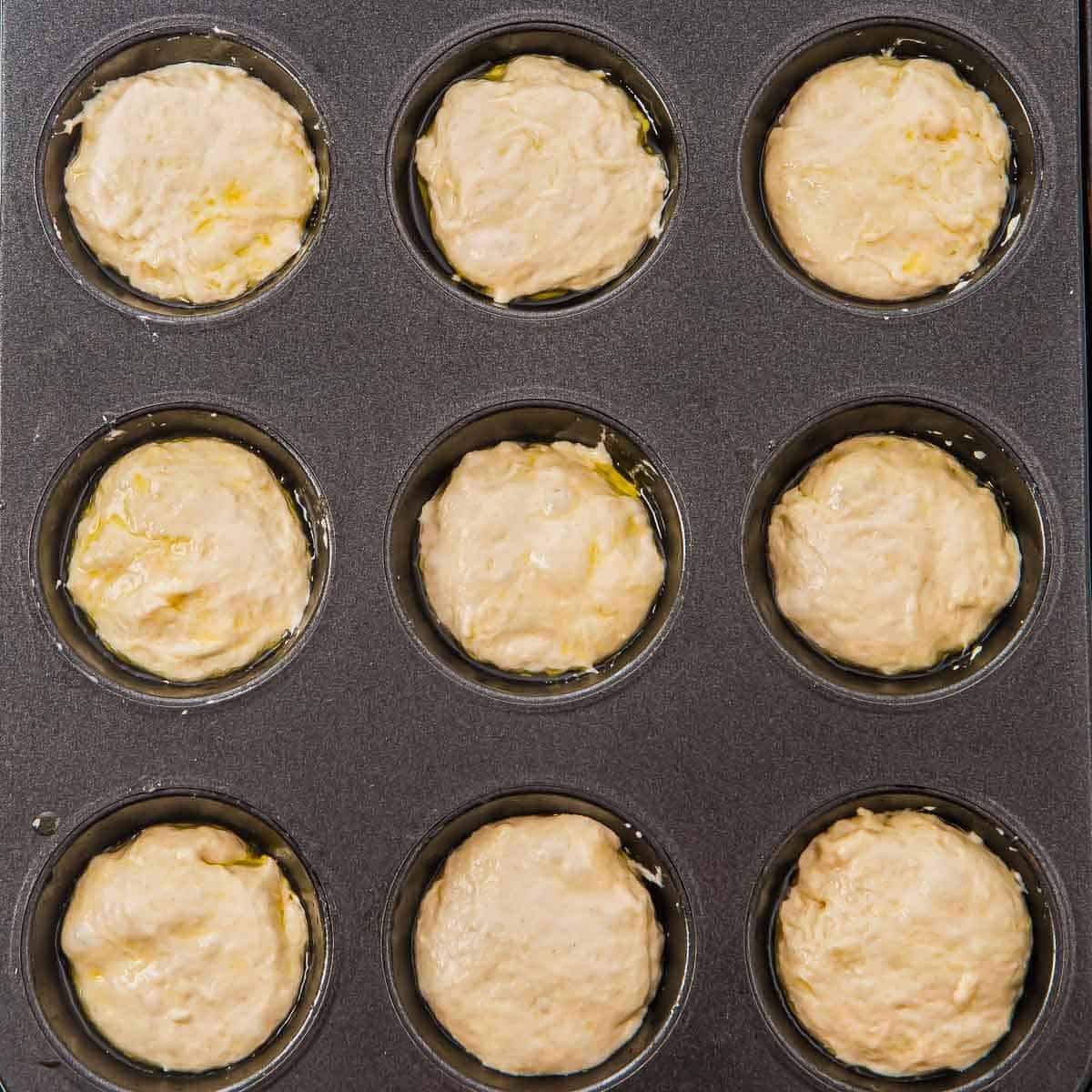
- Place each piece of dough in the muffin tins and let rise once more until doubled in size.

- Drizzle the top of each muffin with remaining olive oil.
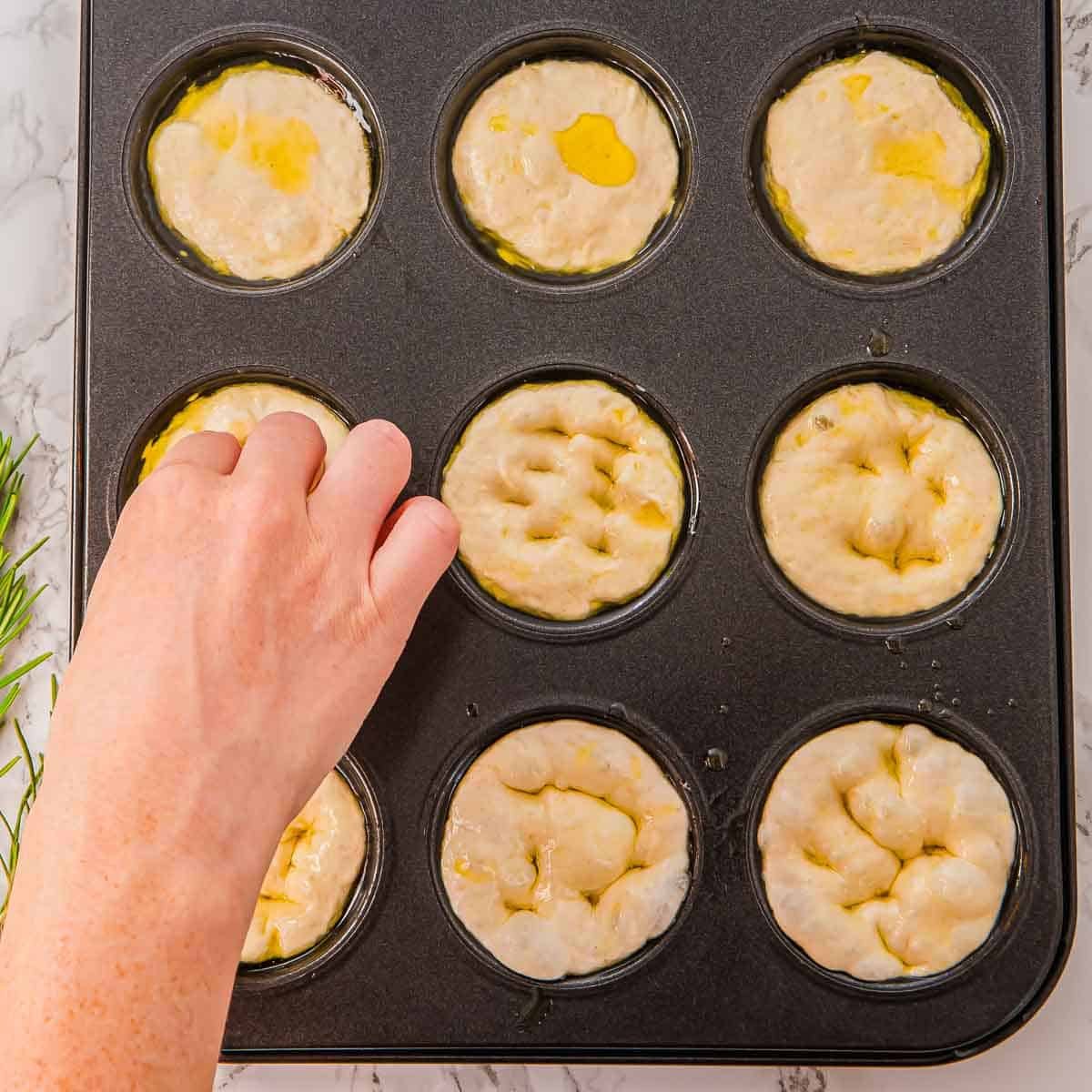
- Use your fingers to create dimples in the tops of each muffins.
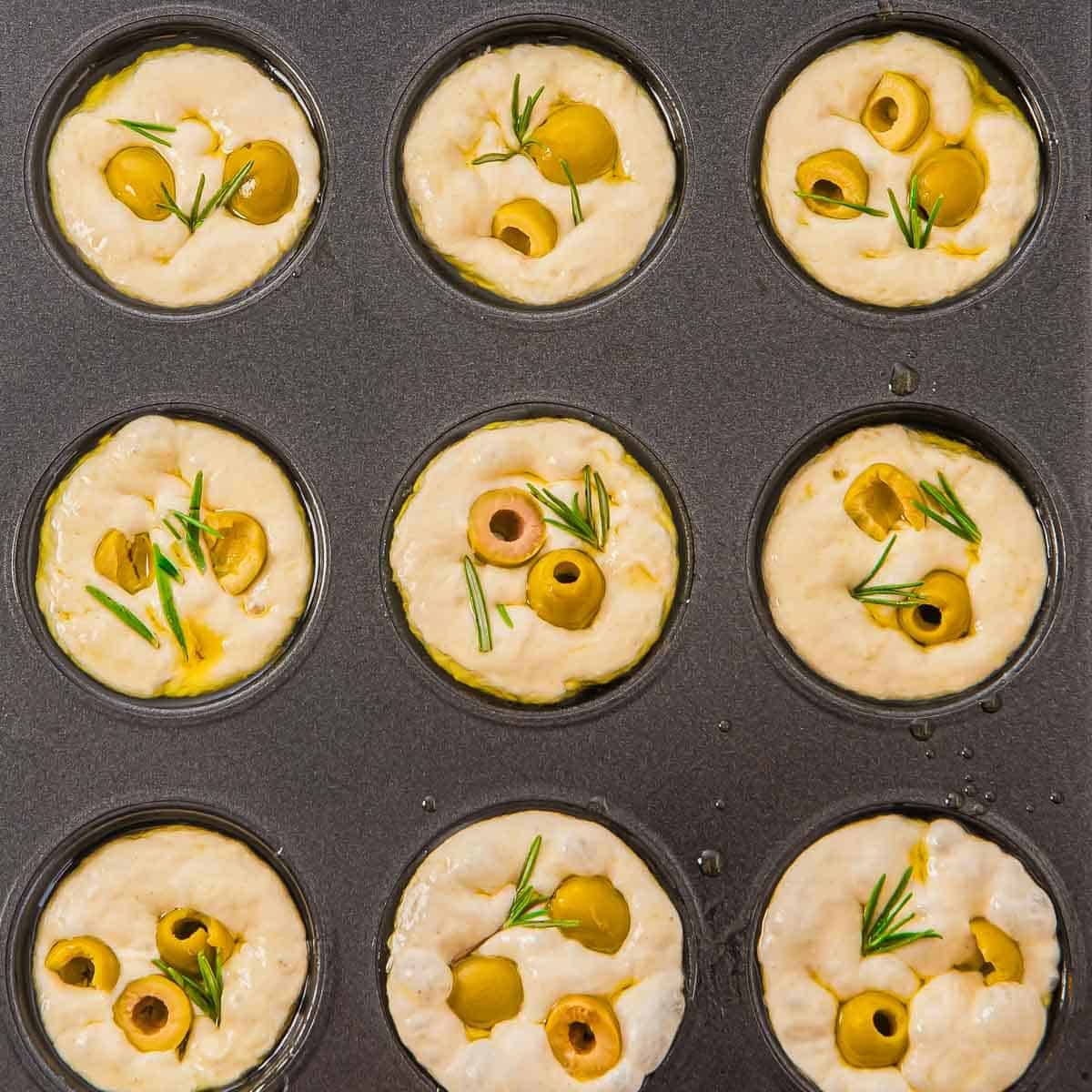
- Garnish with rosemary and olives (or other desired toppings) and bake until golden brown on top.
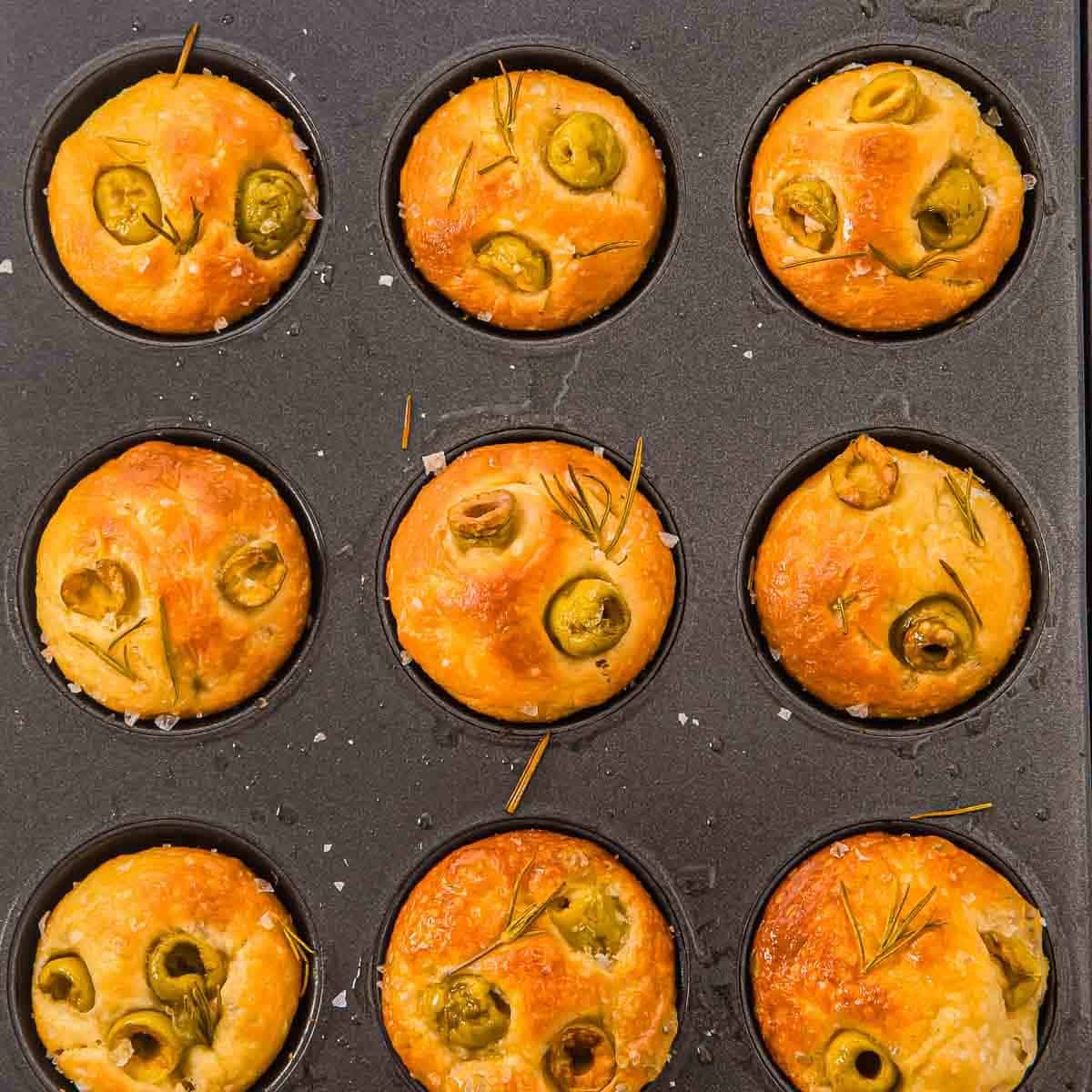
The muffins are best served warm after cooling just a few minutes from the oven.
My Pro Tips
Important Notes
- The temperature of the water is important when using yeast. You want it to be warm enough to quickly activate the yeast but not too hot that it kills it. Aim for a temperature of 95-105°F.
- This dough is supposed to be sticky. Don’t be deterred by the stickiness of the dough at first or add more flour. The hydration of this dough is important to the quintessential open crumb structure of focaccia.
- Do the folds gently. Much like sourdough, the folding part of this dough process is crucial in the outcome of the focaccia. You want to retain the bubbles and air in the dough as much as possible while still making it structurally sound.

How to Shortcut the Process
If you want to cut down the time needed in preparing these focaccia muffins, you can omit the 8-12 hour refrigeration process. See my notes at the bottom of the recipe card that explain how to do this.
The flavor will be more neutral and less developed without the long, cold fermentation, and the texture a little less airy, but the muffins will still come out very good and it’s a worthy tradeoff if you’re limited in time.

Topping Options
Focaccia can be as plain or as loaded up as you like. There’s nothing wrong with just quality olive oil and sea salt for a basic focaccia muffin, but if you want to experiment with toppings, here are my favorites:
- Pesto – any pesto will work. Play around and try everything from arugula pesto to something more unique like trapanese pesto.
- Herbs – rosemary is often used on focaccia, but other fresh herbs like thyme, sage, oregano and marjoram are good options too.
- Olives – make sure they’re pitted, but other than that choose your favorites like kalamata or castelvetrano.
- Sun-dried tomatoes – these bring a sweeter bite to the focaccia.
- Bocconcini – also known as the small mozzarella balls.
- Artichoke hearts – I like the ones in olive oil, not water for focaccia, but be sure to use smaller pieces and drain them well.
- Garlic confit – roasting the cloves into a confit makes their sweetness shine. Air fryer roasted garlic is a quicker option with similar flavor.
- Caramelized onions
Storage
If you don’t eat all the muffins the same day as baking, store the mini focaccia in an airtight container at room temperature for 1 or 2 days. You can freeze them for longer storage and reheat them in a low oven (150°F or as low as your oven goes) for 5-10 minutes.
Focaccia Muffins

Ingredients
For the dough:
- 2 1/2 cups all-purpose flour, or bread flour / 00 flour (*see note)
- 1 1/2 cups water, at room temperature
- 1 teaspoon dry instant yeast
- 2 teaspoon sea salt
- 1/3 cup extra virgin olive oil, approximately
For topping and baking:
- 12 tablespoons extra virgin olive oil, divided
- Fresh rosemary, to taste
- Green olives
- Flaky sea salt, to taste
Instructions
- In a large bowl, combine the flour, yeast, olive oil (3 tablespoons) and sea salt. Add the water gradually, mixing slowly. Use a spoon or spatula to incorporate the ingredients until the dough is well combined and sticky. Let the dough rest for a few minutes to gain structure.
- Cover the bowl with a clean kitchen towel or plastic wrap and let the dough rest for 30 to 40 minutes in a warm place. The dough should double in volume.
- Add the remaining olive oil and lightly brush your hands with olive oil to prevent sticking. Gently fold the dough by lifting it from the edges and folding it over itself with a wrapping motion. Repeat several times to strengthen the dough's structure. Cover the bowl with plastic wrap and refrigerate the dough for at least 8 hours or overnight (12 hours). **see note
- Grease a muffin tin with about 1/2 tablespoon of olive oil in each cup. Cut the dough into equal portions (you can estimate by eye or weigh it for precise consistency). Form dough balls, smoothing the top, and place each portion in a muffin tin.
- Let the dough rest in the tin at a warm room temperature for 40 to 60 minutes, or until it doubles in size and bubbles on the top.
- Preheat oven to high 400°F. Drizzle the remaining 1/2 tablespoon of olive oil over the dough and, with oiled fingers, form dimples by gently pressing into the dough with the pads of your fingers. Sprinkle fresh rosemary, green olives, and sea salt evenly over the top.
- Place the muffin tray in the preheated oven and bake for 25 to 30 minutes, or until the focaccia is golden brown on top.
- Remove the focaccia from the oven and remove each muffin from the pan. Serve warm or at room temperature.
Notes
Nutrition
Nutrition information is automatically calculated, so should only be used as an approximation.

Gina Matsoukas is an AP syndicated writer. She is the founder, photographer and recipe developer of Running to the Kitchen — a food website focused on providing healthy, wholesome recipes using fresh and seasonal ingredients. Her work has been featured in numerous media outlets both digital and print, including MSN, Huffington post, Buzzfeed, Women’s Health and Food Network.











can we use active yeast instead of instant yeast ???
I don’t recommend that. Active yeast requires sugar and more time to activate. The recipe is really written for instant.