


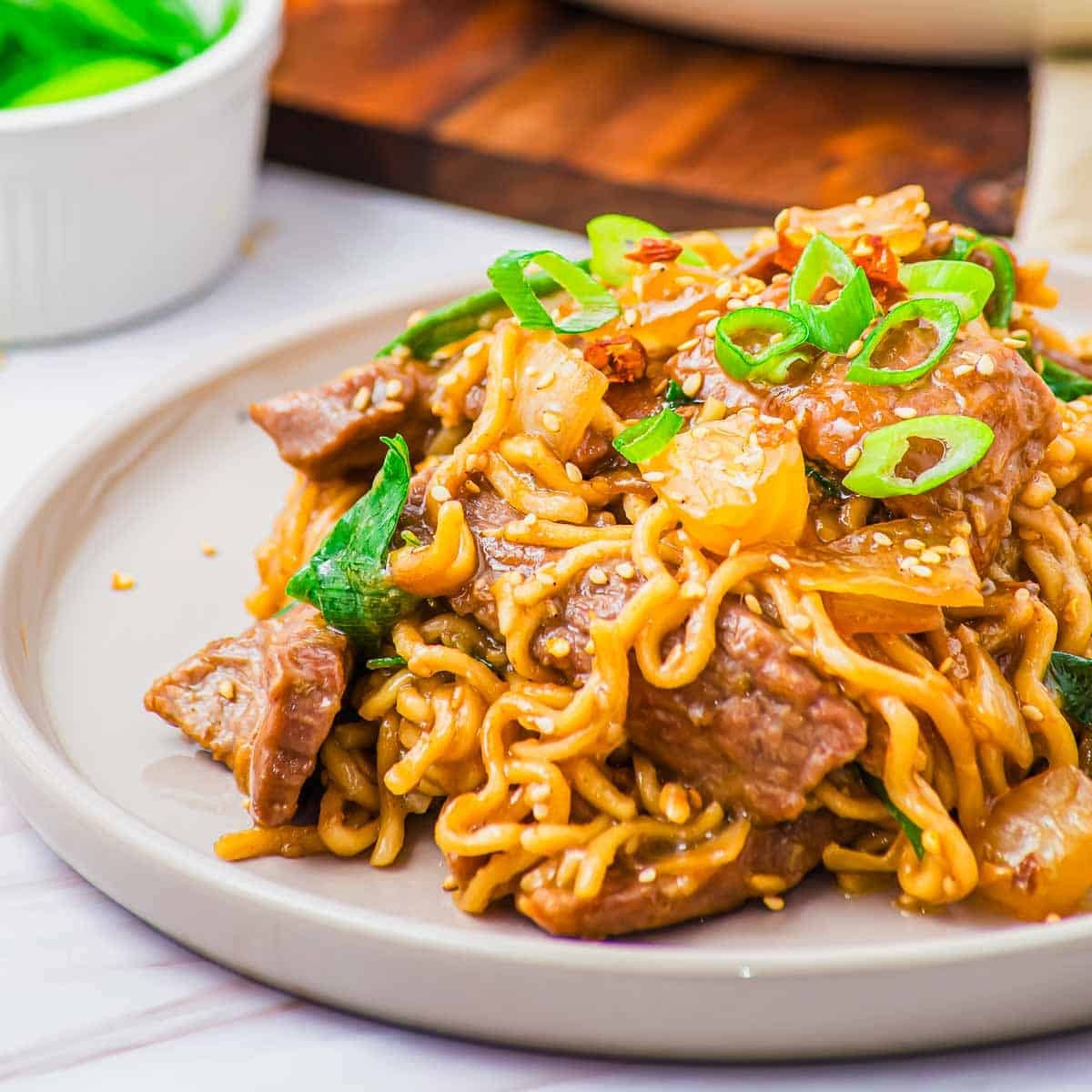
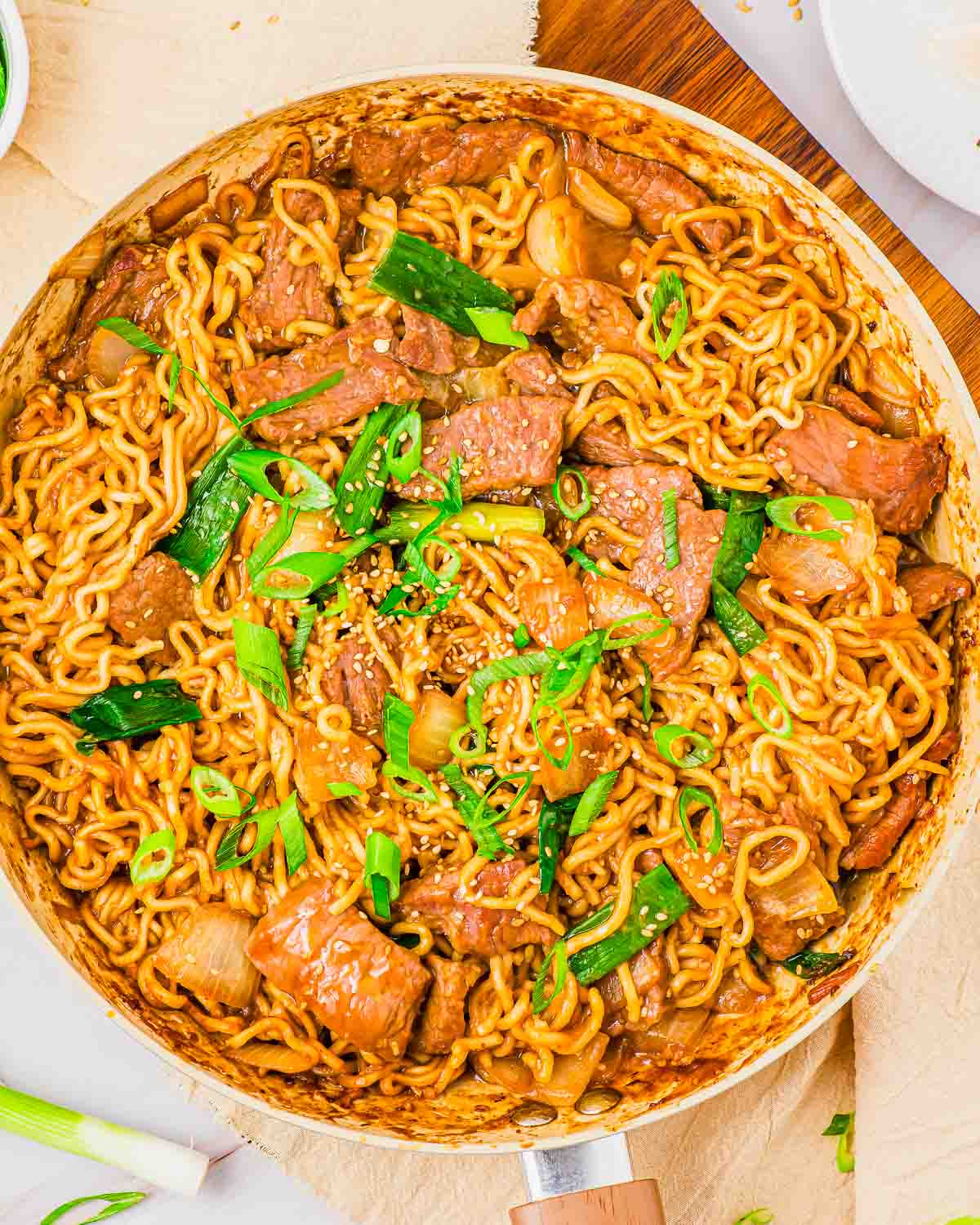
These Mongolian beef noodles combine tender strips of beef, chewy noodles and chunks of onion in a sweet and savory garlic ginger sauce. The beef is quickly marinated before cooking, and everything comes together with a glossy sauce that coats every bite.
Save this recipe!
I’m all for rice with a stir fry, but give me a skillet full of saucy noodles and rice will always come in second place. Especially when there’s tender beef tangled up in there and plenty of garlic and ginger in the sauce.
These Mongolian beef noodles take the sweet and salty sauce you expect from the takeout dish and stretch it out to coat the entire meal because we all know the sauce is the best part.
If you like my shaved beef stir fry, this is a similar kind of dinner with the noodles already worked in. Get the chopping done while the beef marinates, then have everything nearby before you start cooking. Once you begin this recipe, things move quickly.
A Few Reasons to Make This Tonight
- Simple homemade sauce: Soy sauce, brown sugar, rice vinegar, garlic and ginger give you a familiar sweet and salty takeout flavor.
- Flexible ingredients: Use ramen or another noodle you already have, and swap in shaved steak to save some prep.
- A filling dinner: The beef and noodles are served together, so you only need a vegetable on the side if you want one. Or, easily include it in the stir-fry itself. There are some suggestions below in the post.
Ingredient Notes
You’ll find the full ingredient list and amounts in the recipe card below. Here are a few notes on select ingredients and making substitutions.
- Beef: This recipe uses thinly sliced chuck steak, but sirloin or flank steak work too. If you can find store-bought shaved steak, it’ll save you the slicing. If cutting it yourself, slice thinly across the grain. My best tip is to slice the steak while it’s still slightly frozen if you’re defrosting it.
- Baking soda: The small amount in the marinade helps tenderize the beef. Measure it carefully. Adding more won’t improve the dish and can make the beef taste weirdly soapy. I use baking soda in the marinade for this kung pao beef too—it’s especially helpful for quick-cooking recipes like these.
- Cornstarch: It has two jobs here – it first coats the beef and helps the sauce cling to the meat, while the second cornstarch slurry helps thickens the sauce at the end.
- Noodles: Use 6 ounces of ramen without the seasoning packets (yuck), or substitute the same weight of dry lo mein, egg noodles, rice noodles or even spaghetti. Cook separately according to the package directions so they’re ready to toss into the sauce. Lo mein noodles are what I use in my popular shrimp lo mein recipe, if you prefer those to ramen.
- Soy sauce: This gives the marinade and sauce their savory flavor. You can substitute gluten-free tamari or coconut aminos if needed. To make the whole dish gluten-free, choose gluten-free noodles too — I do this all the time.
- Brown sugar and rice vinegar: These balance the salty soy sauce with sweetness and a little tang. I’ve used coconut sugar in place of the brown sugar before with no problems.
- Garlic and ginger: Fresh garlic and freshly grated ginger give the sauce the most flavor. Grating the ginger also keeps you from biting into a fibrous chunk. For quicker prep, keep some of those Dorot frozen ginger and garlic cubes on hand. They’re perfect for recipes like this.
- Onion and green onions: The regular onion softens and sweetens into the sauce as it cooks. The green onions liven up the whole dish at the end with their texture and their fresh onion flavor. You might think it’s weird to include both, but they play different roles.
Step by Step Instructions
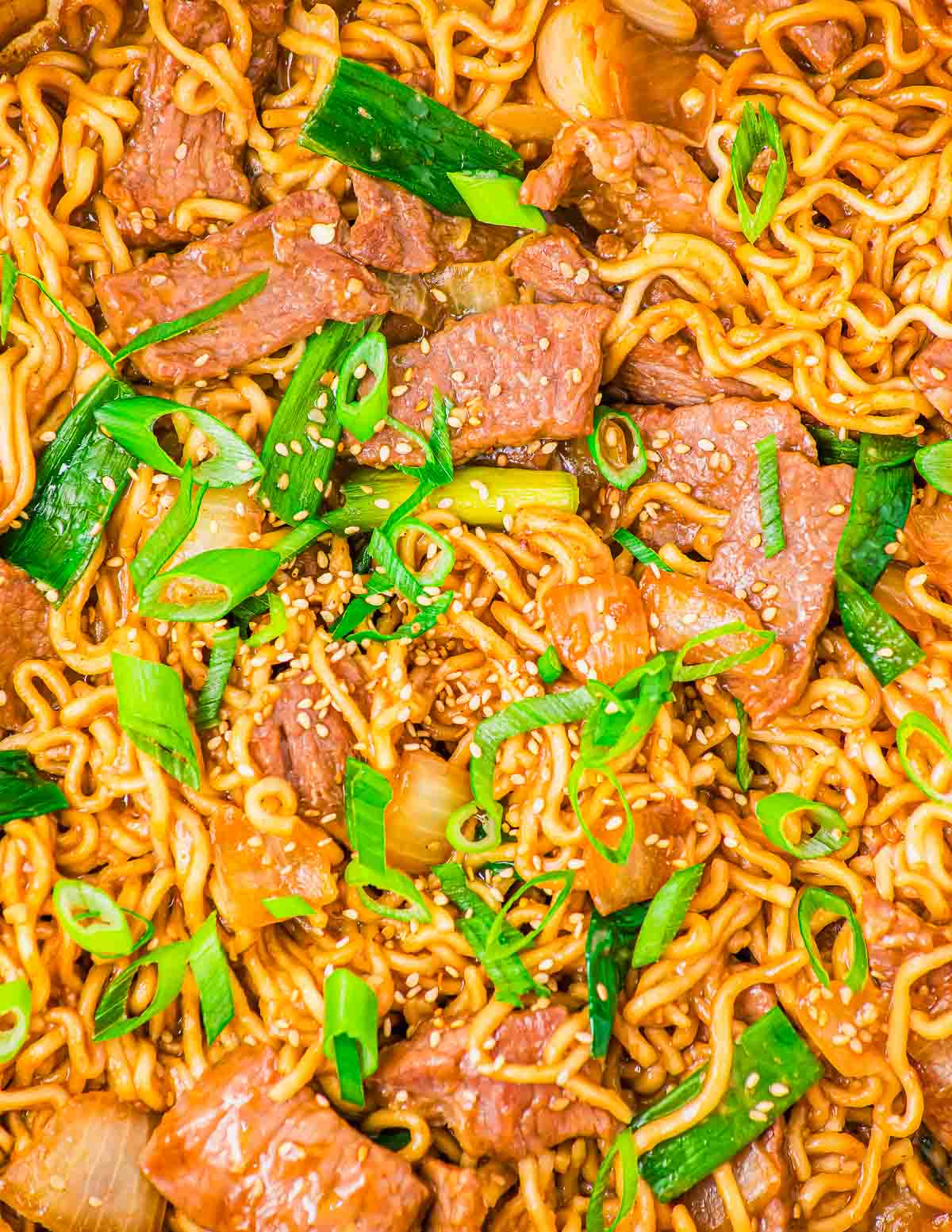
Use these photos as a visual guide. The recipe card below has the measurements and full cooking instructions.

- Separate any strips that are stuck together before mixing in the marinade. You want the coating on the individual pieces, rather than just the outside of a clump of beef.

- Once mixed, the beef should look lightly coated with no dry pockets of cornstarch left in the bowl. Use the marinating time to finish all the other prep for the dish.
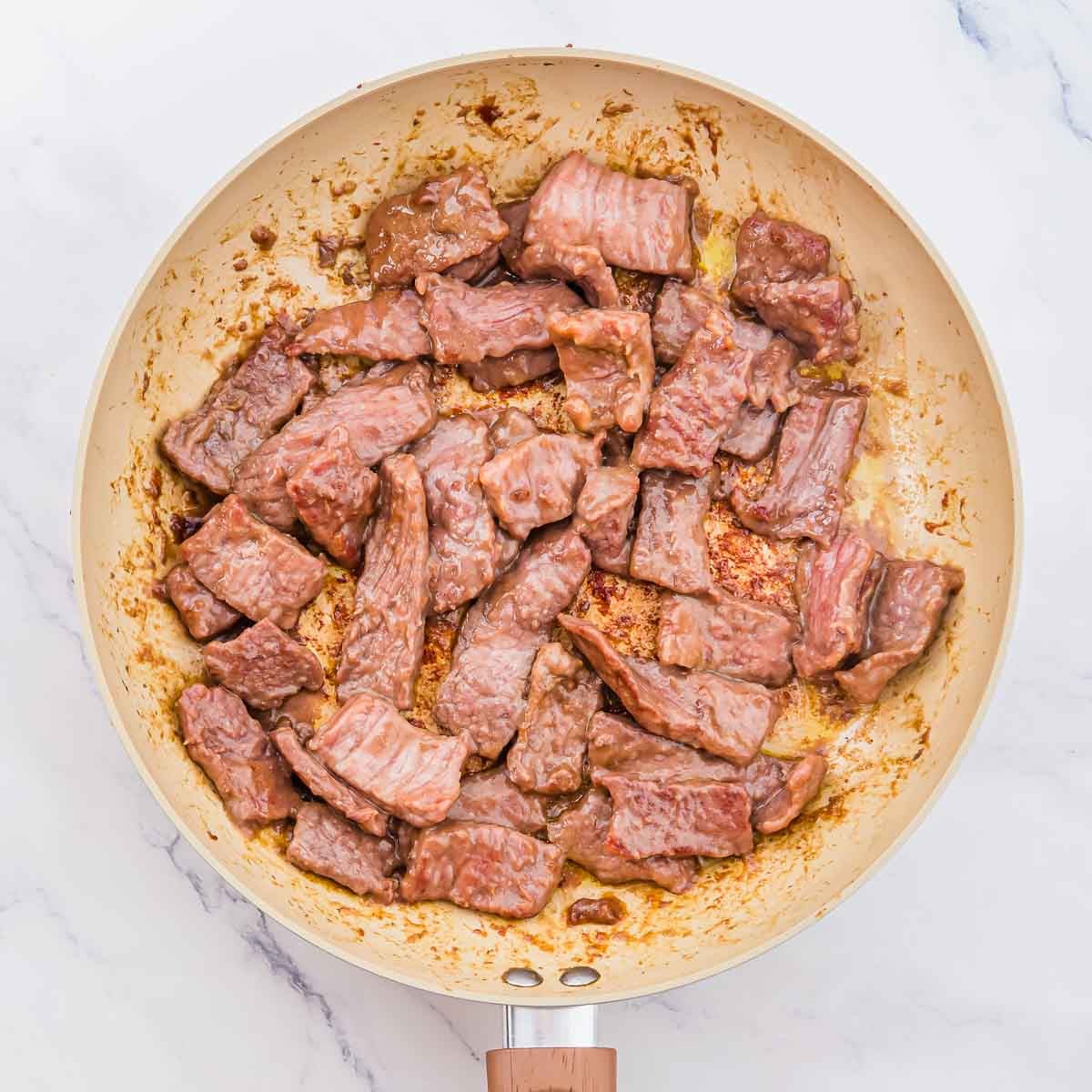
- Spread the beef strips across the hot skillet, working in batches if needed. If the pan is too crowded, the beef will steam instead of getting those browned edges you want. You’re just looking for color on the outside here; the beef will go back into the sauce later to cook more.
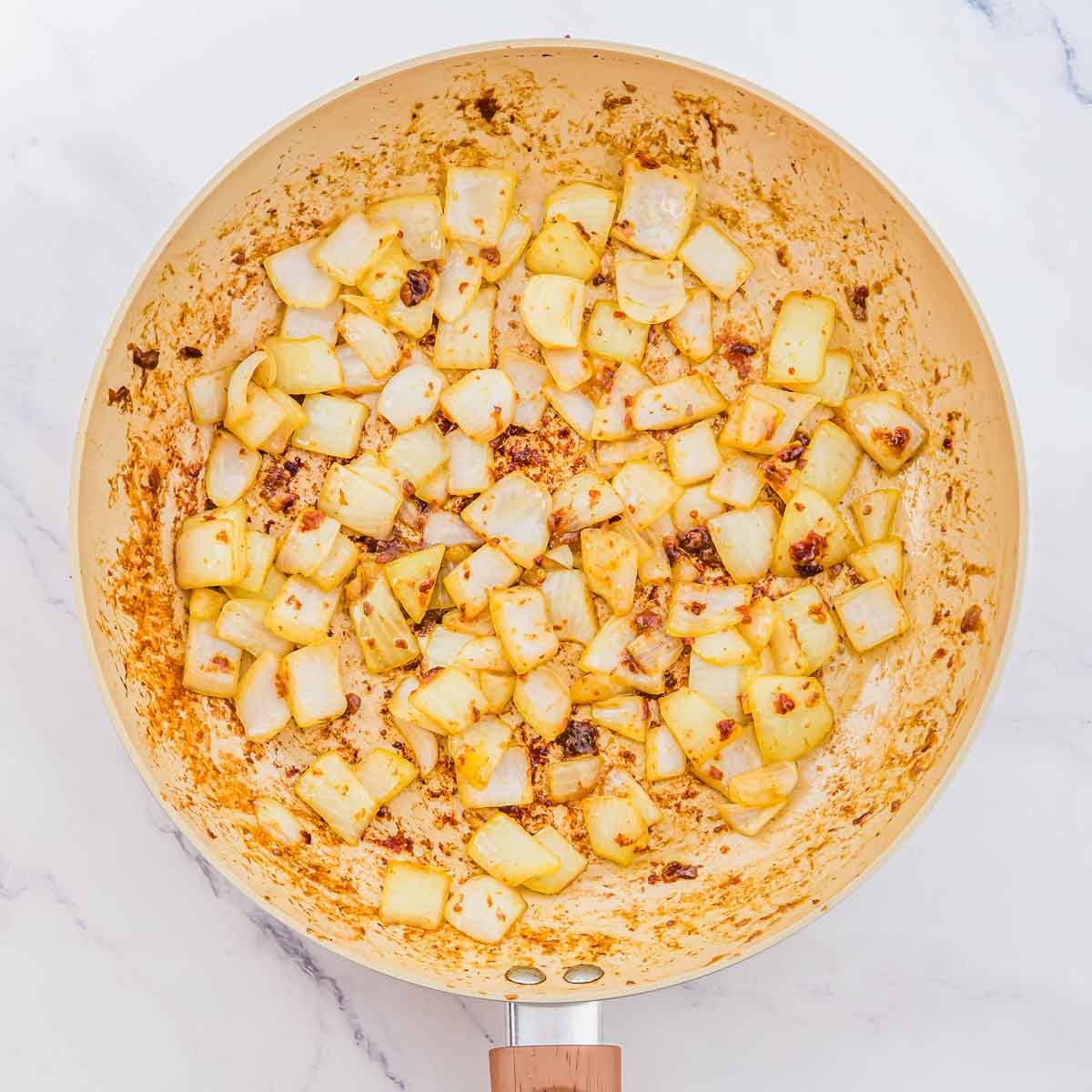
- The onion chunks should begin separating into layers, with some color around the edges as they cook. Keep the browned bits left from the beef in the skillet, but lower the heat if they start getting too dark. When the garlic and ginger go in, stir often so they don’t burn.
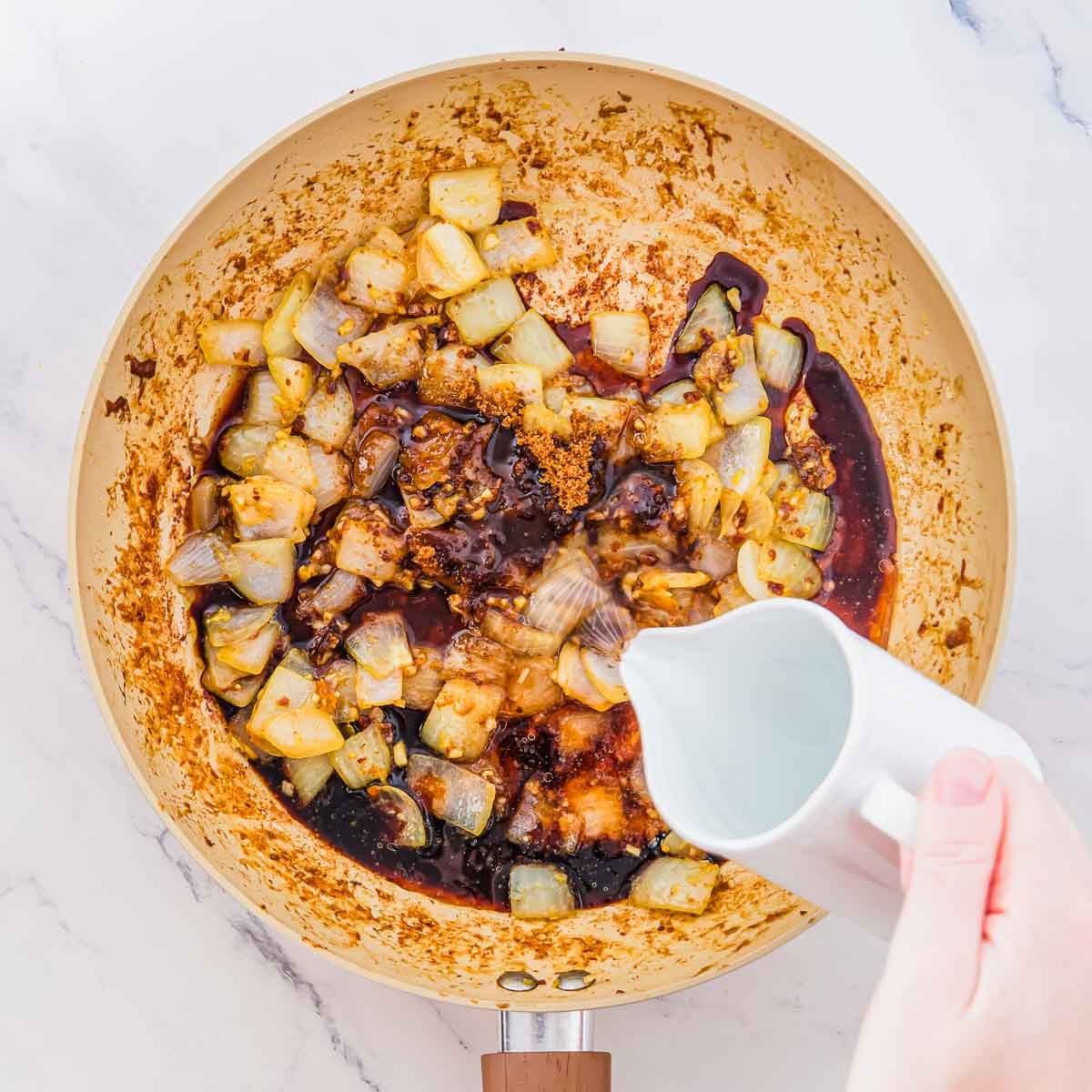
- As you add the sauce liquids, scrape along the bottom of the skillet to loosen the browned bits. They bring flavor with them. The sauce will still look thin at this stage, which is exactly what you want before adding the slurry.
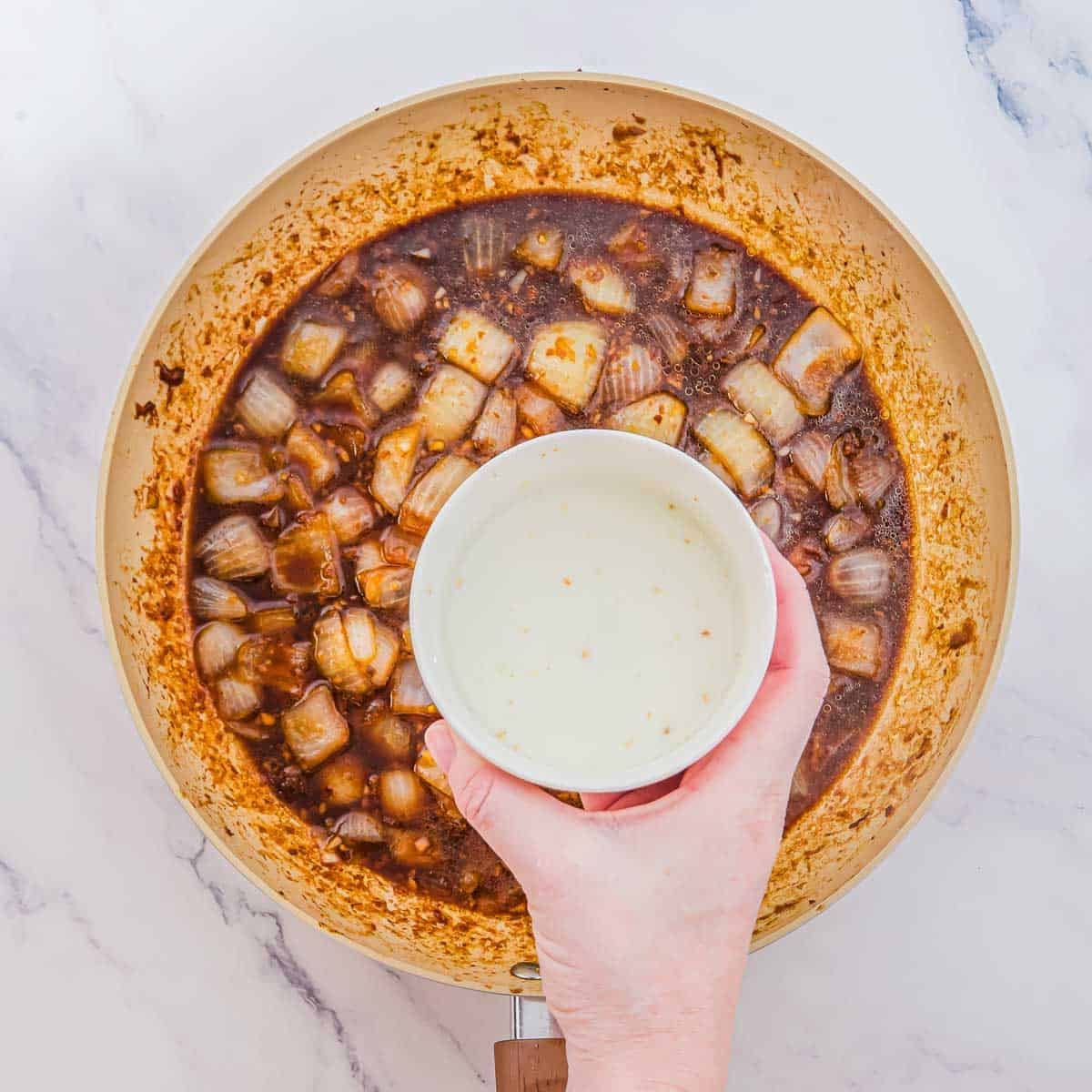
- Cornstarch settles as it sits, so give it another stir right before it goes into the skillet. Keep stirring the sauce as it heats. You’ll see it change from thin and watery to glossy and slightly thickened.
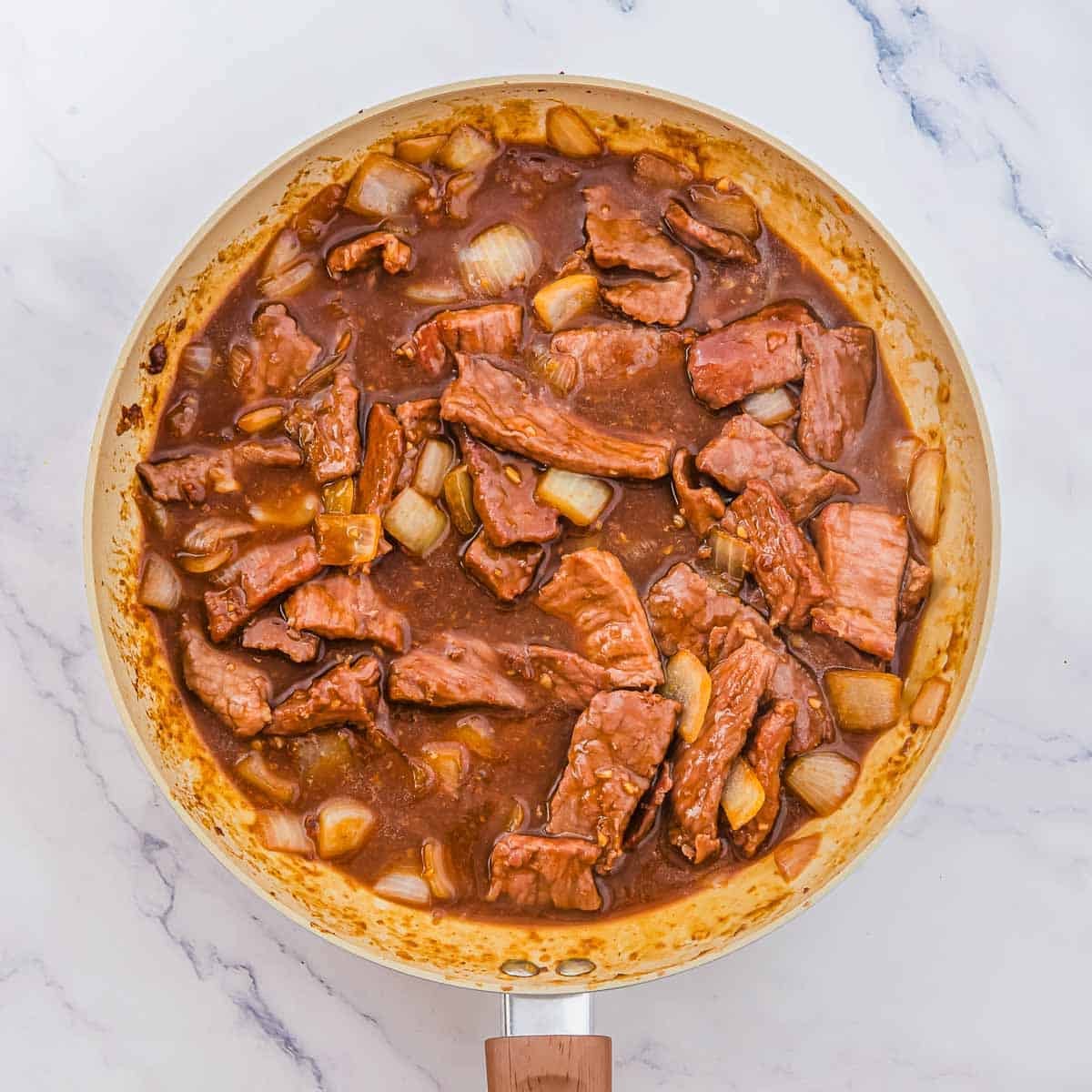
- Include any juices that collected on the plate along with the meat when you put it back in the skillet. Let the beef strips finish cooking in the sauce, but don’t overcook them.
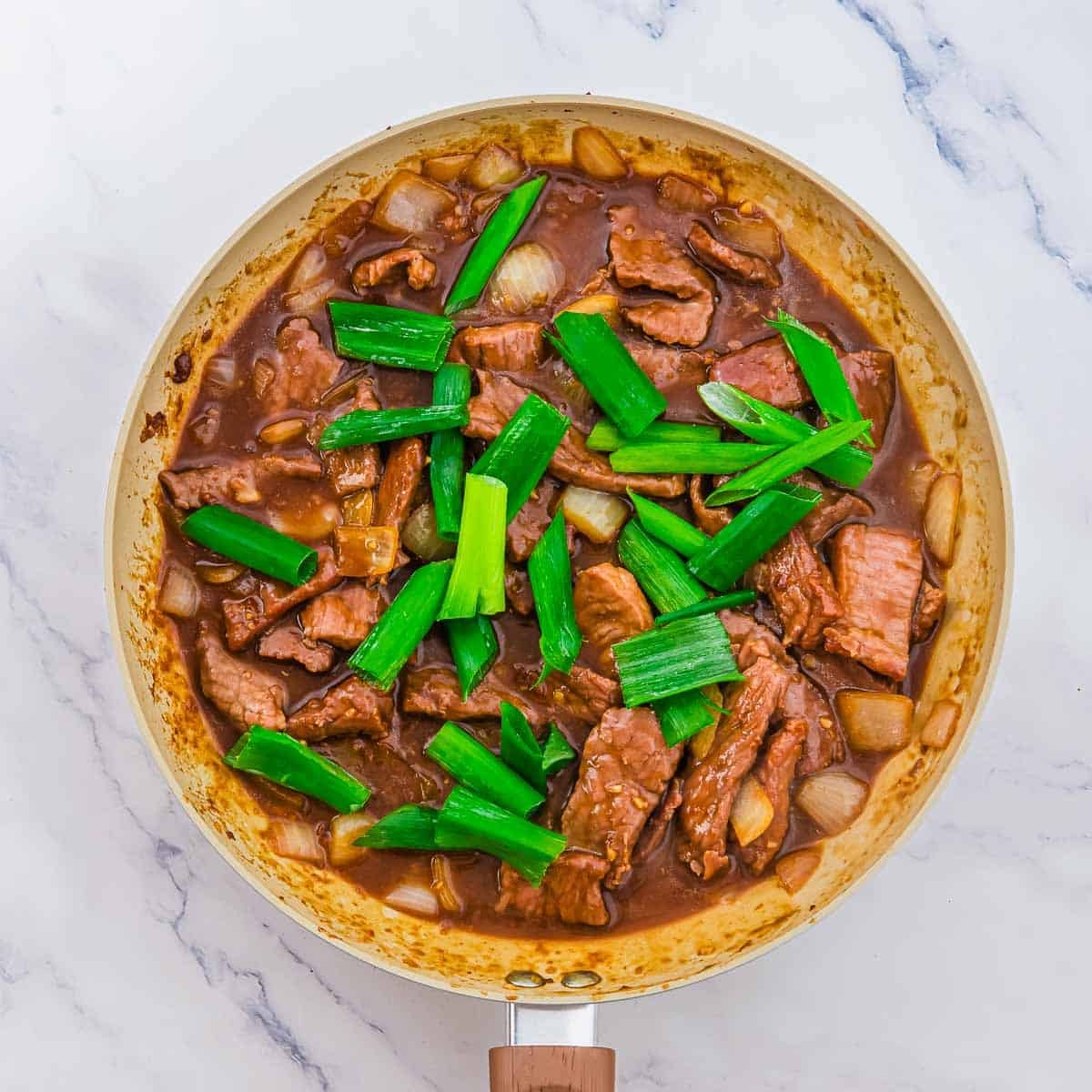
- Add the green onions. Their late addition gives the dish a little freshness against the rich sauce. They’ll soften slightly but keep most of that pretty bright green color for visual contrast in the dish.
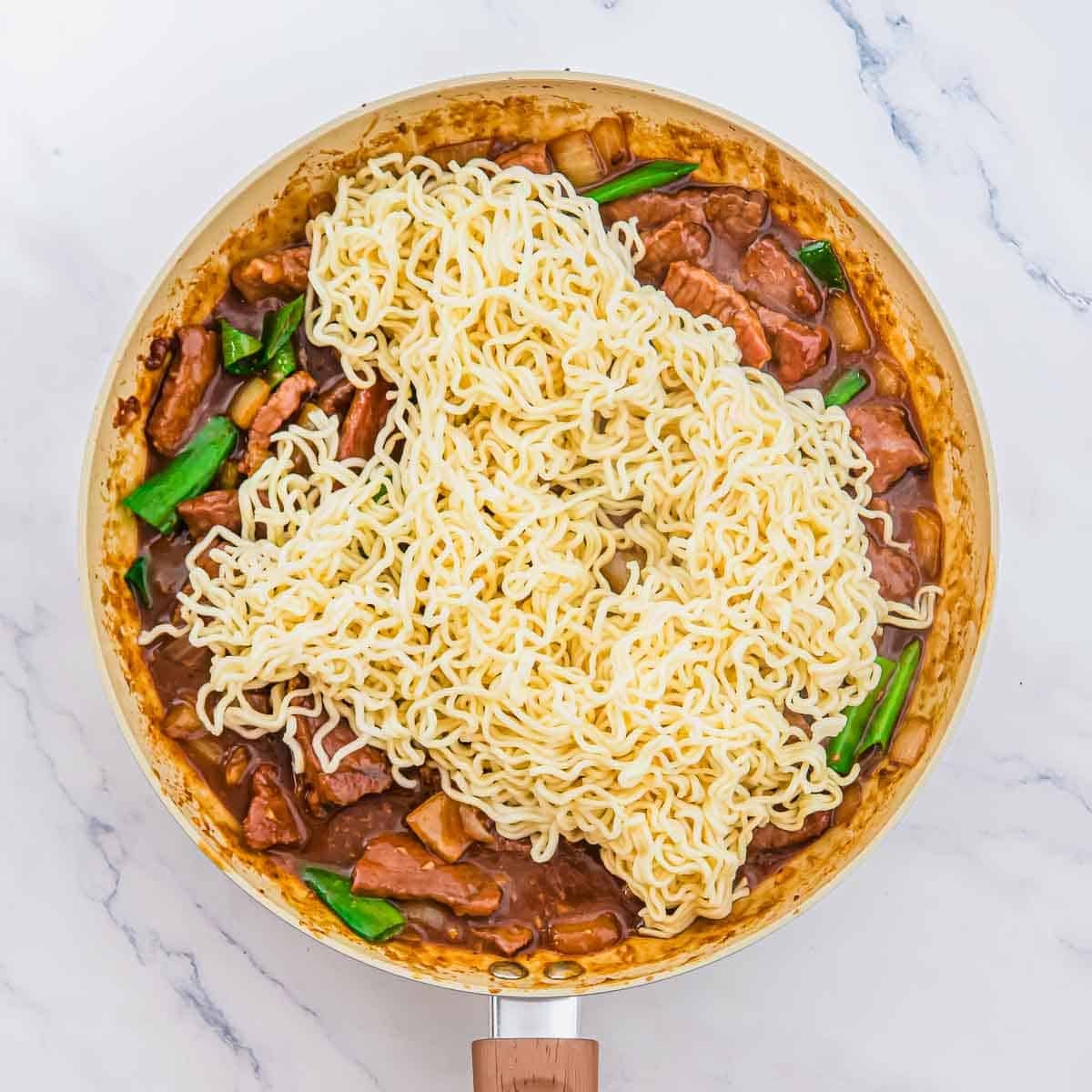
- Add the noodles you’ve previously cooked. I like to undercook ramen (or other noodles) just by a bit to retain some chewiness to them.
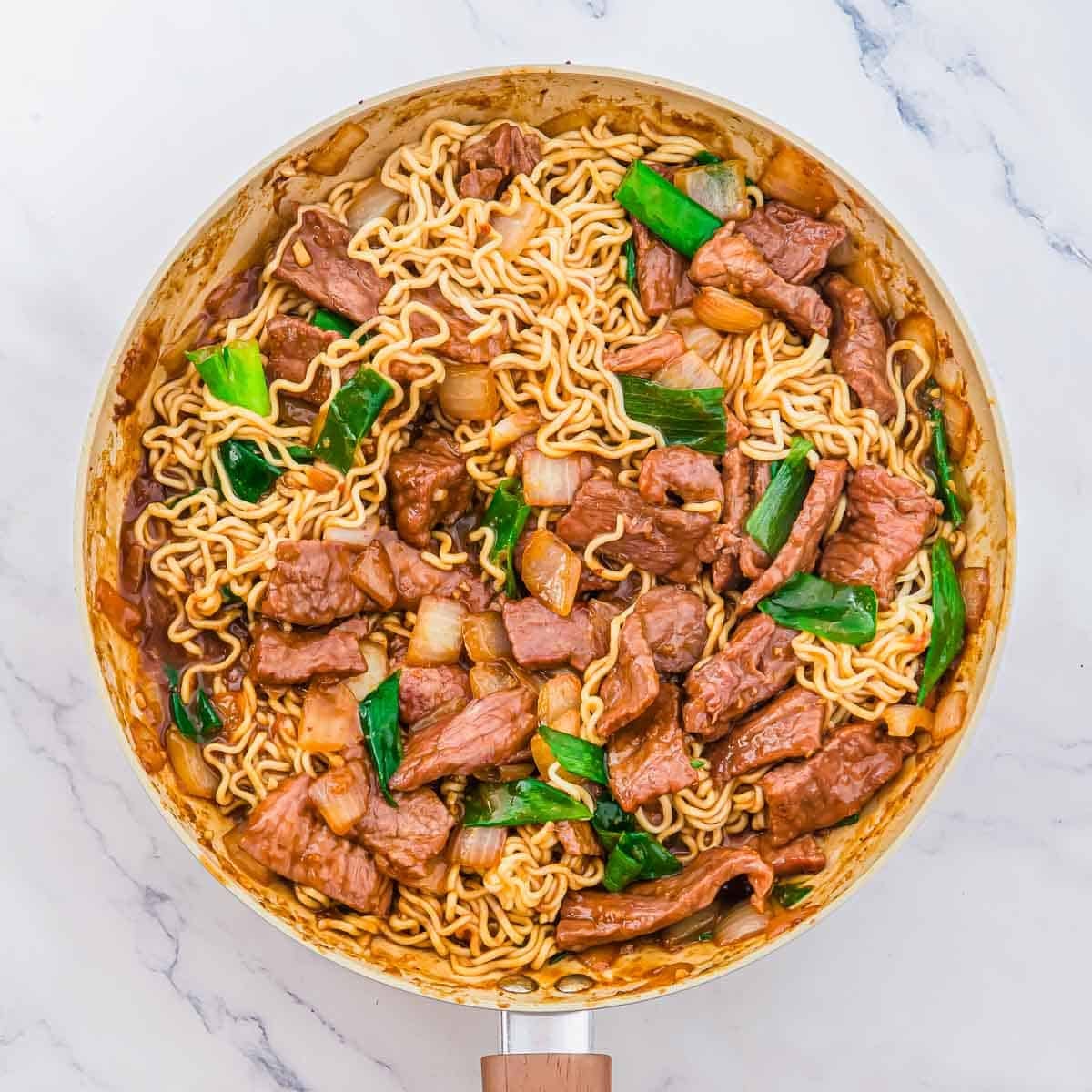
- Use tongs to gently lift and turn the noodles through the beef and sauce. If the sauce is too thick, add a splash of water or broth to loosen it.
Adding Vegetables
I love a takeout-inspired meal, but I usually want more vegetables than what comes with it. If you’re the same way, broccoli, snow peas, sliced bell peppers or shredded cabbage are all easy additions to these Mongolian beef noodles.
You could use cabbage, peppers and shredded carrots like I do in my ground beef and cabbage skillet, or try peas, carrots and zucchini like in this tofu fried rice. Use what you have in the fridge.
Cook the vegetables after removing the beef, before adding the garlic and ginger. If you’re using broccoli, cut the florets small so they cook quickly.
Stick to a couple handfuls so there’s still enough sauce for the beef and noodles. If you want more vegetables than that, I’d serve them on the side.
Storing and Reheating Leftovers
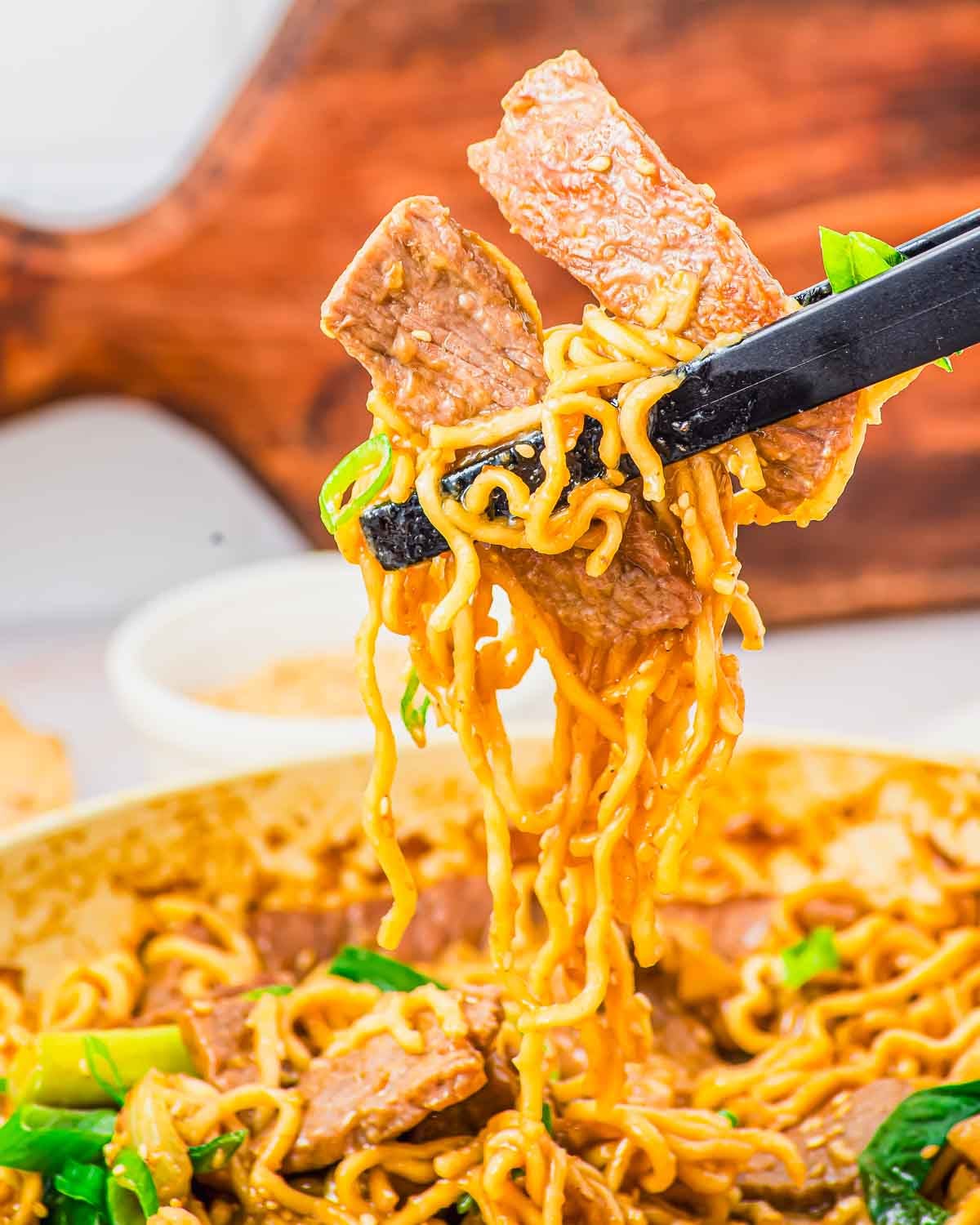
Leftovers make an easy lunch the next day, although the noodles won’t be quite as chewy as when you first made them. Keep them in an airtight container in the fridge for up to 3 days.
To reheat, add a splash of water or broth to a skillet with the noodles and beef. They’ll have soaked up some of the sauce overnight, so that extra liquid helps loosen everything up. Gently toss over medium-low heat until everything is heated through to your liking.
If you’re just reheating a bowl for lunch, there’s no need to get another pan dirty. Add a splash of water, cover loosely and microwave in short intervals on a lower power setting, stirring between each until heated through.
Mongolian Beef Noodles
Ingredients
- 6 ounces ramen noodles (2 blocks), prepared according to package instructions without seasoning packet
For the Marinade:
- 1 pound beef chuck steak
- 2 teaspoons soy sauce
- 1 tablespoon rice vinegar
- 1/2 teaspoon baking soda
- 1 tablespoon cornstarch
For the Sauce:
- 1 tablespoon olive oil
- 2 garlic cloves, minced
- 1 teaspoon freshly grated ginger
- 2 tablespoons brown sugar
- 1 tablespoon rice vinegar
- 1/4 cup soy sauce
- 2 tablespoons cornstarch, dissolved in the water
- 1 cup water
- 1 onion, cut into large chunks
- 2-3 green onions, cut into large pieces
For Serving:
- Sesame seeds
- Red chilli pepper, thinly sliced
Instructions
- Cut the beef into thin strips and place them in a bowl. Add the soy sauce, rice vinegar, baking soda and cornstarch. Mix well until all the beef is evenly coated. Cover and refrigerate for at least 20 minutes.
- Heat the olive oil in a large skillet over medium-high heat. Add the beef and cook until browned on the outside, turning as needed. Remove the beef from the skillet and set aside.
- Add a little more olive oil to the same skillet. Add the onion chunks and sauté for a few minutes, stirring occasionally until they begin to soften and separate into layers.
- Add the minced garlic and grated ginger, cook for about 1 minute, stirring constantly. Scrape up any browned bits from the bottom of the pan to add more flavor to the sauce.
- Add the soy sauce, rice vinegar, brown sugar and 1 cup of water. Stir well to combine.
- In a small bowl, dissolve the cornstarch in 2 tablespoons of cold water. Pour the mixture into the skillet and stir continuously until the sauce begins to thicken and becomes glossy.
- Return the beef to the skillet and add the roughly chopped green onions. Add the cooked noodles and toss to coat them in the sauce. Simmer for 1-2 minutes until heated through. Add a splash of water if the sauce becomes too thick.
- Garnish with sesame seeds, sliced red chilli peppers and extra green onions.
- Browse without ads
- Meal plans made for you
- Member-only recipes
- Print and get cooking
Notes
Nutrition
Nutrition information is automatically calculated, so should only be used as an approximation.

Gina Matsoukas is an AP syndicated writer. She is the founder, photographer and recipe developer of Running to the Kitchen — a food website focused on providing healthy, wholesome recipes using fresh and seasonal ingredients. Her work has been featured in numerous media outlets both digital and print, including MSN, Huffington post, Buzzfeed, Women’s Health and Food Network.